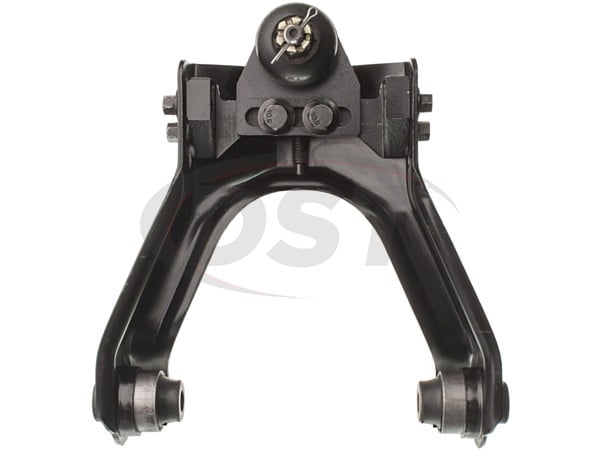
The 1999 Honda Civic is heralded not merely as a mode of transportation, but as a cultural icon that resonates with car enthusiasts and daily drivers alike. Among the multifaceted components that contribute to its performance and handling, adjustable upper control arm bushings emerge as a pivotal feature for those experimenting with the nuances of suspension tuning. In this exploration, we delve into the significance of these bushings, articulating their function, advantages, installation, and broader implications in the realm of automotive customization.
Understanding Control Arm Bushings
At the heart of any vehicle’s suspension system lie control arms, which serve as crucial connectors between the body of the car and its wheels. The upper control arm bushings are specifically designed to provide a pivot point that allows for a smooth range of motion. These bushings essentially insulate the chassis from vibrations and shocks while also facilitating wheel movement in relation to the body of the car. The 1999 Honda Civic, due to its widespread popularity, has an extensive aftermarket support for modifying and enhancing its suspension characteristics.
Why Adjustable Bushings? A Symphony of Performance
Adjustable upper control arm bushings offer a remarkable advantage over their static counterparts by providing the ability to fine-tune suspension geometry. This feature is particularly alluring for performance enthusiasts who seek to optimize handling and ride quality tailored to individual driving styles or track conditions. The adjustment capability allows drivers to modify camber and caster angles, which can profoundly affect tire contact with the road, overall grip, and even tire wear.
Beyond mere performance, the fascination with adjustable bushings stems from their potential to transform the driving experience. Subtle adjustments can yield significant changes in handling characteristics, allowing for a level of personalization that resonates deeply with enthusiasts who view their vehicles as extensions of their identity.
The Anatomy of Adjustable Upper Control Arm Bushings
Adjustable upper control arm bushings replace the factory bushings with units that often incorporate high-quality materials like polyurethane or Delrin. These materials are lauded for their durability and resistance to wear, providing superior handling and feedback compared to rubber bushings. Additionally, many adjustable units come equipped with eccentric bolts, which enable users to dial in their desired settings with precision.
When examining these bushings, one encounters two key adjustments: camber and caster. Camber affects the tilt of the wheels when viewed from the front of the car, while caster pertains to the angle of the steering axis. An understanding of both adjustments is essential for achieving optimal performance on the pavement.
Installation: The Art and Science
Installing adjustable upper control arm bushings is not merely a task; it’s a rewarding venture that can greatly enhance one’s connection to their vehicle. While the process can be intricate, it offers an opportunity for mechanical engagement that many enthusiasts savor. Basic tools, a solid jack, and potentially a torque wrench are requisite for this calibration of one’s suspension.
Following the removal of the factory upper control arm, the installation of the adjustable bushings typically requires precise alignment to ensure that everything functions harmoniously. Following installation, a professional alignment is advised, as the changes made via the adjustable bushings will necessitate expert calibrations to achieve the vehicle’s full potential.
Performance Benefits: A Shift in Dynamics
The narrative around adjustable bushings does not end with mere tweaks. These components can decouple the limitations of stock control arms, enabling a driver to experience dramatically improved cornering prowess and enhanced stability. For those who encounter winding roads or engage in competitive driving, this adaptability translates into palpable confidence behind the wheel.
Moreover, adjustable bushings contribute significantly to tire longevity, as they facilitate the maintenance of optimal alignment settings. When tires are uniquely aligned to the operational demands of the road or track, they exhibit enhanced traction and responsiveness, ultimately leading to an exhilarating driving experience.
The Broader Implications: Culture and Community
Adjustable upper control arm bushings resonate beyond mere mechanics; they embody the spirit of customization and a shared camaraderie among car enthusiasts. The act of modifying a Honda Civic—once considered an economy vehicle—transcends individual ownership, linking drivers in a broader narrative that celebrates innovation and personal expression. Car meets and forums buzz with discussions of alignment settings, ride height adjustments, and suspension setups, showcasing a vibrant community dedicated to pushing the limits of automotive performance.
Conclusion: The Ultimate Expression of Personalization
In conclusion, adjustable upper control arm bushings exemplify the potential for performance enhancement within the venerable 1999 Honda Civic. The combination of functionality, adjustment capability, and the community ethos surrounding automotive customization culminates in a fascinating exploration of what it means to engage with one’s vehicle on a deeper level. As enthusiasts continue to tinker with their setups, they are not only improving their cars’ performance but also becoming part of an enduring legacy of automotive passion and innovation. Each adjustment represents a personal journey, echoing the blend of engineering and artistry that defines the world of car culture.









Leave a Comment