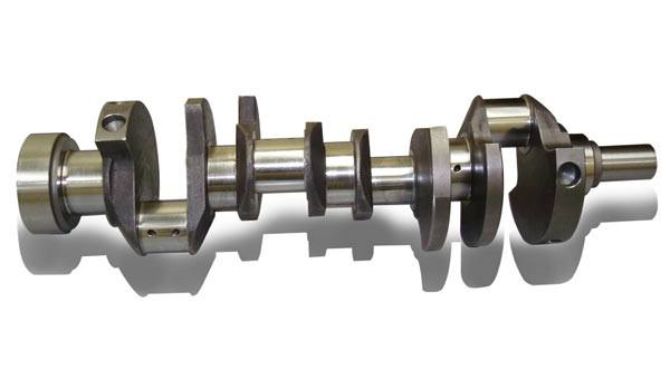
Crankshafts, the unsung heroes of internal combustion engines, play a pivotal role in converting the linear motion of pistons into rotational motion, which ultimately powers vehicles. Despite their robust construction, crankshafts can become unbalanced, leading to unwanted vibrations and potentially catastrophic engine failure. This phenomenon, while common, beckons further examination into its causes and consequences. A deeper understanding of crankshaft balance not only illuminates a critical aspect of engine design but also reveals a fascinating interplay of physics, mechanics, and engineering.
Understanding Crankshaft Functionality
To grasp the concept of unbalance, one must first comprehend the intricate functioning of a crankshaft. Primarily, crankshafts are designed to withstand significant stress while enabling efficient energy transfer within the engine. They undergo rigorous engineering processes, from forging and machining to dynamic balancing, in order to achieve the precision required for optimal performance. This precision is paramount; even the smallest deviation in balance can lead to drastic and often detrimental consequences.
The Science of Balance
Balance in crankshafts refers to the even distribution of weight along their length, which allows for smooth rotation. A perfectly balanced crankshaft ensures that the forces generated by the moving pistons counteract each other, producing minimal vibration. When a crankshaft is unbalanced, it can lead to excessive vibration that not only affects performance but also accelerates wear on engine components. The moment of inertia plays a crucial role here—any alteration to the distribution of mass can alter the mass moment of inertia, thus inducing imbalances during operation.
Common Causes of Crankshaft Unbalance
The reasons for crankshaft unbalance can be numerous and varied:
- Manufacturing Defects: Despite stringent quality control, defects can occur during the manufacturing process, leading to uneven weight distribution. For instance, a misalignment in the placement of counterweights can cause imbalance during rotation.
- Wear and Tear: Over time, components wear out and can lead to alterations in crankshaft geometry. Bearings can degrade unevenly, or counterweights can become damaged, resulting in an unbalanced state.
- External Forces: Factors such as improper engine mounting or misaligned drivetrain components can exert forces that amplify any existing imbalances in the crankshaft.
- Modification and Tuning: Performance enhancements, such as altering the size or weight of the crankshaft or associated components, can inadvertently introduce imbalance if not executed with precision.
Symptoms of Unbalanced Crankshafts
The consequences of an unbalanced crankshaft are not as easily dismissed. Observing the symptoms can be crucial for timely intervention. Some of the most notable signs of crankshaft unbalance include:
- Vibration: Excessive vibrations felt through the steering wheel or chassis during operation can be a primary indicator. These vibrations often increase with engine speed.
- Unusual Noises: Knock and rattle sounds emanating from the engine compartment provide auditory clues that stress levels are exceeding normal parameters.
- Engine Performance Issues: A reduction in power output or irregular engine behaviors, such as irregular idle or difficulty in acceleration, can signal crankshaft imbalance.
- Increased Wear on Components: Noticeable wear on engine mounts, bearings, and other components can reflect the effects of excessive vibrations triggered by an unbalanced crankshaft.
Addressing Unbalance
When addressing the issue of crankshaft unbalance, it is imperative to approach it with a systematic plan:
- Inspection: A thorough examination of the crankshaft and associated components should be conducted to identify any visible signs of wear or distortion.
- Balancing Techniques: Professional balancing techniques, including dynamic and static balancing, can remedy imbalances. These procedures involve adding or removing weight from specific locations on the crankshaft to achieve even distribution.
- Replacement: In cases where the damage is irreparable, replacing the affected crankshaft or associated parts may be necessary to restore engine functionality.
- Preventative Measures: Regular maintenance and adherence to manufacturer guidelines can greatly mitigate the risk of developing an unbalanced crankshaft.
The Broader Implications of Crankshaft Unbalance
The fascination with crankshafts and their balance extends beyond mere mechanical function. Understanding how forces interact within an engine can provide insights into thermodynamics, fluid dynamics, and material science. Engineers continuously explore better designs to mitigate unbalance, which not only enhance performance but also extend the lifespan of engines. The delicate art of balancing a crankshaft exemplifies the harmony of mechanics, where physics and creativity intertwine to engineer reliable machinery.
In conclusion, while crankshafts may appear as simple machinery components, they represent a complex interplay of engineering principles and performance optimization. An appreciation for their balance can lead to a greater understanding of engine dynamics and the challenges faced in automotive design. As technology evolves, the study of crankshaft balance continues to be a critical area, emphasizing the importance of precision and maintenance in the quest for mechanical perfection.










Leave a Comment