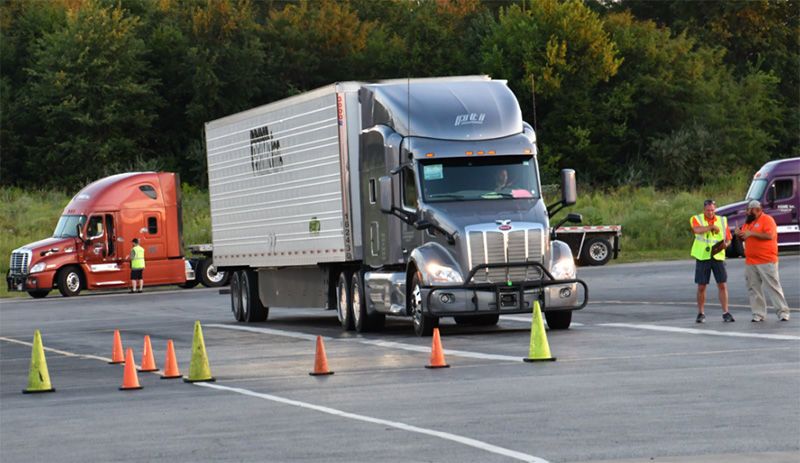
In the vast expanse of the open road, where asphalt ribbons snake through sprawling landscapes, box trucks stand as the unsung heroes of commerce, bridging the gap between consumer demand and supply chain logistics. These sturdy vehicles, reminiscent of steadfast sentinels, rise to meet the challenges of transport, housing cargo within their distinct rectangular bodies. Yet, as one gazes upon these mechanical marvels, the pressing question emerges: Do you need a Commercial Driver’s License (CDL) to navigate one of these titan trucks? Let us embark on a journey to unravel the intricacies of this query.
The heart of the matter lies in the size and weight classification of the vehicle. Box trucks are diverse; they can range from smaller models, often used for local deliveries, to larger variants that tip the scales significantly. A CDL is primarily mandated for vehicles that exceed 26,000 pounds in Gross Vehicle Weight Rating (GVWR). This weight is akin to the threshold where mere driving skill transforms into an intricate dance of responsibility and safety regulations. Thus, before seducing the alluring curved steering wheel of a box truck, understanding its specifications is essential.
The Federal Motor Carrier Safety Administration (FMCSA) delineates that a CDL is required for vehicles classified as commercial motor vehicles. This classification generally encompasses any vehicle that:
- Has a GVWR greater than 26,000 pounds.
- Is designed to transport 16 or more passengers, including the driver.
- Is used to transport hazardous materials, necessitating a placard for visibility.
Understanding these criteria is akin to grasping the secrets of an ancient tome; the knowledge gained informs your journey ahead. For box trucks that fall below the 26,001-pound threshold, a standard driver’s license might suffice. These nimble heralds of transport can glide through urban landscapes with relative ease, lifting burdens without the stringent licensing requirements tethered to heavier vehicles.
However, the spectrum of state regulations casts an additional layer of complexity on the matter. Each state possesses its own unique rules and statutes pertaining to commercial driving. In certain jurisdictions, drivers operating box trucks exceeding a specific length may find themselves ensnared in regulations that mandate a CDL. Hence, it is imperative to delve into state-specific laws, much like a sailor consulting a map before setting sail on uncharted waters.
While diving into the complexities of licensing, it is also vital to consider the diverse array of box trucks available. Various companies manufacture these vehicles, each presenting an amalgamation of dimensions and functionalities. For instance, a compact box truck, often equipped for last-mile deliveries, may fall comfortably under weight requirements; conversely, a heavy-duty variant designed for long-haul transport ascends into the realm demanding a CDL.
The allure of becoming a box truck driver captures many, yet one must ponder the responsibilities that accompany such a role. Operating a vehicle laden with cargo, especially in bustling urban centers, demands not only driving proficiency but also the acute awareness akin to that of a seasoned navigator. It is a transition from handling a mere automobile to orchestrating a symphony of safety measures, route planning, and customer interaction. Operating without a CDL when required could lead to legal repercussions that may echo far beyond a simple fine.
A box truck represents more than a vehicle; it serves as the lifeblood of commerce—the arteries through which goods flow to sustain economy and efficiency. Each journey taken with a box truck is woven into an elaborate tapestry of logistics, marking the confluence of myriad adventures. Thus, for those drawn to the open road, a commitment to understanding the nuances of CDL requirements stands as a testament to professional integrity.
As one contemplates the allure of box trucking, it becomes essential to explore the benefits of obtaining a CDL. This investment in certification not only bolsters a driver’s credentials but also potentially opens up avenues for more lucrative ventures in the transportation sector. With a CDL in hand, drivers can tackle a variety of driving opportunities, from towing trailers to operating heavy equipment, each adding layers of skill to their profile. The future may hold diverse horizons, and a CDL acts as a key—unlocking doors to uncharted territories in the driving realm.
In conclusion, whether you need a CDL to drive a box truck hinges on a tapestry of factors: weight, dimensions, and geographic regulations. It is an ever-evolving landscape where knowledge empowers you and ensures safer journeys through intricacies of the road. So, as you contemplate whether to journey down this avenue, embrace the responsibility and potential that come with such a decision. The world awaits, with its cargo to transport and stories to tell—ensuring that every drive is an adventure worth embarking upon.








Leave a Comment