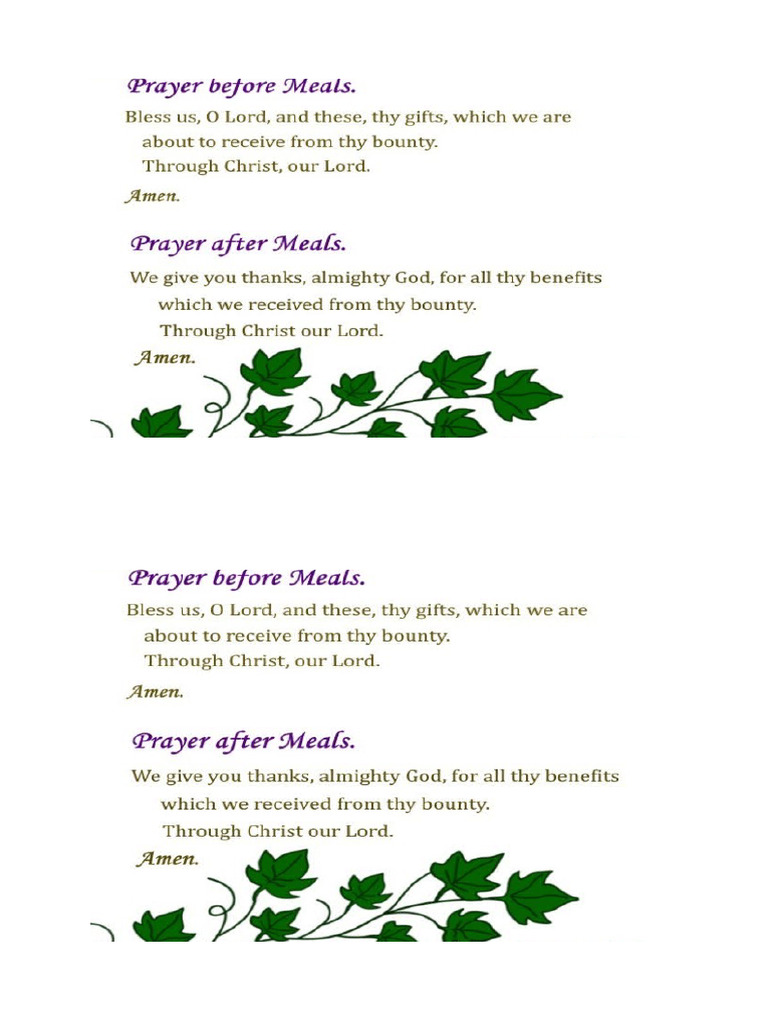
In the rhythm of daily life, where meals are often consumed in haste, the act of pausing to offer a Christian prayer before meals can be likened to a gentle pause in a beautiful symphony. This sacred moment provides an opportunity to align not just the mind and heart, but also the spirit, transforming a simple gathering around a table into an experience laced with profound significance. The following exploration delves into the essence of Christian prayers before meals, their historical roots, diverse expressions, and their unique appeal that adds flavor to the mundane act of eating.
Historical Significance
The tradition of offering prayers before meals can trace its origins back to biblical texts. The practice often finds its roots in the teachings of Jesus, who, during the Last Supper, gave thanks before breaking bread (Matthew 26:26). This moment not only sanctified the meal but also established a model for followers, illustrating the importance of gratitude. Through the centuries, Christians have woven this practice into the fabric of their everyday lives, symbolizing a recognition of divine providence and grace.
As one reflects on the significance of this ritual, it becomes clear that the act transcends mere formality. It serves to remind individuals of their interconnectedness with God and creation, framing the meal as not just sustenance for the body, but nourishment for the soul. Just as roots anchor a tree, enabling it to thrive, so too does this prayer root believers in faith.
The Essence of Gratitude
At its core, a prayer before meals embodies gratitude—an essential virtue in Christian doctrine. Expressing thankfulness fosters a mindset that recognizes the abundance bestowed upon us. This moment serves as an acknowledgment of the hands that prepared the meal, the farmers who cultivated the crops, and the Earth itself, which provides sustenance. By articulating thanks, individuals cultivate a spirit that transforms their perspective, inviting joy into the act of eating.
Consider this metaphor: a seed planted in fertile soil. The seed embodies potential and promise, yet it must be nourished and cared for. In the same way, a prayer infuses a meal with a nurtured appreciation for every ingredient and effort that went into its preparation. It is a celebration of life, conscious of the myriad blessings that often go unnoticed.
Expressions of Prayer
Christian prayers before meals can take myriad forms, ranging from the formal to the spontaneous. Each expression carries its own resonance and reflects the unique culture of the family or community involved. Traditional prayers, such as the “Blessing of the Food,” often resemble historic invocations, echoing ancient rhythms and phrases that ground the specific moment in a broader spiritual context.
Conversely, some families may favor personal or extemporaneous prayers that resonate with their lived experiences. These prayers can be deeply introspective, sharing specific gratitude for recent blessings or invoking assistance during challenging times. Whether recited by the eldest family member or a curious child, the informal nature of these prayers offers a fresh, invigorating perspective that can invigorate even the most habitual of routines.
Symbolism and Rituals
In addition to spoken prayers, the act of blessing food can involve various rituals that enhance the experience. The lighting of candles, the arrangement of a sacred table, or the invitation for each member to share a blessing can create an atmosphere rich with spiritual significance. These rituals symbolize a collective intent to honor the meal and those sharing it, thus weaving together diverse threads into a cohesive tapestry of community.
Imagine a gathering where each person, with an open heart, articulates what they are thankful for—a vibrant mosaic of voices rising like incense, enveloping the table in warmth and unity. This collective engagement reinforces the communal aspect of meals, inviting each individual to partake in a shared spiritual journey. The colors, sounds, and scents blend with the prayers, creating an embrace of fellowship that becomes palpable.
The Unique Appeal
What makes Christian prayer before meals especially poignant is its ability to transcend the act of eating, transforming it into a contemplative practice. In a society bustling with distractions, this moment of reflection acts as an anchor, inviting stillness amidst the clamor of daily life. It galvanizes a true appreciation for the present, fostering mindfulness which modern life often forsakes.
Furthermore, the act represents a moment where faith intersects with daily life. It serves as an invitation to acknowledge ‘the sacred in the mundane,’ revealing how every bite can become an act of worship. This unique appeal often reinforces a familial commitment to values, traditions, and shared beliefs. The habitual nature of saying grace before meals etches the experience into the family narrative, passed down through generations like an ancient recipe.
Conclusion
In conclusion, Christian prayer before meals is more than just a ritual; it is an experience steeped in history, gratitude, and community. It offers a sanctuary from the frantic pace of life, allowing individuals to reflect, appreciate, and connect, both with their faith and each other. As meals nourish the body, prayers nourish the spirit, bridging the gap between the sacred and the ordinary. In the rich tapestry of life, may each meal be punctuated by these moments of gratitude, enriching existence with a touch of the divine.







Leave a Comment