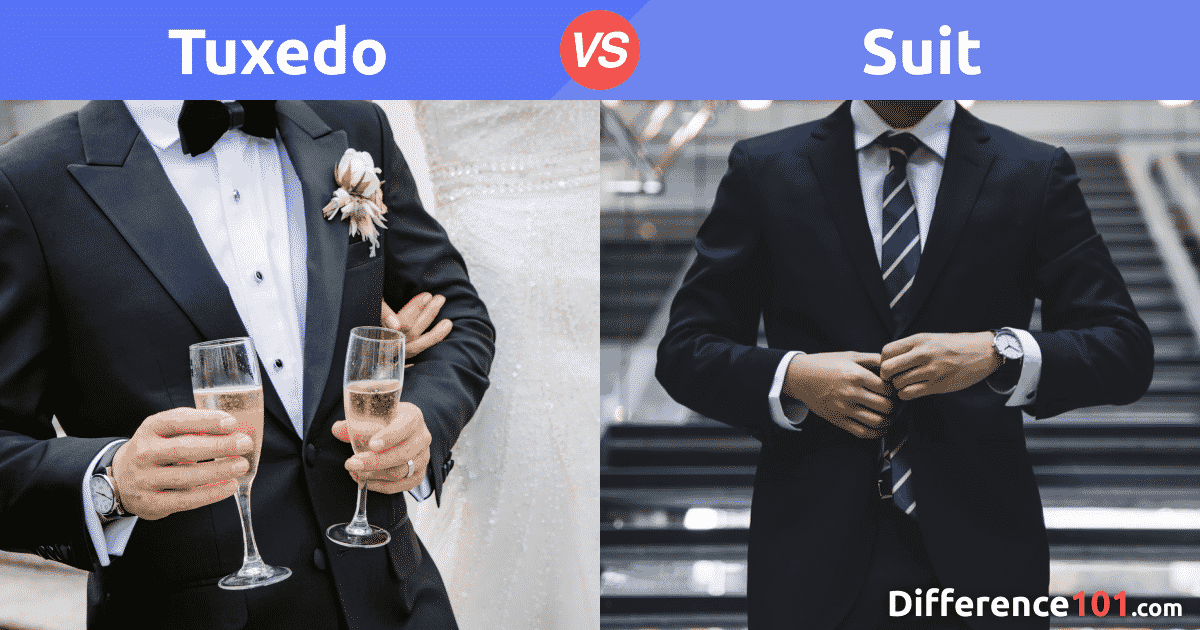
When it comes to formal attire, the lexicon of men’s fashion often leads to confusion, particularly surrounding the nuances between a tuxedo and a suit. It’s a playful question worth pondering: Can one truly distinguish between the refined elegance of a tuxedo and the versatile charm of a suit, or do they merely represent shades of a similar spectrum? This inquiry challenges enthusiasts and novices alike to delve deeper into the intricacies of these quintessential garments. In this discourse, we will explore the salient features, occasions, and historical contexts that set a tuxedo apart from a suit.
To embark on this sartorial journey, let’s first establish a fundamental understanding of each garment. A suit is typically characterized by its matching jacket and trousers, usually made of the same fabric. Often donned for a variety of functions, suits encompass an array of styles, colors, and fabrics, making them adaptable to both professional environments and social gatherings.
On the other hand, a tuxedo—formally known as a dinner jacket—tends to be far more distinctive. Originating from the tailcoats of the 19th century, the modern tuxedo has become synonymous with black-tie occasions. It traditionally features satin or grosgrain facings on the lapels, a contrasting color (often black or midnight blue) as well as a distinctive approach to styling, including the use of a bow tie instead of a necktie.
While both garments can be accompanied by various accessories, the tuxedo’s charm lies in its tailored aesthetic and luxurious fabric choices, often encompassing silk, wool, or velvet. The sophistication of a tuxedo is not merely in its design, but also in the aura it evokes. Herein lies the first pivotal distinction: the level of formality.
When should one choose a tuxedo over a suit? The selection often correlates with the gravity of the event—think galas, formal weddings, or prestigious award ceremonies. Conversely, a suit is generally more suitable for business meetings, casual events, or semi-formal gatherings. This differentiation poses a challenge for many individuals: how does one navigate the complex world of formalwear when the lines blur between a suit’s versatility and a tuxedo’s exclusivity?
Furthermore, let’s delve into the elements of construction. The inherent design of a tuxedo not only reflects its historical evolution but also invokes a unique set of accessories. A tuxedo typically showcases satin or silk lapels and sometimes features a button-down or shawl collar, a defining mark of its formality. The trousers usually display a satin side stripe, adding an extra touch of elegance absent in ordinary suits.
In terms of color palettes, traditional suits can be donned in a multitude of hues ranging from classic navy and charcoal to bold patterns or colors like tweed and pinstripe. Tuxedos, however, traditionally embrace darker colors, primarily black or the deeper shades of midnight blue, meant to accentuate their formal nature. The contrast between these garments’ textures and colors gives room for sartorial expression; yet, with great choices comes a great responsibility to choose wisely based on the occasion.
Of course, let’s not forget about the accessories that accompany these garments. Typical tuxedo accessories include a bow tie or a formal necktie, a waistcoat, and sometimes cummerbunds or formal shoes. In contrast, a suit can be accessorized with a variety of ties and pocket squares, offering an opportunity for personal flair. This brings to light another question: does the accessory selection further complicate the decision-making process in choosing between a tuxedo and a suit?
One cannot overlook the cultural implications that underscore each choice. Various traditions revere the tuxedo as an emblem of grandeur and an essential item for certain milestone events. The very notion of ‘black tie’ evokes a sense of elite sophistication, whereas suits often embody professionalism coupled with casual elegance. Thus, understanding both garments requires an appreciation of the nuances in cultural perceptions, which can significantly impact one’s choice on a given occasion.
Before we conclude, let’s briefly touch upon the maintenance and care of these garments. A tuxedo, often made from more luxurious fabrics, may require specialized cleaning to maintain its luster. It is also advisable to invest in quality hangers to preserve shape, avoid creasing, and protect the exquisite materials. Suits, while also needing care, are generally easier to maintain and can occasionally withstand more rigorous wearing and washing processes. This recognition of upkeep presents another conundrum: Is investing in a tuxedo worth the additional maintenance when a suit may suffice in many scenarios?
In wrapping up this exploration of tuxedos and suits, we find that both hold distinct places in the realm of formalwear, each with its unique characteristics and designated environments. Choosing between a tuxedo and a suit is akin to selecting the right brushstroke for a masterpiece—each option offers its own tapestry of elegance and sophistication. The decision ultimately falls upon the event, personal style, and the impression one hopes to create. As you don your attire for your next occasion, remember that whether you opt for a tuxedo steeped in tradition or a suit bursting with versatility, the key is to wear it with confidence and panache. What will your choice be?









Leave a Comment