Golf is a game steeped in tradition, nuance, and a healthy dose of intrigue. For many, the allure of golf lies not just in mastering swings and perfecting putts but in achieving milestones that mark one’s progress on the course. One such milestone is breaking the coveted 100-stroke barrier. This statistic reveals more than mere numbers; it encapsulates the aspirations and frustrations of countless players. The question, “What percent of golfers break 100?” serves as a segue into a broader exploration of skill levels and the thrill of reaching for excellence.
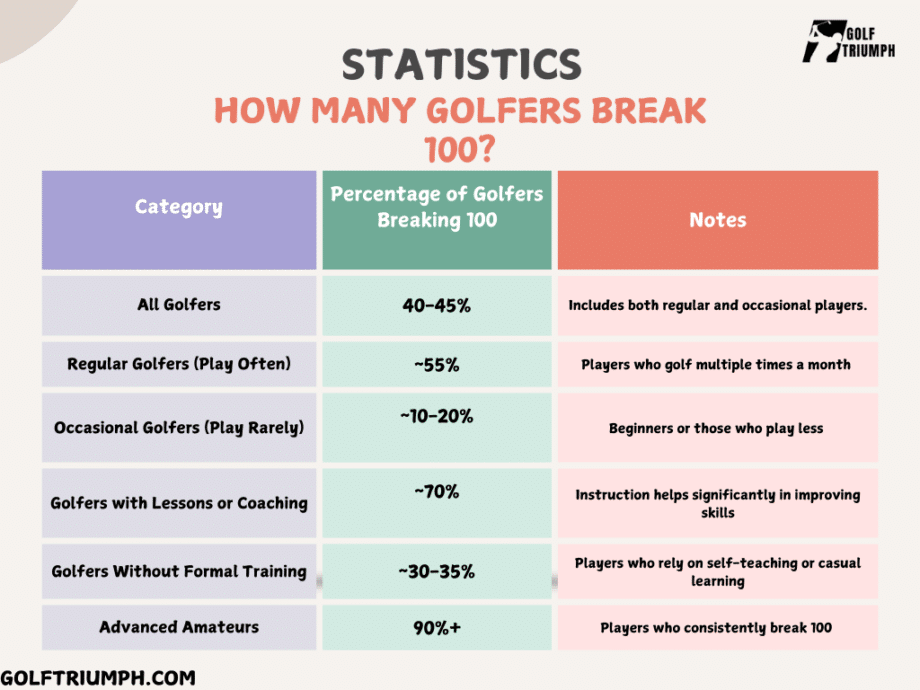
As a benchmark, breaking 100 strokes over the course of 18 holes is often perceived as a rite of passage for amateur golfers. It distinguishes the beginner from the competent and offers an initial glimpse into the realm of proficient golfing. Yet, the actual percentage of golfers who achieve this feat can be surprising. Various studies and aggregations suggest that roughly 30% of all golfers successfully shoot below 100 on a regulation course. While this might seem relatively modest, it also reflects the complexities inherent in mastering a sport that so keenly intertwines skill, strategy, and psychological resilience.
So why does the emphasis on breaking 100 resonate deeply within the golfing community? To answer this question, it’s essential to evaluate the factors that influence a golfer’s ability to reach this milestone, as well as the psychological and emotional implications tied to it. The journey through the golfing landscape is fraught with challenges, and understanding these hurdles can illuminate why breaking 100 is such a revered goal.
The Complexity of Golfing Skills
Golf is not merely a test of physical prowess; it requires a refined amalgamation of technique, mental acuity, and strategic thinking. Mastering the fundamentals—grip, stance, swing path, and putting techniques—forms the foundation upon which strong performance rests. Yet, nearly every golfer grapples with the variables that can affect these skills, including weather conditions, course difficulty, and personal health on a given day.
Furthermore, the sport demands a unique blend of precision and power. While some players may excel at driving long distances from the tee, they may falter when it comes to the finesse required for short game success. This duality makes breaking the 100-stroke barrier not just a matter of brute force but also of comprehensive skill acquisition across various aspects of the game. The significant number of golfers who struggle to consolidate these skill sets contributes to the statistic—it’s a reflection of the multifaceted nature of the sport itself.
The Psychological Aspects of Golf
A substantial component of golfing proficiency resides in the psychological realm. Golf can be an arduous mental game, rife with pressure and introspection. The very act of striving to break 100 often engenders heightened levels of anxiety, which can manifest in various forms on the course. For this reason, mental fortitude becomes as crucial as technical skills. The fear of failure can inhibit a player’s ability to perform in critical moments, often resulting in erratic performances when attempting to achieve this important benchmark.
Moreover, the social aspect of golf contributes to the pressure that players feel when they aim to shoot under 100. As most golf courses are communal spaces, the implicit judgment from peers and the desire to impress can amplify stress levels. Many golfers fixate on numerical outcomes in comparison to others, which can detract from the enjoyment of the game. This dilemma highlights a broader theme around self-perception and external validation that permeates even the most seasoned enthusiasts.
Golfing Demographics and Participation Rates
An examination of who plays golf can provide further insight into breaking 100. The average golfer is typically an older demographic, often male, with a proclivity for leisure—attributes that do not inherently facilitate the high-performance training seen in other sports. As a predominantly recreational activity, the commitment necessary to refine skills to the level of shooting under 100 varies broadly among the millions who pick up clubs each year. Consequently, while some players invest in lessons, practice sessions, and equipment upgrades, others may treat golf more casually, contributing to differing results across the board.
Additionally, participation rates in golf have fluctuated over the years. The advent of technology, such as simulators and video analysis, has transformed the landscape, enabling players to hone their skills in more controlled environments. However, despite technological advancements, a golfer’s ultimate success still hinges on that age-old quest for patience and persistence—the virtues essential for true progression in the game.
The Significance of Breaking 100
Ultimately, breaking 100 holds significance far beyond a simple scorecard entry. It symbolizes achievement, progress, and ultimately the joy found in self-improvement. While only about 30% of golfers reach this mark, the journey to that accomplishment can be enlightening and transformative. It acts as a fulcrum around which additional aspirations revolve, paving the way for further targets, such as breaking 90 or even aspiring to a single-digit handicap.
In conclusion, delving into the question of what percentage of golfers break 100 encapsulates a tapestry woven from various threads—skill set intricacies, mental hurdles, demographic realities, and the profound sense of achievement that accompanies this landmark. For many, the quest itself is as meaningful as the score, affirming golf’s status as a lifelong pursuit filled with both challenges and rewards. As every golfer ultimately learns, it’s not merely the numbers that count; it’s the journey, the experience, and the personal evolution that define their engagement with the game.








Leave a Comment