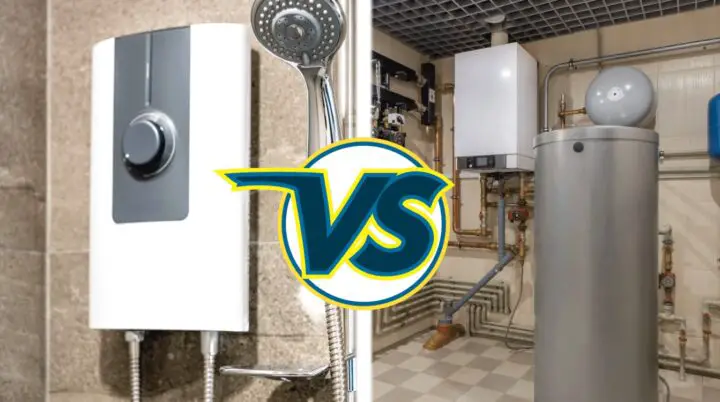
In the realm of household appliances, two entities often emerge in discussions about comfort and efficiency: the boiler and the water heater. At first glance, one might perceive these devices as mere tools for delivering hot water or heating spaces. However, upon further examination, one discovers a fascinating dichotomy between these two systems. This article explores their distinct functionalities, applications, and the underlying reasons for their significance in our daily lives. A deeper understanding reveals that they are not only functional components but also pivotal elements that cater to human well-being and convenience.
1. Definitions and Core Functions
A boiler is a sophisticated apparatus that heats water or other fluids, primarily for space heating or generating steam. This steam is often utilized to power various systems, particularly in industrial settings. Conversely, a water heater, typically a simpler appliance, is designed primarily for providing hot water for domestic use, such as bathing, cooking, and cleaning. Understanding these definitions offers clarity on the nuances of their roles and the contexts in which they thrive.
2. Types of Boilers and Water Heaters
The landscape of heating devices is populated by various models, each tailored to specific needs. Boilers come in several types, including:
- Combi Boilers: These multifunctional units provide both heating and hot water without requiring a separate tank, thus optimizing space.
- System Boilers: With a built-in water storage cylinder, these are ideal for homes with higher hot water demands.
- Conventional Boilers: These traditional systems necessitate a separate hot water tank, typically suited for larger residences.
Water heaters also present an array of options, such as:
- Tankless Water Heaters: These compact units heat water on demand, eradicating standby heat loss associated with traditional tanks.
- Storage Water Heaters: Featuring a reservoir for heated water, these models are common in many households.
- Heat Pump Water Heaters: Utilizing electricity to move heat from one place to another, these are incredibly energy-efficient.
3. Operational Mechanisms
Understanding how boilers and water heaters operate provides insight into their efficiencies. Boilers utilize a heat exchange system, often burning natural gas or oil to produce heat. This heat is transferred to water contained within a closed vessel, converting it into steam or simply raising its temperature. This system can be complex, but it yields effective results for both heating and industrial applications.
Water heaters, on the other hand, are generally more straightforward in their operation. Conventional tank systems heat a volume of water, maintaining it at a preset temperature until it is needed. Tankless models, however, represent a technological evolution, heating water only as it flows through the system. This efficiency often brings about significant energy savings, a topic that resonates deeply with environmentally conscious consumers.
4. Applications and Environments
Both systems serve distinct environments and functions. Boilers are often integral components in larger infrastructures, such as residential buildings, commercial facilities, and industrial plants. Their ability to generate steam makes them indispensable in manufacturing, healthcare, and even in some power generation settings.
Water heaters, while ubiquitous in homes, have seen vast technological advancements. They cater predominantly to residential needs but increasingly find applications in commercial settings as well. Their role in facilitating daily activities—showers, kitchen tasks, and cleaning—underscores their importance in elevating quality of life.
5. Energy Efficiency Considerations
Energy consumption and efficiency matter significantly in the contemporary context. Boilers often come equipped with energy-efficient features, such as modulating burners and advanced insulation. These enhancements can drastically reduce operational costs and carbon footprints, aligning with modern sustainability goals.
Water heaters, particularly tankless and heat pump models, shine in this regard as well. They represent a shift toward greener technologies, harnessing energy more efficiently and employing environmentally friendly refrigerants. The choice between the two often hinges on specific needs, including space constraints and hot water usage patterns.
6. Common Misconceptions
Amidst the intricate discussions surrounding boilers and water heaters, misconceptions can abound. A prevalent myth is that these devices are interchangeable, when, in reality, they each serve specialized purposes. Additionally, the belief that boilers are only useful in cold climates overlooks their importance in various industrial applications and steam generation.
7. The Psychological and Emotional Dimensions
Interestingly, the fascination with these devices transcends their mere functionalities. The presence of reliable heating and hot water systems provides psychological comfort, especially during harsh winters or in times of scarcity. The warmth of a heated home or the comfort of a hot shower can inspire feelings of security and solace. This emotional connection underscores a profound appreciation for these technological marvels, elevating them beyond mere appliances.
In conclusion, the juxtaposition of boilers and water heaters invites us to delve into a world where technology meets our daily lives. Each device serves a unique purpose, contributing to the fabric of our environments while reflecting deeper needs for comfort and efficiency. Understanding these systems fosters an enhanced appreciation for the roles they play, turning the mundane into something worthy of fascination. Whether in the home or industry, the continual evolution of these technologies holds the promise of improved performance and sustainability. As we navigate the complexities of modern living, we find that even the simplest comforts can have profound impacts on our well-being.









Leave a Comment