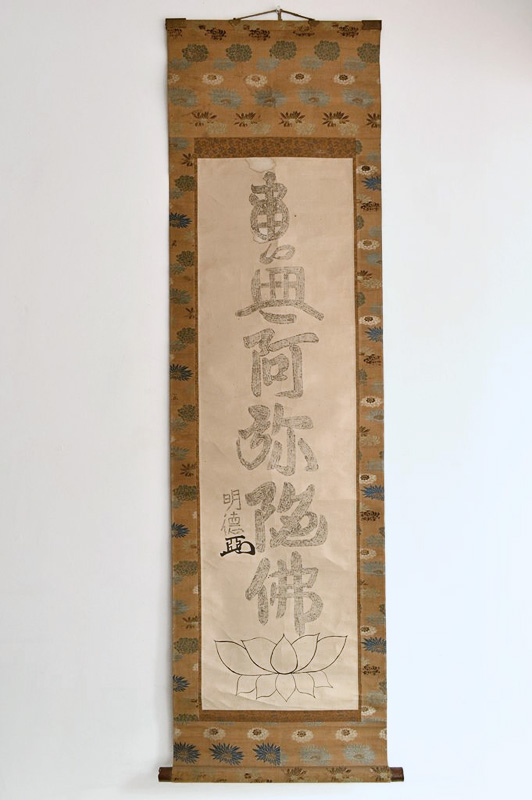
In the rich tapestry of Buddhist practice, the phrase “Namu Amida Butsu” holds profound significance. It is a pivotal declaration that resonates deeply within the hearts of adherents in the Pure Land sect of Buddhism. Essentially, it encapsulates a devotion to Amitābha Buddha, a celestial buddha associated with infinite compassion and wisdom. As we delve into the multiple facets of this impactful mantra, we’ll unwrap its linguistic roots, historical context, spiritual import, and the broader implications it holds for practitioners today.
To embark on this exploration, it is paramount to comprehend the linguistic composition of the phrase “Namu Amida Butsu.” The term “Namu” derives from the Sanskrit word “namas,” which translates to “to take refuge” or “to honor.” This exclamation signifies a surrendering of the self, placing one’s entirety in the embrace of the divine. “Amida,” or “Amitābha,” translates to “Infinite Light” or “Infinite Life,” symbolizing the boundless nature of compassion and enlightenment. Finally, “Butsu” signifies “Buddha,” encapsulating the essence of the enlightened one. Thus, the phrase can be interpreted as “I take refuge in Amitābha Buddha.” This simple yet profound acknowledgment is not merely a rhetorical expression; it embodies a cosmic relationship between the practitioner and the divine.
Historically, the popularity of “Namu Amida Butsu” burgeoned during Japan’s Heian period, particularly within the Jōdo-shū (Pure Land) and Jōdo Shinshū schools. These sects emerged as responses to the prevailing religious and philosophical milieu, where individuals yearned for a direct and accessible path to salvation. Amidst societal tumult, the simplicity and sincerity of this mantra provided a beacon of hope. It emphasizes that salvation lies not in ascetic practices but through heartfelt utterance and faith in Amida Buddha, who promises rebirth in the Pure Land— a serene realm free from suffering.
The mantra further embodies a radical democratization of enlightenment. In contrast to the complex rituals and scholarly pursuits favored by other Buddhist traditions, Pure Land Buddhism extends a welcome embrace to all, irrespective of status, intellect, or capability. This inclusivity fosters a sense of belonging, enabling practitioners to seek solace in their faith without the fear of inadequacy clouding their spiritual aspirations.
When delving into the spiritual dimensions of “Namu Amida Butsu,” one quickly recognizes its role as a tool for mindfulness and meditation. Recitation of the mantra acts as a meditative practice, centering the mind and nurturing a profound connection with Amida. This repetition transcends verbal articulation, morphing into a mantra of deep resonance that can evoke serene states of consciousness. In this context, the practitioner contemplates the attributes of Amitābha— his unerring compassion, wisdom, and the promise of a fruitful rebirth. Such contemplative practices pave the way for inner peace, fortifying the heart against the vicissitudes of life.
The mantra is also woven into various communal and ritualistic frameworks, reflecting its communal potency. Chanting “Namu Amida Butsu” reverberates through temples, where congregational practices create a collective atmosphere of devotion. Together, participants engage in a harmonious exchange of spiritual energy that reinforces community bonds. This sense of solidarity illustrates the transformative power of shared faith and highlights how communal reinforcement can bolster individual spiritual journeys.
Moreover, the essence of “Namu Amida Butsu” expands beyond doctrinal confines. In our contemporary society, where existential dissonance often reigns, the mantra serves as an anchor. It invites individuals to relinquish burdens and embrace a more profound sense of acceptance and trust in the workings of life. The tenets embedded in this phrase encourage seekers to cultivate a mindset rooted in compassion—both toward oneself and others. This perspective can permeate daily interactions, nurturing an environment of kindness and empathy, thereby actualizing a more harmonious existence.
While elaborating on the extensive implications of “Namu Amida Butsu,” it is vital to recognize the broader philosophical inquiries it inspires. Questions of destiny, free will, and the interconnectedness of all beings emerge prominently within this discourse. Engaging with these inquiries allows individuals to navigate their spiritual inclinations while examining the broader tapestry of human experiences. This fluid exploration fosters intellectual curiosity and invites practitioners into a deeper relationship with both their faith and the world around them.
In summation, “Namu Amida Butsu” epitomizes a deeply enriching spiritual practice that intertwines linguistic meaning, historical context, and contemporary relevance. Anchored in the traditions of Pure Land Buddhism, it serves as a lighthouse for seekers amidst the turbulent seas of life. By embracing its essence, individuals can cultivate a sense of belonging, nurture compassion, and foster mindfulness in their daily lives. As practitioners gravitate towards this mantra, they embark on a journey not solely toward spiritual fulfillment but also toward a communal ethos of empathy and understanding, paving the way for a more profound connection—with oneself, others, and the universe at large. Through this mantra, the story of Amitābha Buddha continues to resonate, inspiring generations on their quest for enlightenment.











Leave a Comment