The period stretching from 70 AD to 1070 AD is a fascinating epoch marked by significant socio-political transformations, cultural advancements, and the rise and fall of powerful civilizations. The aftermath of the Roman Empire’s zenith and the slow march towards the medieval period reflects a tapestry woven with intrigue and complexity. This article serves as a meticulous exploration of critical developments during this remarkable span, focusing on their implications and the enduring fascination they evoke.
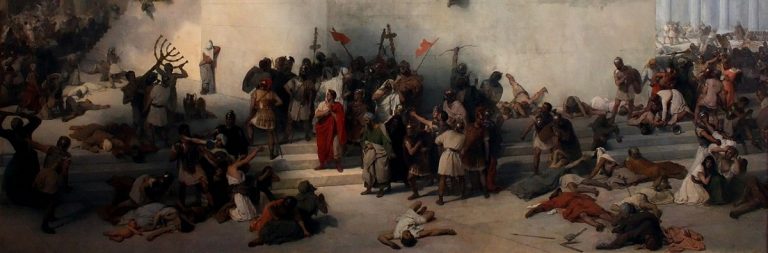
As the waning light of the Roman Empire began to dissipate, the world was undeniably in flux. The destruction of the Second Temple in Jerusalem in 70 AD not only signified a pivotal moment in Jewish history but also underscored a broader narrative of upheaval. The Roman conquests had far-reaching implications, influencing not only governmental structures but also the philosophical and theological landscapes in which cultures interacted. This section demarcates the salient events and ideologies that emerged in these early years.
Initially, the aftermath of the Jewish Revolt left a vacuum of authority, giving rise to numerous sects and messianic claims within Judaism. The development of Rabbinic Judaism, characterized by the codification of Jewish law and tales of the Talmud, marked a renaissance of Jewish intellectualism. This process was captivated by the need to preserve identity amid adversity, hinting at humanity’s intrinsic desire for connection to heritage and belief systems.
Meanwhile, on the continental stage, the Roman Empire, although reaching the zenith of its territorial extent, began experiencing signs of internal decay marked by political instability and economic struggles. The socio-political hierarchy was increasingly challenged by external forces, most notably the Germanic tribes and the Sassanian Empire in the East. This constant clash stimulated a cultural syncretism that enriched both Roman and barbarian communities, resulting in a fascinating juxtaposition of traditions and lifestyles.
Transitioning into the 3rd century, the rise of the soldier emperors instantiated a paradigm shift. The emphasis on military prowess and the expediency of power not only altered leadership dynamics but also cultivated a brutish loyalty predicated on allegiance rather than legitimate governance. This period laid the groundwork for the eventual fragmentation and decentralization of the empire, which would invite additional questions about authority and legitimacy in governance.
Fast forward to the mid-5th century, the diminished Roman grip over Western territories paved the way for the emergence of the Byzantine Empire. Often regarded as the bastion of classical knowledge and the arts, Constantinople’s ascendance heralded an era wherein Greek and Roman intellectual legacies were fervently preserved. This shift toward the East tells a compelling story of resilience and transformation, highlighting humanity’s ability to adapt amidst disintegration.
The establishment of the Eastern Orthodox Church during these transformative years exemplified the intertwining of religion and governance. The substantial role of ecclesiastical authority in state matters initiated a phenomenon of governance through divine right that would resonate throughout European history. This dynamic illuminates humanity’s perpetual quest for meaning, as well as the subtle interplay between spiritual belief and political power.
As the Middle Ages unfolded, the year 800 AD marked a crucial evolutionary step, with Charlemagne’s coronation by Pope Leo III. This event catalyzed a reawakening of cultural achievements and intellectual queries across Western Europe, commencing the Carolingian Renaissance. This brief revival represented humanity’s collective yearning for enlightenment and understanding, showing that tumultuous upheavals often lead to sparks of creative brilliance.
In parallel, the Islamic Golden Age emerged as a profound epoch characterized by unparalleled advancements in science, mathematics, medicine, and philosophy. Scholars such as Al-Khwarizmi and Avicenna not only challenged existing paradigms but also unified knowledge from various cultures—an enduring testament to humanity’s propensity for collaboration across divides. The marked contrast between regions during this period underscores the multifaceted nature of human endeavor and the quest for knowledge.
The period also bore witness to Viking expeditions. As Norsemen embarked across vast oceans, they established trade routes from North America to Byzantium. These ventures not only echoed the tenacity of the human spirit in exploration but also facilitated cultural exchanges that enriched societies on multiple continents. The Viking impact on societal construction and eventual assimilation into European cultures speaks volumes about the interconnectedness of humanity.
By the time one reaches 1070 AD, the landscape had irrevocably transformed. The schism between the Eastern and Western Christian churches had begun solidifying, laying the groundwork for centuries of conflict and dialogue. Moreover, the alacrity of various sects and reforms initiated a tromp through theological discourse, revealing humanity’s intricate and often tumultuous relationship with spirituality. Each stride—whether toward enlightenment or dogmatism—reveals a deeper yearning for universality and belonging.
In conclusion, the years between 70 AD and 1070 AD are emblematic of humanity’s vast tapestry, woven from threads of conflict, resilience, and intellectual curiosity. The ebb and flow of power, culture, and belief throughout these centuries provide insight into a historical continuum that beckons continual exploration. This journey through an era rife with transformation offers not only revelations about the past but also profound implications for our understanding of human nature and social evolution. In tracing the contours of this epoch, one cannot help but be captivated by the timeless narrative of resilience, adaptation, and the relentless pursuit of knowledge that has defined civilization across the ages.









Leave a Comment