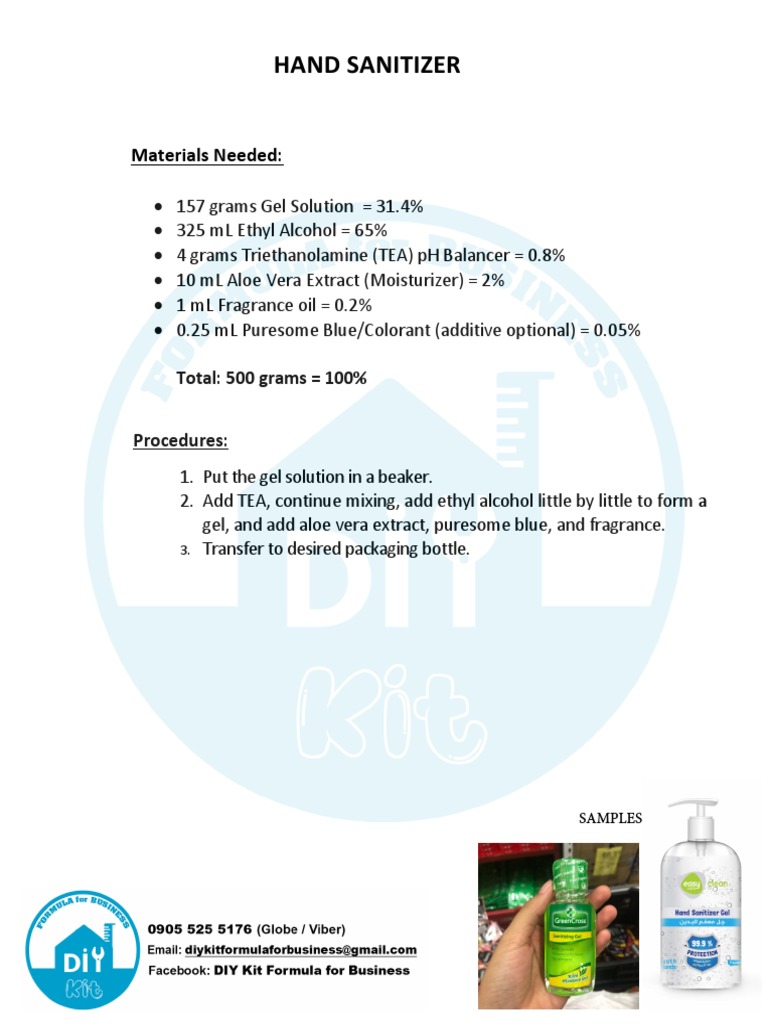
In the world we inhabit today, maintaining stringent hygiene practices is akin to wielding a shield against invisible threats. Have you ever pondered the necessity of hand sanitizer in our daily lives? It’s the unsung hero that rescues us from germs lurking on various surfaces. However, with supply chains fluctuating, crafting your own hand sanitizer at home could be an exciting venture. Today, let us embark on a delightful exploration of how to make hand sanitizer using vegetable glycerin (VG) and isopropyl alcohol (ISO). With the ever-evolving landscape of health protocols, this DIY project presents a unique challenge—creating a highly effective formula while ensuring a pleasing texture and scent.
Before we delve into the engaging process, we must first understand the primary ingredients: vegetable glycerin and isopropyl alcohol. The former is derived from plant oils and serves as a humectant, which means it attracts moisture, helping to keep your hands hydrated. Conversely, isopropyl alcohol is the powerhouse ingredient recognized for its bacteria-fighting prowess. With understanding comes confidence; let’s unravel the process.
1. Gather Your Ingredients and Tools
- Isopropyl Alcohol (at least 60%): This is your main germ-killing component. Choose a concentration of 70% for optimal disinfection.
- Vegetable Glycerin: This will provide moisture to counteract the drying effects of alcohol.
- Essential Oils (optional): Select a fragrance—such as lavender or tea tree—to infuse your sanitizer with a lovely scent.
- Mixing Bowl and Whisk: A sturdy bowl and utensil to combine your ingredients.
- Measuring Cups: Precision is key, so ensure you have your measuring implements at the ready.
- Funnel: This handy tool will make transferring your mixture into containers a breeze.
- Container for Storage: Opt for a bottle with a secure cap, perhaps one with a pump for easy dispensing.
2. Measuring Proportions
A practical formulation comprises roughly two parts isopropyl alcohol to one part vegetable glycerin. To produce an effective batch yielding about 100 milliliters of hand sanitizer, measure 66 milliliters of isopropyl alcohol and 33 milliliters of vegetable glycerin. The essential oils can be added in drops, allowing you to personalize the scent to your preference.
3. The Mixing Process
In your mixing bowl, begin by pouring in the measured isopropyl alcohol. Engage the whisk to aerate the liquid slightly. Subsequently, introduce the vegetable glycerin, continuing to whisk until the two ingredients amalgamate seamlessly. The glycerin, with its thicker consistency, will take some extra coaxing, but this is where your determination shines through! If your chosen essential oils are part of the concoction, add them now and mix well.
Embrace the sensory delight of blending these ingredients—the crisp scent of alcohol, mingled with the sweet, earthy notes of glycerin. It’s a phenomenon only a few get to experience in their culinary attempts. This elixir, laden with purpose, will now await its final form.
4. Bottling Your Hand Sanitizer
With your mixture thoroughly combined, the next step is to transfer the solution into your designated bottle. Utilize the funnel to avoid spillage, a common faux pas in this endeavor. Once filled, securely cap the bottle, ensuring a tight seal that preserves your concoction’s efficacy and aroma.
5. Application Tips and Considerations
Crafting your hand sanitizer is but the beginning. Always remember, the application must occur on clean, dry hands. Dispense an adequate amount—approximately the size of a quarter—into one palm. Rub your hands together, making certain to cover all surfaces, including between fingers and beneath fingernails, for at least 20 seconds. This is the golden rule—the longer it sits on your hands, the more effective it will be.
6. Storage Recommendations
Store your hand sanitizer in a cool, dark location away from direct sunlight. This ensures the longevity of its potency and fragrance. Regularly check the texture and smell, discarding any mixtures that appear discolored or have developed an odd smell. After all, your health, and the health of those around you, deserves the utmost care.
Conclusion
In a world that often seems chaotic, the ability to create your own hand sanitizer fosters a sense of control amidst uncertainty. Now, you can soothe your hands with a gentle, aromatic blend while effectively neutralizing harmful pathogens. Have you felt the advancement of your skills while crafting this liquid armor? This exploration invites you to take on the challenge of DIY hygiene, placing the power in your hands—or rather, in your sanitizer. Ultimately, the journey you embark upon while concocting your own hand sanitizer could serve as a delightful experiment that not only enhances your hygiene practices but also enriches your knowledge of ingredients and their properties. So, are you ready to take the plunge into this fun and practical project?






Leave a Comment