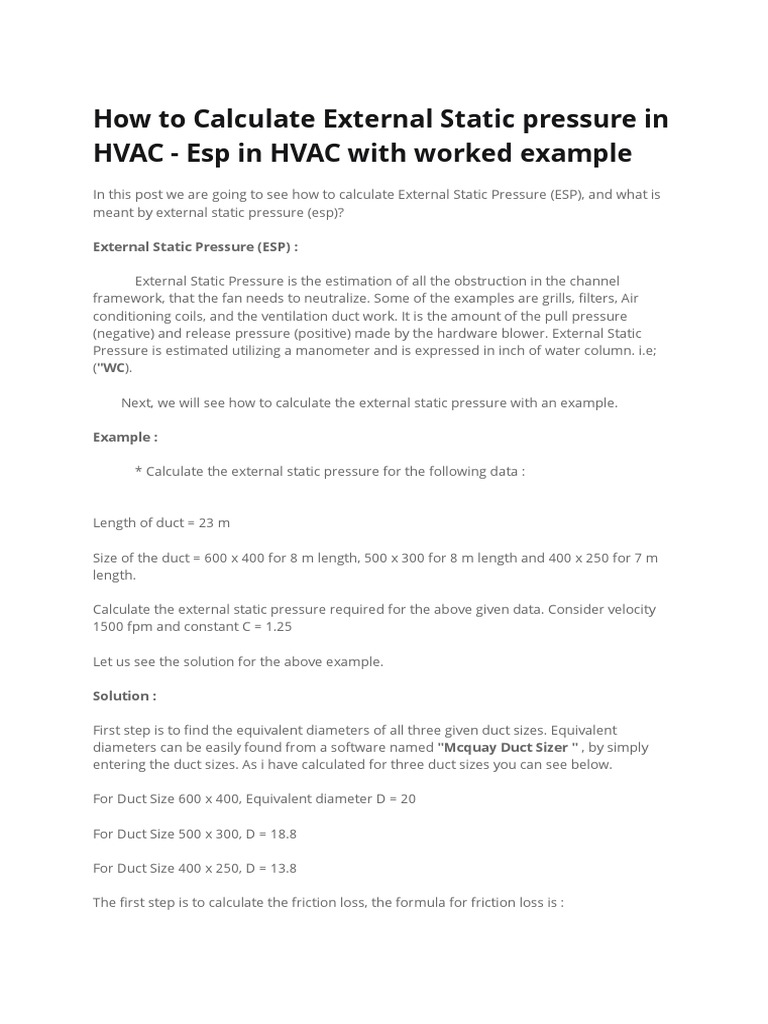
Understanding External Static Pressure: An Essential Guide
Imagine standing at the edge of a vast ocean, where the relentless waves continuously press against the shore. In this scenario, the waves represent static pressure in the world of fluid dynamics, while the shore symbolizes the external environment with which our systems interact. External static pressure is a crucial concept in various fields, especially in the realms of HVAC (Heating, Ventilation, and Air Conditioning) and aerodynamics. Understanding this phenomenon is akin to mastering the ebb and flow of tides; it requires a nuanced understanding of how pressure intricately affects systems designed to move fluids, be they air or liquid.
1. Defining External Static Pressure
External static pressure refers to the pressure exerted by the surrounding environment on a system. It acts in contrast to internal pressure, which is created by the pressure inside a duct, pipe, or any other medium. Much like cookies baking in an oven that expands due to heat, the pressure inside a system can fluctuate, but it is the external static pressure that remains a steady force influencing these changes. Through this lens, one can perceive external static pressure as an unyielding player in the theater of fluid mechanics, influencing the performance of every element involved.
2. The Importance of External Static Pressure
Why do professionals in HVAC and aerodynamics devote time to studying external static pressure? This pressure significantly impacts how systems operate and perform. Here are a few reasons emphasizing its importance:
- Efficiency: A system’s efficiency can often correlate with how well it can manage external static pressure. Overcoming excessive external pressure can lead to energy wastage, much akin to fighting against a strong adversary in a tug-of-war.
- Comfort: In HVAC systems, managing external static pressure is essential for comfort. Balancing the internal climate demands a thorough understanding of the external forces at play.
- System Longevity: Operating without regard for external static pressure can lead to wear and tear on machinery, much like an athlete who neglects proper training and pushes beyond limits. The inevitable breakdown can occur when systems are constantly at odds with external demands.
3. How External Static Pressure is Measured
Measuring external static pressure involves using tools such as manometers, pressure transducers, or gauges. These instruments decipher the invisible forces acting upon systems. The measurement allows professionals to calculate the pressure difference between inside the duct or chamber and the external atmosphere. Just as a sailor reads the winds to navigate the open seas, understanding static pressure readings allows engineers to steer their designs toward optimal performance.
4. Factors Influencing External Static Pressure
Several factors affect external static pressure, notably:
- Environmental Conditions: Weather elements, such as wind speed and direction, contribute to external static pressure variance. These conditions can be compared to unpredictable tides that can either aid or hinder navigation.
- Building Design: The architecture of the building influences airflow patterns and, in turn, affects the static pressure experienced by HVAC systems. Complex designs can create eddies and vortices that complicate pressure dynamics.
- Duct Design: The size and layout of ductwork greatly impact the external static pressure exerted on a system. Properly designed duct systems can maintain an equilibrium like a well-planned waterway, while poorly designed ducts create turbulence and obstruction.
5. Impacts of External Static Pressure on HVAC Systems
In the HVAC sector, external static pressure can play the role of a quiet partner, whose influence can be felt in subtle, yet significant, ways:
- Airflow Effectiveness: Insufficient airflow caused by high external static pressure can lead to discomfort in residential spaces. The system’s inability to provide adequate air circulation is analogous to trying to fill a tire with a slow leak—the result is an underperforming system.
- Energy Consumption: High external static pressure makes equipment work harder, directly affecting energy bills. Like a marathon runner who struggles against a headwind, systems burdened by excessive external pressure consume more energy.
- Uneven Temperatures: The ability of HVAC systems to maintain consistent temperatures can be compromised. This inconsistency can be likened to a pendulum that swings too far in one direction, leading to discomfort and dissatisfaction.
6. Strategies for Managing External Static Pressure
To optimize performance and mitigate challenges associated with external static pressure, several strategies can be employed:
- System Design Optimization: Carefully planning duct layouts and selecting appropriate sizes can mitigate adverse effects, promoting an efficient flow much like a well-directed river channel.
- Regular Maintenance: Regular checks can prevent pressure complications by catching issues early, akin to a gardener pruning overgrown foliage, ensuring the health of the entire ecosystem.
- Balancing Techniques: Implementing balancing valves can adjust internal pressures to counteract external forces, maintaining equilibrium within the system.
Conclusion: Navigating the Waters of External Static Pressure
External static pressure is an omnipresent force that significantly impacts various systems and environments, particularly in HVAC applications and fluid dynamics. Through careful measurements and a thorough understanding of its implications, engineers and technicians can navigate the complexities associated with this phenomenon. Whether it be optimizing efficiency or ensuring comfort, mastering external static pressure paves the way for innovation and success in system design. By recognizing the nuances and intricacies surrounding this concept, professionals can harness the energy of external forces, turning potential adversaries into allies on their journey toward superior performance.









Leave a Comment