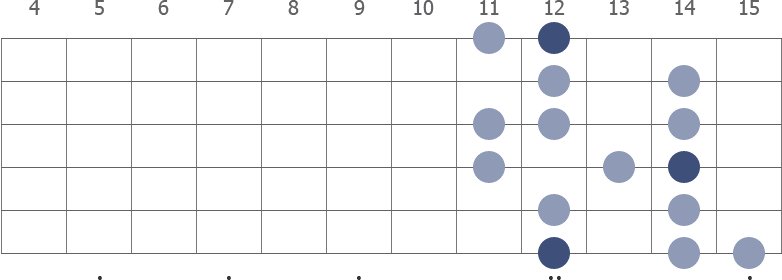
The E melodic minor scale stands as a resplendent tapestry woven from the threads of emotion and intrigue. Much like a somber yet captivating twilight that morphs into deep night, this scale embodies the delicate juxtaposition between melancholy and hope. Known for its distinctive sound, the E melodic minor scale transports musicians and listeners alike through a myriad of sonic landscapes, revealing an expansive emotional palette along the way. To appreciate this scale, one must delve into its structure, its unique characteristics, and its myriad applications across different genres of music.
The E melodic minor scale consists of the following notes: E, F#, G, A, B, C#, and D#. Unlike its natural minor counterpart, the melodic minor scale diverges from tradition, ascending with a raised sixth and seventh degree. This elevating feature renders it a fluid and dynamic scale, one that resembles the growth of a sapling reaching towards the light after the shadows of night. However, upon its descent, the E melodic minor scale reverts to the natural minor, adhering to the notes E, F#, G, A, B, C, and D, thereby creating a striking contrast. This duality is where the scale finds its unique appeal, oscillating between the uplifting and the somber, like a pendulum of sound that encapsulates the complexity of human emotion.
Understanding the construction of the E melodic minor scale can be likened to mastering a fine recipe. The scale comprises a combination of whole and half steps: Whole (W), Whole (W), Half (H), Whole (W), Whole (W), Whole (W), Half (H). Following this sequence results in the melodic ascendancy provided by the raised sixth and seventh notes when moving upward. Spanning an octave, the E melodic minor is structured as follows: E (root), F# (major second), G (minor third), A (perfect fourth), B (perfect fifth), C# (major sixth), and D# (major seventh). On descent, we embrace the day’s close, casting the C# and D# back into shadow, and returning to E, F#, G, A, B, C, and D. This fluctuation in structure gives musicians abundant opportunities for artistic expression.
The inherent characteristics of the E melodic minor scale reach far beyond mere theoretical frameworks; they shift into the realm of artistry and inspiration. Primarily utilized in both classical and jazz compositions, this scale serves as a bridge between genres, facilitating an air of sophistication and grace. Classical composers such as J.S. Bach utilized the melodic minor scale, imbuing their works with poignant depth and resounding emotional resonance. Imagine a symphony enveloping its audience, each note a brushstroke painting an ethereal landscape on the canvas of human experience.
Moreover, in jazz, the E melodic minor scale manifests itself as a treasure trove for improvisation. Jazz musicians harness its distinctive tonal qualities to create melodies that are not only emotive but also intricate in structure. The raised sixth and seventh degrees invite the use of sophisticated chord progressions, laying down a foundation upon which musicians can flourish. Picture a nimble dancer, effortlessly weaving between rhythm and melody, capturing the imagination of onlookers, as the music ebbs and flows, unfurling within the space of a smoky club.
As one immerses themselves in the exploration of the E melodic minor scale, it becomes vital to recognize and appreciate its applications in various compositional techniques. Harmony plays an essential role, as the E melodic minor scale lends itself to a myriad of chord voicings. Commonly derived chords include the tonic E minor (Em), the dominantly raised seventh chord B7, the major sixth chord C#maj6, and the minor chord variations that enhance the scale’s lush sound. Harmonizing with these chords allows musicians to build rich textures that resonate across genres—from classical masterpieces to contemporary jazz standards, creating a unique auditory experience that ignites the senses.
Furthermore, the E melodic minor scale is captivatingly versatile, presenting itself in various time signatures and rhythmic schemes. Like an artist mixing colors on a palette, musicians can experiment with syncopation, polyrhythms, or even tempo changes, all while preserving the scale’s inherent elegance. The opportunities for exploration are endless; whether in a haunting ballad or an energetic fusion piece, the E melodic minor scale’s malleability enriches the musical landscape.
As one delves deeper into the fabric of the E melodic minor scale, it remains essential to continue nurturing one’s creativity. Consider the act of improvisation: it’s akin to a spontaneous conversation, brimming with possibilities, where musicians engage in a dialect of sound to communicate emotions, ideas, and stories. Embracing the E melodic minor scale provides a valuable foundation for developing one’s voice, creating a unique fusion of personal expression and musical language.
In summary, the E melodic minor scale’s intricate structure and emotive potential invite musicians on a captivating journey. It serves as both a technical resource and an artistic muse, allowing for profound expression within every note. As musicians traverse this scale’s melodic paths—welcoming its heartache, beauty, and excitement—they ultimately discover the sheer magic that lies in the realm of sound. It is here, amidst the chorus of notes, that one can realize the profound connection between music and the myriad emotions it evokes, resonating through the very fabric of our existence.











Leave a Comment