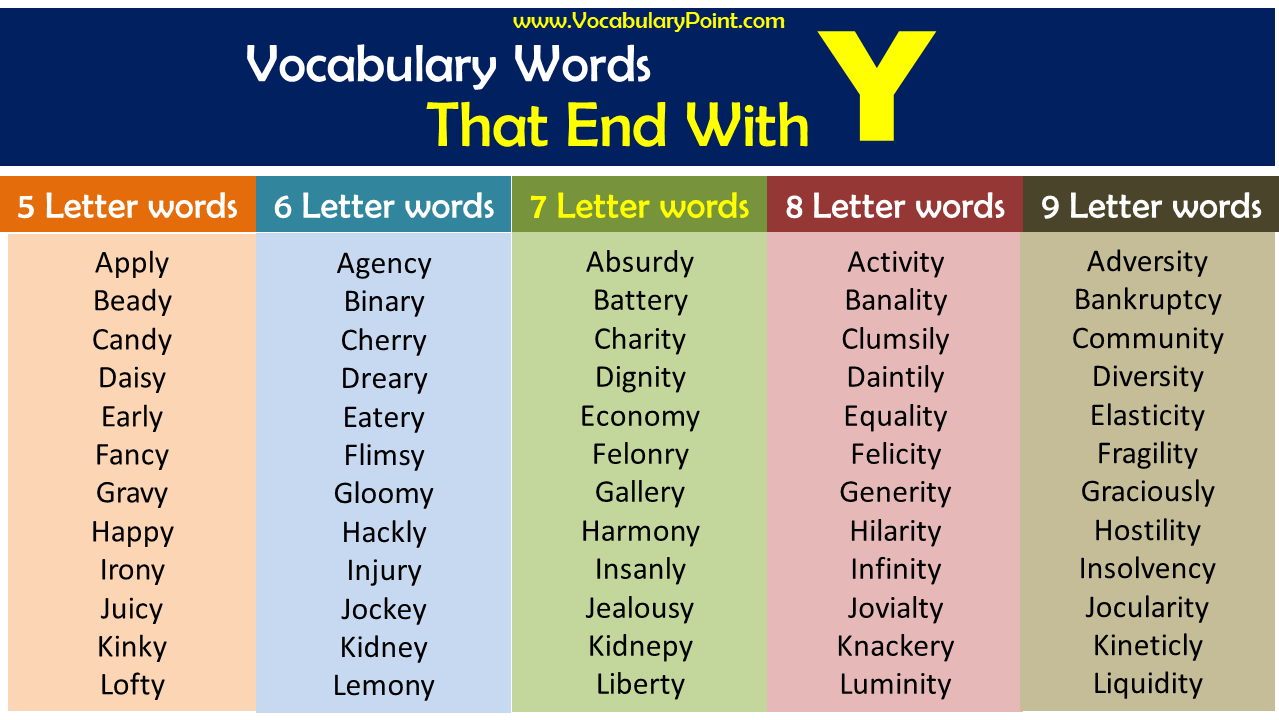
Language, in its intricate tapestry, often beckons our attention to seemingly trivial details. One such detail is the presence of the letter “Y” at the end of words. This peculiar linguistic feature can provoke curiosity and inspire a deeper contemplation regarding its usage, significance, and the myriad emotions it evokes. Herein, we delve into the multifaceted role of “Y” at the end of various terms, exploring its phonetic properties, grammatical functions, and the cultural nuances that bring forth an irresistible allure.
1. The Phonetic Charm of “Y”
The letter “Y” often serves a dual function: as a consonant and as a vowel. When it appears at the end of words, it most commonly assumes the latter role, producing a soft vowel sound, akin to the sound in “happy.” This phonetic versatility provides a lyrical quality to language, enabling an array of emotional expressions. Contrarily, the hard consonantal sound of “Y” can be found at the beginning or middle of words, such as in “yellow” or “play.” The ambivalence of “Y” between consonant and vowel creates a unique auditory experience, eliciting an instinctive response from listeners.
2. Morphological Significance
The presence of “Y” at the end of words often denotes specific morphological attributes. For instance, it frequently indicates diminutive forms or adjectives in certain contexts. Words like “Johnny” or “mommy” embody an affectionate tone, laced with nostalgia and tender familiarity. The diminutive quality afforded by the “Y” suffix can imbue a sense of warmth, cultivating a connection that transcends mere terminology. Furthermore, adverbs such as “slowly” or “eagerly” demonstrate how this final letter modulates meaning, altering the very essence of the words it decorates.
3. The Allure of Playfulness
Words ending in “Y” often confer a playful or whimsical aura. Consider “silly,” “buzzy,” or “fizzy.” Each of these words evokes not only a physical sensation but also an emotional response. The auditory qualities of these terms can elicit a smile, coaxing lightheartedness in conversation. This whimsicality can be captivating, allowing speakers to engage in a shared moment of levity. In children’s literature, the prevalence of “Y” endings punctuates texts with an infectious charm, enhancing the enjoyment of reading for both children and adults alike.
4. Cultural Connections
Different cultures have ascribed unique meanings and uses to words ending with “Y.” In certain contexts, this letter can be emblematic of youthfulness, as seen in terms like “zesty” or “fancy.” The suffix can create a sense of vibrancy, entwining itself with a culture’s identity and linguistic richness. In English, terms of endearment frequently incorporate “Y,” fostering intimacy and connection in communication (e.g., “sweetie” and “cutie”). As societies evolve, the frequency and flavor of these terms may shift, mirroring cultural dynamics while preserving the tradition of connection through language.
5. The Evolution of English Linguistics
Delving into the historical trajectory of the English language unveils the shifting landscapes of words ending in “Y.” Many of these words derive from Old English and Middle English, reflecting a rich etymological past. As languages morph and adapt over time, the ways in which “Y” is utilized also transform—both reflecting and shaping societal norms. An example of this evolution can be seen in the transition of playful terms into more formal usages, merging the ostensible line between the serious and the lighthearted in discourse.
6. Psychological Implications
The presence of “Y” at the terminus of words can evoke varied psychological responses in both speakers and listeners. This phenomenon is perhaps best illustrated by the concept of ‘neologism,’ where new terms are crafted for the sake of expressing innovative ideas or feelings. The playful connotation of words featuring “Y” invites creativity and open-mindedness, fostering an environment where expression flourishes. This illusion of simplicity constructs complex layers of meaning that enrich the linguistic landscape, enabling individuals to articulate thoughts and emotions that might otherwise remain dormant.
7. The Transformative Potential of Language
Words are not static; rather, they evolve, influenced by cultural, societal, and psychological shifts. As we engage with language, particularly with the whimsically curious placement of “Y,” we observe an embodiment of human creativity and adaptability. Regardless of the examination mode—be it historical, phonetic, or cultural—the fascination with words ending in “Y” remains profound, resonating with our innate desire to connect, express, and explore the very fabric of communication.
In conclusion, the letter “Y” at the end of words serves as a captivating focal point in linguistic studies, connecting phonetics, morphology, and psychology with cultural significance. It is a letter that conjures feelings of familiarity, playfulness, and intimacy—reaching beyond mere pronunciation to encapsulate the essence of human interaction. As we navigate the intricacies of language, an awareness of such details can spark curiosity and appreciation for the ever-evolving tapestry of communication that binds us all. Language is indeed an art, and “Y” at the end of words is a brushstroke that invites us to explore its vibrant canvas.









Leave a Comment