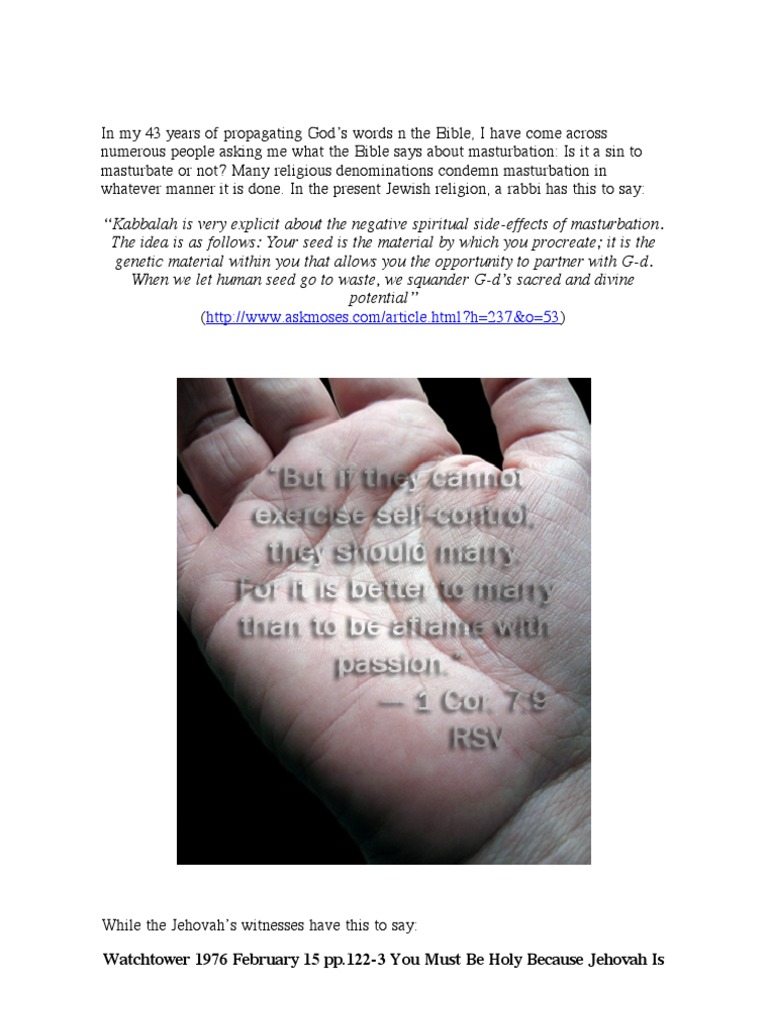
Understanding the complexities of human sexuality is a venture riddled with nuances, particularly when considering practices such as masturbation or “jerking off.” This act, often steeped in cultural, religious, and personal beliefs, invites a multitude of opinions and perspectives. To unravel whether jerking off is deemed a sin, one must delve deep into the interplay of ethics, societal norms, and individual beliefs. This exploration will encompass historical viewpoints, religious interpretations, psychological implications, and societal effects, offering a comprehensive understanding of this contentious subject.
Historical Context of Masturbation
The history of masturbation can be traced back to ancient civilizations, where various cultures held divergent views on the act. In some societies, such as certain tribes in Africa and indigenous peoples in the Americas, masturbation was seen as a natural part of human sexuality, even embraced as a form of self-exploration and pleasure. Conversely, ancient Greek and Roman texts often depicted masturbation with a sense of shame, associating it with weakness or loss of control. As society evolved, so did the perceptions surrounding this intimate act, leading to a convoluted narrative influenced by cultural ethos.
Religious Perspectives
Religions have historically played a monumental role in shaping moral perspectives, particularly regarding sexuality. In Christianity, passages from the Bible are often cited when debating the morality of masturbation. For instance, the story of Onan in the Book of Genesis, wherein he withdrew during intercourse, is frequently interpreted as a condemnation of ejaculation outside the reproductive act. However, interpretations vary widely among denominations. Some Christian sects adopt a more liberal stance, suggesting that masturbation can be a natural expression of sexuality. Similarly, Islam views the act differently across its sects, with some scholars considering it permissible under specific circumstances, while others back a stricter view.
In contrast, many Eastern philosophies, including certain branches of Buddhism and Hinduism, often perceive sexual energy as sacred. In these contexts, the manipulation of sexual energy through practices such as masturbation could be seen as a missed opportunity for spiritual growth and enlightenment. This dichotomy highlights how deeply entrenched religious ideologies can influence perceptions of what constitutes sin.
Psychological Implications
The psychological implications of masturbation extend beyond moral or ethical boundaries. Research suggests that masturbation can serve as a method of stress relief, facilitating physical and mental well-being. It becomes pivotal in exploring one’s sexuality, helping individuals understand their bodies and desires more intimately. Some psychologists argue that guilt surrounding masturbation can lead to detrimental effects on mental health, fostering anxiety and shame rather than fostering a sense of empowerment over one’s body.
Furthermore, the rise of the internet and access to sexual content has reshaped attitudes toward masturbation, especially among younger demographics. It is instrumental in sexual education, particularly for those who may not have access to comprehensive teachings regarding sexual health. This evolution towards understanding masturbation as a facet of sexuality rather than a taboo act can alter the perception of sin associated with it.
Cultural Norms and Societal Views
Contemporary culture plays a significant role in how masturbation is perceived. With the advent of open discourse related to sexual health, there has been a notable shift in societal attitudes. Feminist movements, LGBTQ+ advocacy, and an overarching emphasis on sexual autonomy have contributed to a gradual demystification of masturbation, presenting it as a valid expression of one’s sexuality. Yet, remnants of stigma persist, especially in more conservative circles where traditional values are held tightly.
Social media platforms and online forums provide a breeding ground for shared experiences, challenging preconceived notions about masturbation as sinful or shameful. These discussions encourage individuals to embrace their bodies and sexual desires without fear of moral condemnation, thus fostering an environment where personal exploration is celebrated rather than shunned.
Debating the Concept of Sin
Ultimately, whether jerking off is a sin remains a highly subjective inquiry. It transcends mere religious doctrine or psychological argumentation, touching upon individual beliefs and cultural conditioning. The characterization of an act as sinful is often a reflection of inner convictions, societal norms, and prevailing attitudes rather than an undisputed truth. For some, the act of masturbation signifies empowerment and self-understanding, while for others, it is fraught with guilt and moral conflict.
Finding Personal Reconciliation
To navigate the murky waters of this discussion, individuals must seek personal reconciliation between their internal beliefs and external pressures. Engaging in self-reflection, exploring various viewpoints, and seeking guidance from trusted sources can illuminate the path toward a healthier attitude about one’s sexuality. It becomes vital to assess the roots of one’s beliefs—distinguishing between teachings and personal values—allowing for a more holistic understanding of one’s sexual self.
In conclusion, the question of whether jerking off is a sin is far more intricate than a simple binary answer. It is ensconced in a matrix of historical narratives, religious tenets, psychological insights, and cultural dialogues. As society continues to evolve, so too does the conversation surrounding sexuality, inviting ongoing exploration and open-mindedness regarding such a deeply personal aspect of human life. Ultimately, acknowledging the diverse perspectives surrounding masturbation can lead to greater acceptance, understanding, and autonomy over one’s body and desires.









Leave a Comment