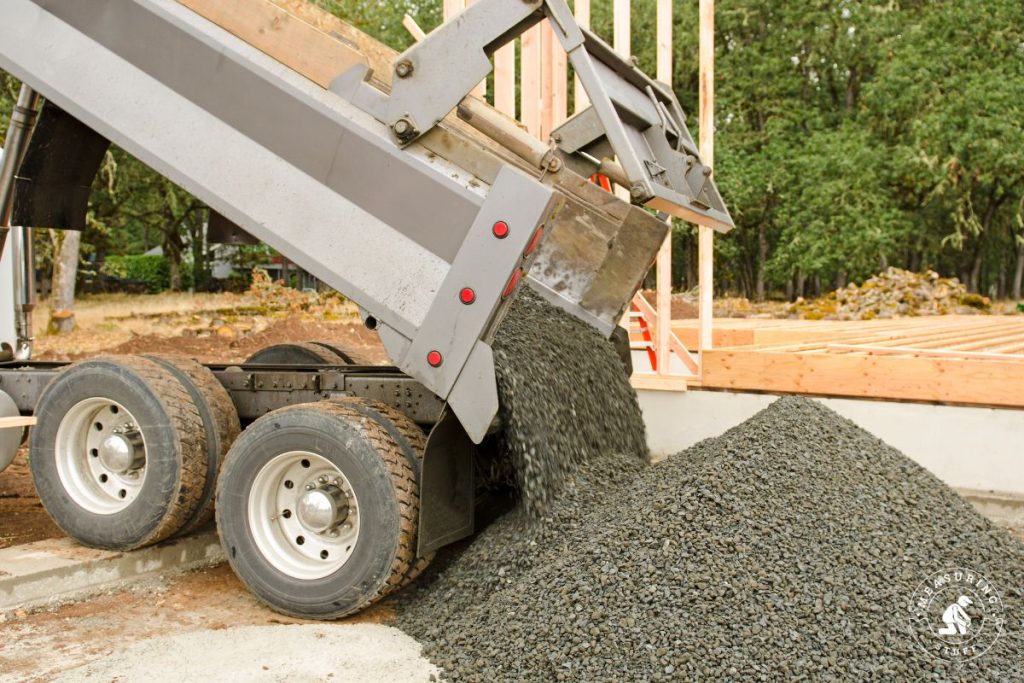
When embarking on a construction or landscaping project, one of the more perplexing dilemmas you might face is quantifying the amount of gravel needed, particularly when considering the metric of tons and yards. Understanding the conversion between these two units is crucial for your undertaking’s success. This guide will delve into the fundamentals of gravel measurement, clarify the intricacies involved, and provide a comprehensive overview of different types of gravel available, along with factors influencing conversions.
Understanding the Basics: Gravel Measurement
Gravel is typically purchased and sold by weight, often expressed in tons, while suppliers may measure it in volume, particularly in cubic yards. The challenge, therefore, lies in navigating this dichotomy. One ton of gravel generally covers a specific volume depending on the gravel’s density, which can fluctuate based on its type and moisture content.
On average, 1 ton of gravel is equivalent to approximately 0.67 cubic yards. This approximation can vary; hence, it’s essential to know the specific type of gravel and its corresponding density before making definitive calculations. The density of gravel can range from 1,800 to 2,700 pounds per cubic yard, a factor heavily influenced by the gravel’s composition and size.
The Density of Various Gravel Types
Before delving into types, it’s important to note that gravel can be categorized mainly into two types: coarse and fine. This division is fundamental, as it dictates the density and consequently how much a ton will occupy in cubic yards.
- Coarse Gravel: This type consists of large, angular stones and is primarily used for construction purposes. Its density hovers around 2,000 to 2,400 pounds per cubic yard. Thus, one ton of coarse gravel will approximately equal 0.5 to 0.6 cubic yards.
- Fine Gravel: Also known as sand or pea gravel, this type contains smaller particles. The density is lighter, typically ranging between 1,600 to 1,800 pounds per cubic yard. Consequently, one ton of fine gravel can cover about 0.75 to 0.85 cubic yards.
- River Rock: Characterized by its smooth, rounded edges, river rock is often used for decorative purposes in landscaping. This variety usually has a density of around 2,500 pounds per cubic yard, making one ton approximately equivalent to 0.4 cubic yards.
- Crushed Stone: Commonly utilized for road bases, driveways, and landscape design, crushed stone comprises smaller, crushed pieces of larger rock. Its density can be about 2,700 pounds per cubic yard, meaning that one ton will approximate 0.37 cubic yards.
Determining Your Gravel Requirements
When planning a project where gravel is to be laid, your first step should be to determine the area you wish to cover. The basic formula for calculating cubic yards needed for a gravel project is:
Length (in feet) x Width (in feet) x Depth (in feet) ÷ 27 = Cubic Yards
Once you have the cubic yardage calculated, you can convert this to tons using the density of the specific gravel type you are considering. For instance, if you desire to cover a 10-foot by 10-foot area with a depth of 3 inches using coarse gravel, your calculation would look as follows:
10 x 10 x 0.25 ÷ 27 = 0.93 cubic yards
Subsequently, taking the average density of coarse gravel (let’s say 2,200 pounds per cubic yard), you can convert cubic yards back to tons:
0.93 x 2,200 ÷ 2,000 = 1.025 tons
From this, you can infer that approximately 1.03 tons of gravel would suffice for your project.
Considerations in Purchasing Gravel
While the need for gravel may seem straightforward, several variables can complicate the purchasing process:
- Moisture Content: The gravel’s weight can fluctuate with moisture content. Wet gravel weighs more than dry gravel, potentially skewing your calculations if not taken into account.
- Compaction: The application of gravel over a surface may lead to compaction. If this occurs, you may require less material than initially predicted.
- Delivery Costs: When ordering gravel, be mindful of transport charges, which can significantly impact your overall budget.
- Supplier Variations: Different suppliers might have varying procedures for weighing and measuring gravel; thus, ensure you understand their methods before completing your purchase.
Conclusion
Understanding the correlation between tons and yards of gravel is pivotal in executing any construction or landscaping project efficiently. Knowing how to calculate the required amount, taking into consideration the diverse types of gravel and their individual densities, will empower you to make informed decisions. By grasping these fundamental principles, you can reduce waste, control expenses, and ensure that your project progresses smoothly with the correct quantities of materials. With this knowledge, you are now better equipped to tackle any gravel-related undertaking.








Leave a Comment