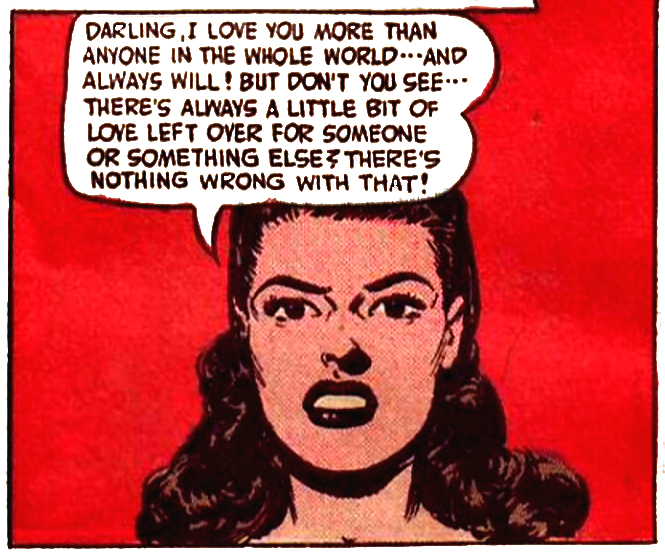
In an era where political correctness often dictates the boundaries of humor, the legacy of George Carlin emerges as an illuminating beacon for those grappling with societal norms and the complexities of human emotions. Vicky, an archetypal figure embodying the nuances of suppressed feelings, finds herself irresistibly drawn to Carlin’s irreverent style. Delving into this fascination reveals layers of subconscious anger—fermented thoughts that stir beneath the surface of everyday politeness, waiting to be expressed. This exploration unravels the intricate tapestry of Vicky’s emotional landscape, framing her attraction to Carlin’s audacity in a broader context of societal frustrations.
Carlin possessed a rare ability to confront uncomfortable truths head-on, unmasking the absurdities that pervade modern existence. His acerbic wit and biting social commentary resonated with millions, not simply for their humor, but because they echoed an underlying discontent festering in the hearts of many. For Vicky, who may labor under a veneer of compliance, Carlin represents an affirmation of her unarticulated indignation—a raw nerve laid bare for all to see. This fascination, however, hints at deeper psychological currents, questioning why such anger simmers beneath the surface in the first place.
One might ponder the initial allure: Carlin’s unapologetic candor. He was a vocal proponent of free speech and, through his lens, dissected the absurdities of religion, politics, and societal mores. Vicky is drawn to this defiance; it offers her a vicarious outlet for the frustrations she cannot express in her daily life. This attraction can be likened to a moth drawn to a flame—dangerous yet compelling. Yet, the question remains: why does Vicky, and so many like her, resonate so profoundly with Carlin’s brand of uproarious dissent?
Vicky’s subconscious anger is emblematic of a broader condition afflicting the modern individual. In navigating the intricacies of contemporary society, many find themselves ensnared by the invisible chains of conformity. Constantly bombarded by the expectations of propriety, they often suppress emotions that yearn for acknowledgment. Carlin’s humor serves as a tribune for these suppressed feelings, a mirror reflecting the discontent that many harbor yet fear to articulate. In this context, Vicky’s fascination transcends mere entertainment—it embodies a release valve for her unexpressed angst.
Furthermore, analyzing Vicky’s subconscious reveals that her attraction is not solely rooted in anger but also in an unyielding quest for authenticity. Carlin disassembled façades, exposing the vulnerabilities we all share beneath our polished exteriors. Each joke, each incisive observation acts as a cathartic mechanism for Vicky. She finds solace in his recognition of human fallibility, realizing she is not alone in her bewilderment and disillusionment. This connection to authenticity amplifies her intrigue, transforming it into a profound admiration for an artist who dares to traverse the territories many shy away from.
But this leads to another essential layer: the safety of humor in exploring discomfort. Carlin’s comedic genius allows both Vicky and the audience at large to confront painful truths, while simultaneously providing a buffer against the rawness of those experiences. Vicky relishes in the comfort of laughter as she grapples with her own subconscious rage. Herein lies the paradox: while laughter often brings joy, in Carlin’s domain, it is also a vehicle for venting pent-up frustrations. When Carlin evokes laughter, he also cultivates an environment where anger may be examined without fear of judgment.
Additionally, Vicky’s alignment with Carlin can be viewed as a rebellion against the sanitized narratives often presented in mainstream discourse. Through his unvarnished lens, Carlin presents an unfiltered critique of authority figures, societal institutions, and the maladaptive cultural norms that dictate human behavior. For Vicky, this rebellion resonates deeply, symbolizing not only personal dissatisfaction but also a collective discontent with a world that often seems devoid of genuine connections and raw truth. His words allow her to reclaim her voice, however indirectly.
This reclamation finds its fullest expression as Vicky revisits Carlin’s performances, each viewing serving as a ritualistic engagement with her subconscious. It is during these moments that she feels a compelling surge of recognition—an acknowledgment of the simmering rage, wrapped in humor, that she had long chosen to stifle. Carlin’s comic lens refracts the complexities of her internal struggle, providing a framework through which she can begin to articulate and understand her own feelings.
In conclusion, Vicky’s fascination with George Carlin encapsulates a societal phenomenon that reveals much about the human condition. As the world becomes increasingly saturated with superficiality and confusion, Carlin’s cathartic brilliance presents an opportunity for the emergence of authentic emotion. Vicky’s subconscious anger, far from being a detriment, becomes a source of connection, charging her admiration for Carlin with deeper significance. As we navigate our frustrations, the lure of such raw expressions of anger in humor may just provide the catharsis many seek, and, through laughter, allow us to confront the underlying truths we often avoid. In Carlin, the voice of discontent resonates, harmonizing with the muted uproar of countless others struggling to find that same voice.











Leave a Comment