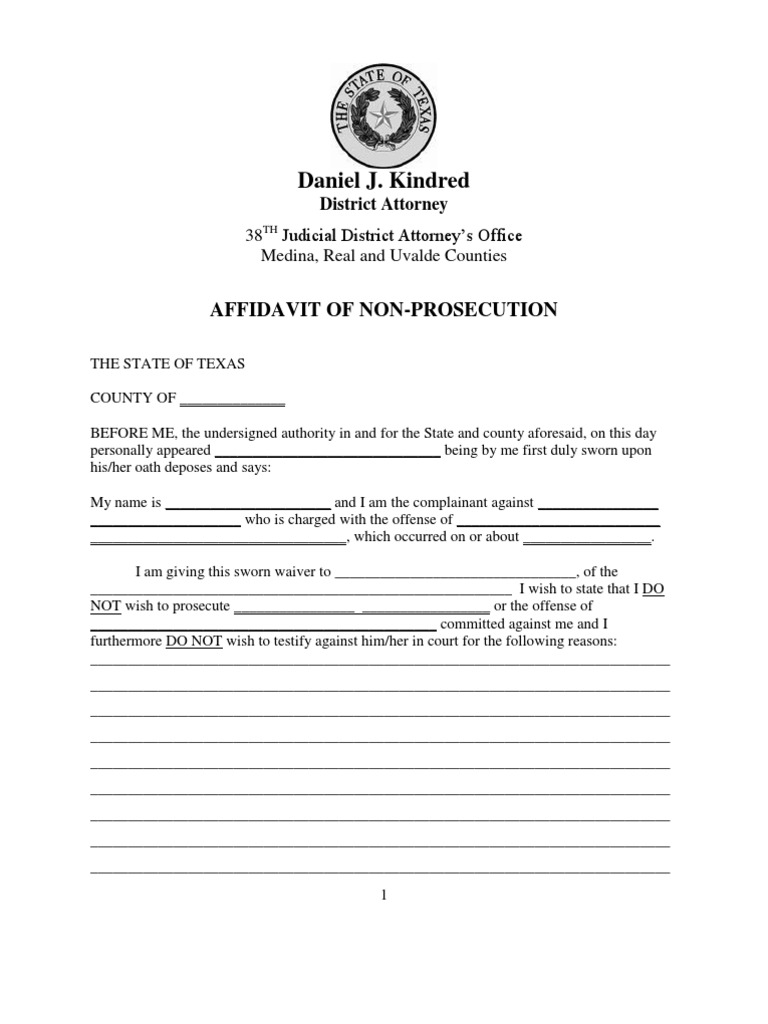
The legal landscape can often resemble a labyrinth of intricate paths that one must navigate with caution and acumen. Among the myriad of legal instruments at one’s disposal lies the Affidavit of Non Prosecution, a document that may initially seem obscure yet serves as a powerful tool within the judicial system. In the following exploration, we will dissect this potent affidavit, uncovering its purpose, procedure, implications, and the unique role it plays in the realm of criminal justice.
Understanding the Affidavit of Non Prosecution
At its core, an Affidavit of Non Prosecution is a formal declaration in which a victim or witness communicates their decision not to pursue criminal charges against an accused individual. This document is akin to a lifebuoy tossed into turbulent waters, providing relief and a second chance to the alleged perpetrator. It symbolizes the victim’s choice to disengage from the criminal proceedings, reflecting their autonomy in the face of potentially life-altering decisions.
This affidavit is particularly salient in misdemeanor and certain felony cases, where it can significantly influence the trajectory of a legal matter. However, its implications extend beyond mere paperwork; it embodies a multitude of emotional and psychological factors, emphasizing the victim’s current state of mind and relationship with the accused.
The Purpose of the Affidavit
The primary function of an Affidavit of Non Prosecution is to formally communicate the victim’s intention to halt legal proceedings. This can arise for various reasons—be it personal reconciliation, fear of retaliation, or a desire to move forward without lingering legal entanglements. Just as a phoenix may rise from its ashes, a victim may choose to let go of past grievances to reclaim their narrative and heal.
Moreover, the affidavit exists as a safeguard for the accused individual, often transforming a looming cloud of guilt into a clear sky of opportunity. By expressing a desire for non-prosecution, victims can alleviate the burdens of criminal liabilities from the accused’s shoulders and potentially prevent life-altering consequences stemming from a criminal conviction. Importantly, however, the validity and effect of an affidavit can vary based on jurisdiction and specific circumstances of the case.
The Process of Creating an Affidavit of Non Prosecution
Embarking on the path to creating an Affidavit of Non Prosecution involves a series of deliberate steps. This process is transformative, akin to chiseling a block of marble into a refined sculpture. Here are the essential stages involved:
- Consult Legal Counsel: Before drafting the affidavit, victims are encouraged to engage a legal professional who can elucidate the ramifications of their decision. The counsel serves as a compass, guiding them through the nuances of legal terminology and potential outcomes.
- Draft the Affidavit: The document should contain specific details, including the names of the parties involved, the case number, and a clear statement of intent not to pursue prosecution. This section requires precision, as ambiguity can lead to misunderstandings.
- Sign Before a Notary: To confer legitimacy and authenticity, the affidavit must be signed in the presence of a notary public. This step is crucial in preserving the integrity of the declaration.
- File with the Appropriate Authorities: Once complete, the affidavit should be submitted to the prosecuting attorney’s office or the court handling the case. This action brings the declaration into the legal fold, formally ceasing further prosecution efforts.
The Implications of the Affidavit
The ramifications of submitting an Affidavit of Non Prosecution can be profound. While it provides the victim with a sense of agency, it is important to recognize that this decision can also have significant impacts on both the accused and the judicial system at large. Just as a pebble creates ripples in a pond, the decision not to prosecute can resonate across various layers of society.
For the accused, the affidavit might herald the dawn of a new beginning, liberating them from the specter of criminal charges. However, it is vital to acknowledge that the case may not entirely disappear; law enforcement agencies sometimes retain the discretion to investigate further or pursue charges irrespective of the affidavit. Thus, the journey toward closure remains intricate and multifaceted.
On a broader scale, the filing of such an affidavit can inform prosecutorial discretion and influence how future crimes are approached. If victims frequently opt not to prosecute, it could lead to an examination of the efficacy of current policies and the sufficiency of victim support within the criminal justice system.
Conclusion: The Significance of Choice
In conclusion, the Affidavit of Non Prosecution constitutes more than just a mere legal document; it symbolizes the dichotomy of forgiveness and accountability, autonomy, and the sometimes harsh realities of justice. For victims, it is a means to reclaim control over their lives, while for the accused, it may serve as an opportunity to rebuild amidst the wreckage of allegations. The journey through the legal arena can resemble a tumultuous storm, but documents like the Affidavit of Non Prosecution can act as a beacon, illuminating a path forward amidst the uncertainty of prosecution. In every case, it is a poignant reminder that choices shape our lives, paving the way for healing, redemption, and renewed hope.











Leave a Comment