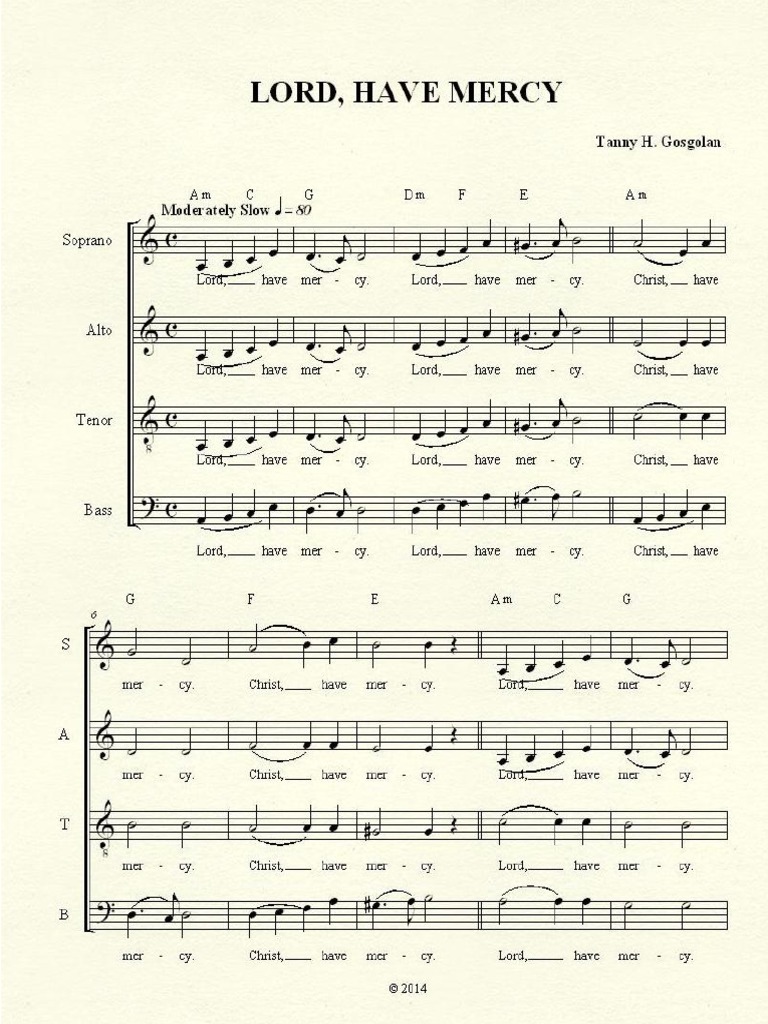
In the intricate tapestry of language, certain phrases—imbued with emotion and cultural significance—achieve quasi-mythical status. One such phrase, “Lord have mercy,” resonates across various contexts, captivating our collective consciousness. This utterance is not merely a reflexive exclamation; rather, it encapsulates a profound depth of meaning and an intriguing blend of spiritual and secular connotations. The phrase unveils layers of human experience, igniting curiosity and fostering reflection. In this exploration, we will delve into its etymology, semantic landscape, cultural implications, and the psychological roots of its allure.
1. Etymology and Historical Context
The phrase “Lord have mercy” finds its origins in biblical texts, where it serves as a plea for divine compassion and grace. Etymologically, it emerges from the Latin “Domine, miserere,” often employed in prayers and liturgies throughout Christian traditions. As a supplication, it reflects humanity’s perennial quest for solace in moments of peril or distress. This historical backdrop lends a sacred aura to the expression, elevating it from mere words to a lifeline connecting the faithful to a higher power.
2. Semantic Nuances and Interpretations
At its core, “Lord have mercy” embodies a triadic principle—acknowledgment of suffering, a yearning for forgiveness, and an appeal for divine intervention. Its usage can traverse multiple spheres, from individual lamentation during personal crises to collective supplication in the face of societal calamities. The phrase encapsulates a poignant blend of vulnerability and humility, often serving as a cathartic release when the weight of the world feels unbearable. This multiplicity of interpretations is a significant factor in its enduring fascination.
3. Cultural Resonance Across Traditions
Across geographical and cultural boundaries, “Lord have mercy” has morphed into a ubiquitous refrain found in various spiritual practices, resonating particularly with Christian doctrine. However, its reach extends beyond the confines of religious observance, permeating colloquial speech, music, and literature. For instance, in African American gospel music, the phrase often expresses an amalgam of struggle and hope, echoing the spirituals that emerged from the profound trials of enslavement. Moreover, its inclusion in popular culture—whether in film, lyrics, or rhetoric—serves to elevate common experiences of despair and reflects a shared yearning for redemption.
4. Psychological Underpinnings
From a psychological perspective, the utterance of “Lord have mercy” can act as a coping mechanism. It encapsulates a human instinct to seek support in moments of crisis, revealing a fundamental truth about the human condition: we are inherently communal beings, often seeking solace in the presence of the divine, whether that be a transcendent entity or the collective empathy of those around us. The invocation of mercy can provoke introspection, encouraging individuals to confront their vulnerabilities, while simultaneously providing a conduit for expressing unarticulated emotions.
5. Modern Usage and Adaptation
In the contemporary vernacular, the phrase has undergone a transformation, often employed in a more casual context as an expression of disbelief or exasperation. Statements like “Lord have mercy! Did you see that?” demonstrate an evolution whereby the phrase retains its emotive power while adopting a lighter, more conversational tone. This shift highlights the adaptability of language and the enduring relevance of the original sentiments behind the phrase, even as they manifest in a rapidly changing sociocultural landscape.
6. The Role of “Lord Have Mercy” in Rituals
Within religious rituals, “Lord have mercy” often serves as a pivotal element, recited in moments of prayer or communal worship. It stands as a reminder of the frailty of human existence and a collective acknowledgment of a higher moral obligation towards compassion and empathy. Such rituals create a space where the faithful can gather and share their burdens, amplifying the communal aspect of spirituality. This collective experience reinforces the notion that while suffering is a solitary affair, it is also a universal human condition, deserving of mercy from both the divine and fellow beings.
7. The Intrigue of Emotional Resonance
The allure of “Lord have mercy” lies not only in its linguistic and cultural richness but also in its emotional resonance. The phrase encapsulates the essence of humanity’s never-ending quest for understanding and compassion amidst chaos. In moments of personal or societal upheaval, invoking this expression becomes an instinctive call for mercy that transcends words, communicating a deep-seated wish for connection and relief. It serves as a reminder of our collective humanity, emphasizing that while each individual’s struggles may be unique, the desire for solace is universally shared.
Conclusion
“Lord have mercy” stands as a powerful statement that echoes through the corridors of history and culture, rich in meaning and intricate in its implications. From its roots in sacred scripture to its modern-day applications, the phrase continues to captivate and comfort individuals across various walks of life. It unveils a fundamental aspect of the human experience: the perpetual thirst for compassion and understanding in times of distress. Ultimately, its enduring fascination lies in its ability to resonate deeply within us all, reminding us of the mercy we seek and the shared humanity it inspires.











Leave a Comment