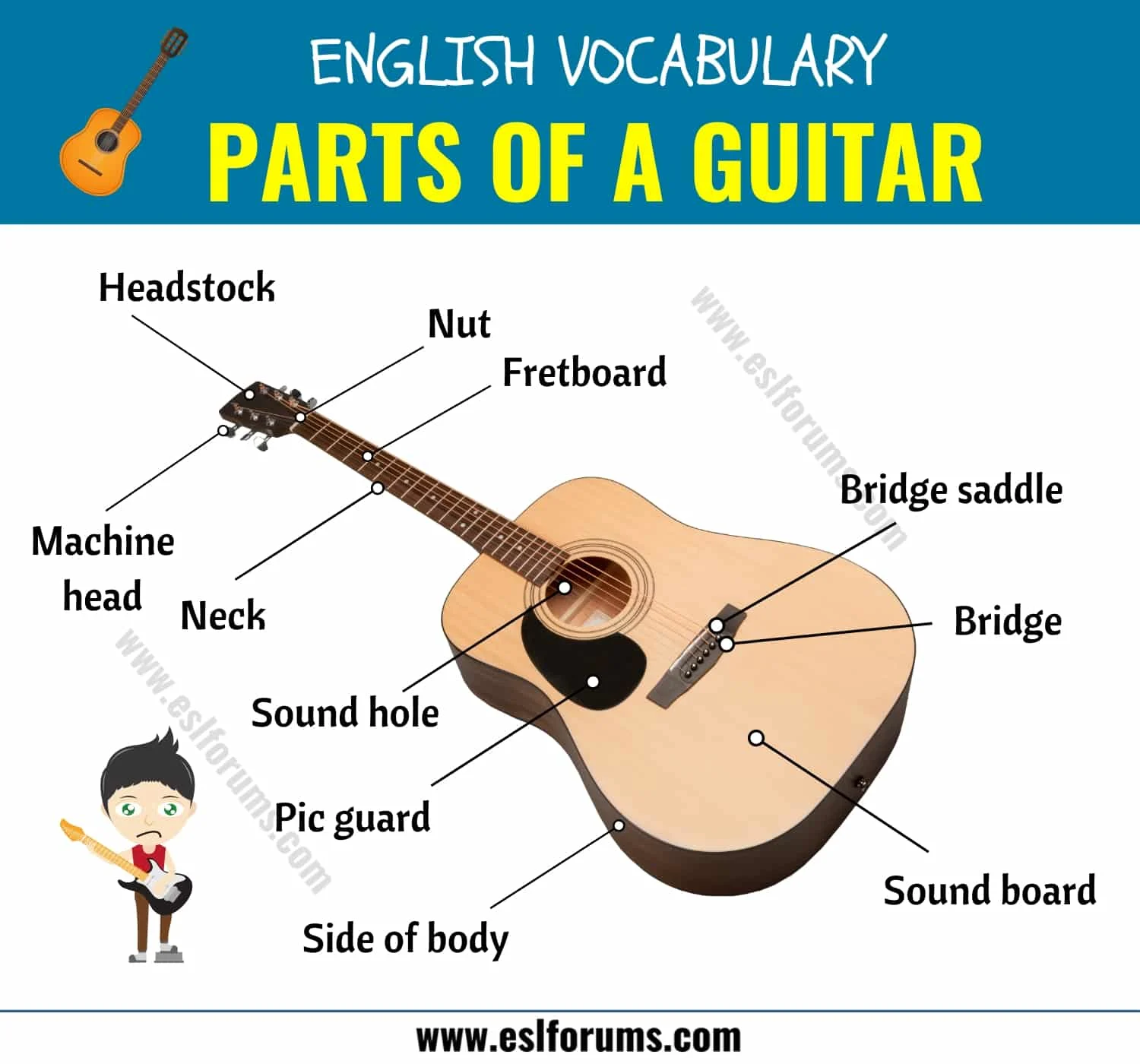
The guitar is more than just a musical instrument; it is a captivating amalgamation of various components, each playing a pivotal role in its sonic identity. From the enchanting melodies of a strum to the intricate flourishes of a solo, the ensemble of parts in a guitar fuels its charm and complexity. Understanding these components not only facilitates better playability but also enhances appreciation for the craftsmanship involved in guitar making. Let’s delve into the myriad parts that comprise this beloved instrument, examining their functions and the reasons for their fascination.
1. Body
The body of the guitar serves as the integral framework, contributing significantly to tonal quality. Comprised of several types, such as dreadnought, concert, and archtop, the guitar body affects resonance and volume. The choice of wood—whether mahogany, spruce, or cedar—imbues the instrument with distinct acoustic characteristics. Each body style also evokes a unique visual aesthetic, further heightening the emotional connection between musician and instrument.
2. Neck
The neck is the elongated segment that houses the frets and allows for finger positioning—a critical aspect of playing. Typically made of woods like maple or mahogany, the neck must be both sturdy and flexible. The curvature, known as the neck relief, is of utmost importance for ensuring an effortless fretting experience. Moreover, the scale length, the distance from the nut to the saddle, influences string tension and playability, making the neck a critical component in determining how a guitar feels and sounds.
3. Fingerboard
Also referred to as the fretboard, the fingerboard is where the player’s fingers dance to create music. The surface is embedded with frets, which are metal strips that divide the fingerboard into semitones. Materials such as rosewood or ebony are favored for their smoothness and aesthetic appeal. Additionally, the inlays—decorative markers on the fingerboard—serve both functional and artistic purposes, guiding the musician while adding flair.
4. Frets
The frets themselves are tiny metal strips that provide specific points where strings can be pressed down to produce different pitches. The precision with which frets are installed greatly affects playability. Fret size varies, impacting tone and the ability to bend strings. Guitarists may favor larger frets for effortless string bending or smaller ones for articulate fingerwork, showcasing the nuanced choices available in guitar construction.
5. Nut
The nut is a small component, often overlooked, yet it is fundamental in maintaining string height and spacing. Located at the top of the neck, the nut ensures that strings rest correctly before reaching the tuners. Made from materials like bone, plastic, or graphite, its construction can significantly affect sustain and tone. A properly carved nut can enhance tuning stability, providing the guitarist with a solid foundation for performance.
6. Tuning Machines
No guitar can sing without the crucial elements of tuning machines, or tuners. These mechanical devices allow the player to adjust string tension to achieve the desired pitch. Quality tuning machines ensure precision and stability, minimizing the need for frequent retuning. The aesthetic diversity of tuning machines also adds to the visual appeal, as they can range from ornate vintage designs to sleek modern finishes.
7. Bridge
The bridge is a vital part of guitar anatomy, anchoring the strings and transferring their vibrations to the body. Often made from hardwood or synthetic materials, the bridge influences sustain and tonal quality. Acoustic guitars may feature a two-piece bridge, while electric ones often utilize a more complex design for intonation adjustments. The bridge’s placement on the body determines the overall playability and response, making it a significant point of interest for builders and players alike.
8. Saddle
Seated atop the bridge, the saddle serves as the final point of contact for the strings. Often crafted from bone or synthetic materials, its construction directly impacts tone and volume. A well-crafted saddle allows for optimal string vibration transfer, resonating harmoniously with the guitar body. Adjustability in saddle height can also assist in fine-tuning action and tone, further underscoring its importance.
9. Electronics (Electric Guitars)
In electric guitars, the electronic components, such as pickups and knobs, play an indispensable role in sound production. Pickups convert string vibrations into electrical signals, subsequently manipulated through various tone and volume controls. The diversity of pickup types—single-coil, humbucker, and P90—offers a broad palette of tonal possibilities, enticing guitarists to explore myriad soundscapes.
10. Finish
The finish on a guitar is more than just a protective layer; it is an artistic embellishment that enhances the instrument’s beauty. Various techniques, such as lacquer or oil finishes, serve to protect the wood while also contributing to its sonic properties. Aesthetically pleasing finishes can elevate a guitar’s appeal, creating an emotional bond between the musician and their instrument.
In conclusion, a guitar is a complex assemblage of parts, each contributing uniquely to its overall performance and aesthetic. The body resonates the notes played, while the neck, fingerboard, and frets interact to create a fluid playing experience. From the tuning machines that maintain pitch accuracy to the electronics that shape sound in electric guitars, each component has its purpose. This intricate interplay of elements is what draws musicians to guitars, as it embodies not just a means of creating music but an enduring passion for craftsmanship, artistry, and expression.









Leave a Comment