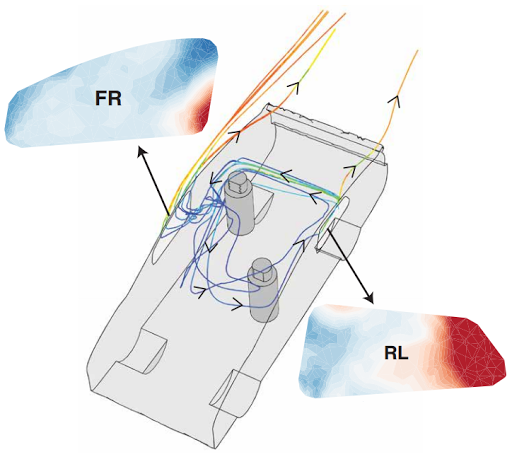
Every time we step into a vehicle, the design and dynamics of the automobile often captivate our attention, but one feature that frequently goes unnoticed is the antenna. While its primary function is to receive radio signals, the airflow dynamics around an automobile antenna can be a subject of fascination for car enthusiasts and aerodynamics aficionados alike. This article will delve into the complex relationship between airflow and automobile antennas, unraveling the science behind their design, the challenges posed by aerodynamics, and the implications for both functionality and aesthetics.
The Dynamics of Airflow
Airflow around an automobile is a multifaceted phenomenon governed by principles of fluid dynamics. When a vehicle is in motion, air interacts with various components, including the antenna. As a streamlined vehicle pushes through air, a complex pattern of airflow emerges, creating both laminar and turbulent regions. These patterns are critical not only for the vehicle’s overall performance but also for the operational efficacy of the antenna. Understanding how air travels around the antenna can lead to improvements in both aesthetics and functionality.
The Role of Antenna Design
Automobile antennas are designed in various shapes and sizes, including mast, shark fin, and retractable configurations. Each style presents unique challenges and advantages concerning airflow. Mast antennas, for example, are often seen swaying at high speeds, seemingly responding to the whims of the wind. Their elongated shape can disrupt airflow, leading to turbulence, which could, at times, compromise signal quality. Conversely, modern shark fin designs are engineered with aerodynamics in mind, minimizing drag while optimizing signal reception. The sleek contour of these antennas allows for smoother airflow, enhancing both form and function.
Aerodynamic Challenges
The interaction between airflow and automobile antennas encompasses several aerodynamic challenges. One notable concern is the phenomenon of drag. As the vehicle travels forward, maximizing aerodynamic efficiency is crucial in reducing fuel consumption and enhancing overall performance. Every protrusion, including an antenna, contributes to drag, which can hamper a vehicle’s performance at higher speeds. Engineers often use advanced computational fluid dynamics (CFD) simulations to evaluate airflow around various antenna designs, striving to achieve optimal configurations that reduce drag while maintaining signal integrity.
Signal Integrity and Interference
Another pivotal aspect of antenna design is the integrity of the received signals. The airflow-induced turbulence around an antenna can lead to a phenomenon known as “multipath propagation,” where signals reflect off surfaces, leading to interference and distortion. This effect is particularly pronounced in urban environments filled with skyscrapers and other structures that disrupt clean signal transmission. To counteract these challenges, automotive engineers meticulously test antenna placements and orientations, striving to position them where they can experience the least turbulence and receive signals most effectively.
The Fascination with Antenna Aesthetics
Moreover, the aesthetics of an automobile antenna should not be understated. In an era where manufacturers are keenly aware of consumer preferences, the visual appeal of an antenna can significantly influence vehicle design. An eye-catching antenna can enhance the vehicle’s overall silhouette, acting as a stylish accessory that signifies modernity and technological advancement. The interplay between the antenna’s design and airflow can evoke a sense of curiosity, prompting enthusiasts to ponder how aesthetics merge with functionality in automotive engineering.
Advancements in Technology
Recent technological advancements have propelled the study of airflow dynamics to new heights. The use of wind tunnels to physically test models has been supplemented by increasingly sophisticated simulations, enabling engineers to visualize airflow patterns with remarkable precision. Additionally, materials science has seen significant developments, with the emergence of lightweight, durable composites allowing for new structural possibilities in antenna design. These innovations make it possible to create antennas that are not only aerodynamically optimized but also resistant to environmental factors, such as rain and snow, that could otherwise hinder performance.
Consumer Impact and Future Trends
The study of airflow across an automobile antenna also holds significant implications for consumers. As awareness of fuel efficiency and environmental sustainability grows, manufacturers are under pressure to create vehicles that are more eco-friendly and aerodynamically sound. The emphasis on efficient airflow can lead to better fuel economy, reduced emissions, and improved radio reception, elevating the driving experience. Looking ahead, we can expect to see further integration of smart technologies in antennas, such as the incorporation of signal boosters or communication systems that cater to a vehicle’s dynamic driving conditions.
Conclusion
The relationship between airflow and automobile antennas is a microcosm of the broader challenges and innovations within automotive design. While the humble antenna might appear to be a simple tool for receiving signals, its interaction with airflow opens a gateway to discussions on aerodynamics, aesthetics, and technological advancements. As car enthusiasts and engineers continue to explore this realm, we become ever more aware that every component of a vehicle, even an antenna, plays a critical role in shaping our driving experience. The quest for perfection in this often-overlooked detail represents the beauty of engineering—where form meets function in a ceaseless pursuit of excellence.









Leave a Comment