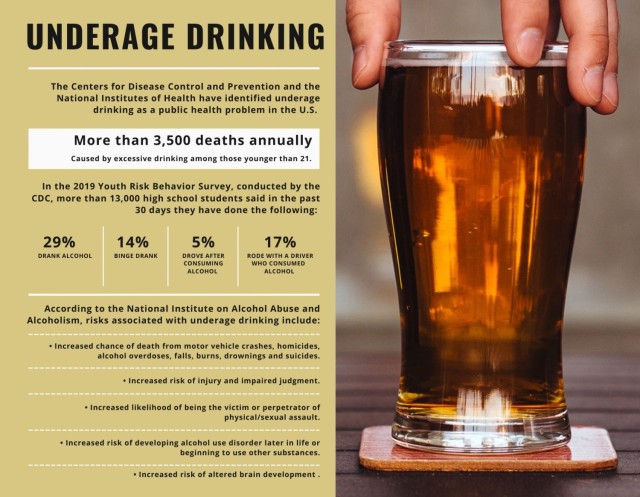
Underage drinking within the Army is a complex issue, layered with consequences that ripple far beyond the initial act itself. Just as a pebble tossed into a pond creates concentric waves, so too does the decision to engage in alcoholic consumption at a youthful age reverberate throughout the lives of soldiers, their families, and the institution at large. Article 15 serves as both a legal framework and a clarion call to address this pervasive problem, embodying a blend of strict regulation and the need for personal accountability. In exploring this multifaceted topic, we venture into the nuances of military discipline, the cultural dynamics within the ranks, and the implications of underage drinking on individual soldiers and the Army as a whole.
The Cultural Landscape of the Army
The Army, akin to a tightly-knit fraternity, often fosters an environment where camaraderie is cultivated over shared experiences, including those involving alcohol. This culture, while promoting bonds among soldiers, can also subtly endorse underage drinking. The dichotomy between embracing a spirit of brotherhood and adhering to the rigid statutes of military law becomes particularly pronounced. The challenge lies not just in the legal ramifications but also in the quest for personal integrity and self-governance within the confines of this supportive yet potentially hazardous environment.
The Underpinnings of Article 15
Article 15 of the Uniform Code of Military Justice (UCMJ) is the Army’s mechanism for maintaining discipline and accountability among service members. When individuals under the legal drinking age, often 21 years, transgress this law, the consequences extend beyond mere reprimands; they encompass a spectrum of disciplinary actions that can significantly alter a soldier’s career trajectory. These actions can range from non-judicial punishment, affecting promotion eligibility, to more severe penalties that may jeopardize one’s military standing and future opportunities. In essence, Article 15 serves as a guardian—an unyielding sentinel against the tumult of impulsivity that can ensue during formative years.
Consequences Beyond the Immediate
The repercussions of underage drinking extend far beyond the bars and gatherings where they occur. The very essence of a soldier’s ethos, built on honor and respect, can suffer irreparable damage when trust is broken. Engaging in underage drinking is akin to setting off fireworks in a dry forest; the initial thrill can quickly morph into disastrous consequences, including injury, impaired operational readiness, and the tarnishing of reputations. Such incidents can rattle not just the individual involved but also their unit, creating a ripple effect that compromises collective integrity and operational efficacy.
Responsibility and Reflection
For soldiers, the act of choosing to partake in underage drinking invites profound introspection. It serves as a litmus test for personal integrity, wherein the choices made can forge or fracture futures. The Army’s expectations are clear: soldiers must embody the principles of leadership, accountability, and responsibility. In this context, the challenge becomes one of self-discipline—a battle of wills against the seductive allure of collectivism and drinking culture. Should one surrender to these temptations, the ramifications can manifest as both personal and institutional crises, requiring comprehensive reflection and realignment.
Strategies for Addressing Underage Drinking
To combat the perennial challenge of underage drinking, the Army must implement proactive strategies, focusing on education and mentorship. Just as a well-tended garden flourishes, so too can an army foster a culture that prioritizes informed decision-making and resilience among its soldiers. Initiatives could include workshops that delve into the risks associated with alcohol, peer-to-peer mentoring programs, and robust support systems to address the social and psychological factors that contribute to underage drinking.
Additionally, leadership must champion an atmosphere where open dialogue about alcohol consumption is normalized. When soldiers can discuss their experiences and challenges without fear of repercussion, the stigma associated with confronting such issues dissipates. This openness can facilitate a shift in attitudes, empowering individuals to make informed choices and foster a more disciplined, health-conscious environment.
The Role of Leadership in Initiating Change
Leadership plays a pivotal role in addressing underage drinking within the ranks. Leaders are not merely figureheads; they are the architects of culture. By embodying the principles of vigilance and accountability, they set the standard for what is acceptable and what is not. Effective leaders must engage in transparent dialogues, share personal anecdotes, and model healthy behaviors. Through their actions, they can dismantle the prevailing attitudes that condone underage drinking as a rite of passage, replacing them with norms that reflect the Army’s values and commitment to excellence.
Navigating Forward: A Collective Responsibility
In navigating the labyrinth of underage drinking in the Army, it becomes clear that the responsibility lies not solely with the individual soldier but also with the institution itself. A multifaceted response—spanning education, policy enforcement, and supportive leadership—is vital to curtail this pervasive issue. As the echoes of youthful decisions ripple outward, a concerted effort can ensure that the legacy of underage drinking does not become a defining chapter in the Army’s storied narrative.
In conclusion, underage drinking in the Army is not merely a legal infraction but a complex social phenomenon that requires nuanced understanding and active engagement from all stakeholders involved. By acknowledging the intricacies of military culture, emphasizing personal responsibility, and fostering an environment of open communication, the Army can significantly mitigate the risks associated with this issue. Ultimately, just as the Army stands as a bastion of strength and resilience, so too must it rise to meet the challenge of underage drinking, forging a path toward a future that champions discipline, honor, and integrity.








Leave a Comment