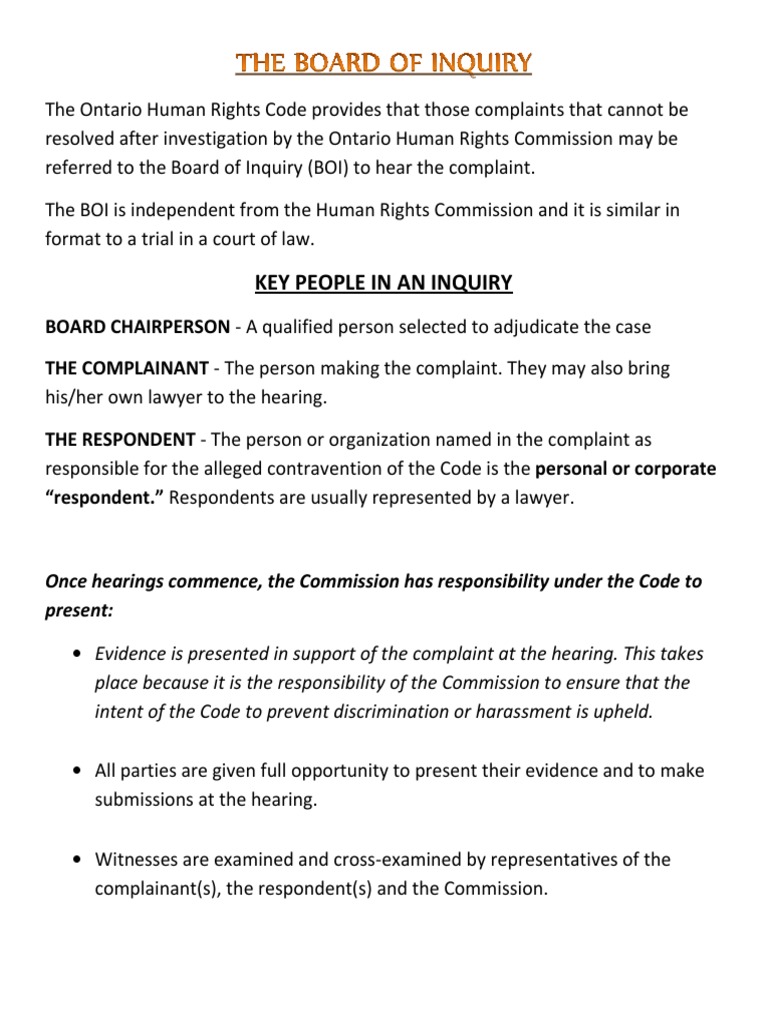
In today’s intricate world of governance, regulation, and organizational oversight, terms like “Board of Inquiry” frequently surface, yet remain enigmatic to many. Understanding the definition, purpose, and implications of a Board of Inquiry is essential for grasping the nuances of accountability structures. This article delves into the complexities surrounding this concept, highlighting why it engenders such interest and what deeper insights it reveals about society and decision-making processes.
Definition of a Board of Inquiry
A Board of Inquiry is an assembly, generally composed of experts or appointed individuals, that investigates specific issues, concerns, or incidents within an organization, community, or governmental structure. Often established in the wake of a significant event—whether it be a disaster, a scandal, or a systematic failure—the board’s primary mandate is to dissect the situation, gather evidence, and provide recommendations aimed at remediation or prevention of recurrence. This investigatory body operates under a framework of formal procedures, ensuring that its findings are not only reliable but also actionable.
The Function and Purpose
Boards of Inquiry serve myriad vital functions. Firstly, they act as independent entities, delineating themselves from the potential biases of internal stakeholders. This impartiality is crucial in fostering trust among the public and ensuring that the findings are perceived as legitimate. Additionally, a Board of Inquiry is tasked with unearthing truths that might otherwise remain obscured, thus illuminating the murky waters of complex situations. They also provide an avenue for managing crises, offering a structured approach to addressing fallout while facilitating healing within affected communities.
Moreover, the recommendations that result from their investigations often influence policy changes or trigger reforms within the concerned organizations. For example, in the wake of a catastrophic workplace accident, a Board of Inquiry may propose new health and safety regulations that not only address the immediate failings leading to the incident but also enhance protections for employees moving forward. Hence, the impact of their work tends to ripple beyond the immediate incident, leading to systemic change.
Historical Context
The origins of Boards of Inquiry can be traced back to various historical contexts, often linked to significant national events or crises. For instance, prominent government inquiries have been established to investigate matters ranging from health scandals to environmental disasters. These boards undoubtedly reflect societal values, highlighting the importance of transparency, accountability, and the pursuit of justice. Their historical legacy reveals the ongoing societal fascination with truth-seeking, especially in contexts where trust in institutions has been compromised.
This desire for accountability is further intensified during times of turmoil or transformation. For example, post-military conflicts, such boards have been commissioned to investigate potential human rights violations. Such inquiries often become touchstones for societal healing and reconciliation, emphasizing their pivotal role in addressing historical grievances.
Composition and Structure
The composition of a Board of Inquiry can vary significantly depending on the nature of the inquiry itself. Typically, members are selected for their expertise, experience, or impartiality, and may encompass a range of disciplines, from legal experts to industry practitioners or academics. This diverse assemblage aids in enriching the inquiry process through multifaceted perspectives.
Structurally, the board operates according to established protocols. There are usually defined phases of inquiry, starting with case identification, followed by evidence collection, analysis, and finally, the dissemination of findings. The procedural rigor involved enhances the credibility of the inquiry, enabling it to withstand scrutiny and fostering deeper trust in its conclusions.
Areas of Engagement
Boards of Inquiry can be convened for a host of reasons, covering various sectors such as public safety, corporate governance, and healthcare. In the realm of public safety, for instance, they may investigate incidents like mass shootings or transportation accidents, evaluating the systemic failures that allowed such events to transpire. Similarly, within corporate governance, they can facilitate investigations into fraud or ethical lapses, thereby reinforcing corporate responsibility.
Healthcare inquiries often arise in response to medical malpractice or systemic issues, examining practices that compromise patient safety. The inquiries highlight the importance of ethical standards and patient advocacy, often resulting in enhanced regulatory frameworks designed to protect the vulnerable.
Challenges and Critiques
Conclusion
In summation, a Board of Inquiry epitomizes a community’s pursuit of truth and accountability amidst complexity and chaos. These boards are not just investigatory bodies but pivotal instruments of social change and moral reckoning. By scrutinizing the past, they illuminate pathways for the future, embodying a collective desire for justice, transparency, and reform. Thus, the fascination surrounding Boards of Inquiry lies not merely in their function as investigators, but rather in their capacity to reshape societies, influence policies, and guide us toward a more equitable future.











Leave a Comment