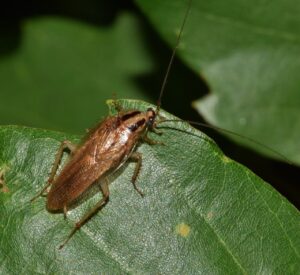
Among the myriad of critters scuttling about in urban areas, few provoke as much discomfort as the German cockroach (Blattella germanica). These ubiquitous pests evoke a visceral response in many, often leaving a trail of questions in their wake. One of the most intriguing inquiries surrounding these insects is whether they possess the ability to fly. This seemingly straightforward question invites a closer examination of the biology, behavior, and ecology of German cockroaches, illuminating not only their capabilities but also their place within our homes and environments.
To understand the flying prowess of German cockroaches, it is essential to delve into their anatomy. Despite being equipped with wings, these insects are not frequent fliers. The structure of their wings is relatively weak compared to those of true flying insects. While it is true that adult German cockroaches have two pairs of wings, the forewings, or elytra, are primarily protective rather than aerodynamic. This anatomical reality suggests that flight is not their preferred mode of transportation.
German cockroaches are generally classified as poor fliers. Their wings can extend past their bodies, allowing them to glide short distances when compelled by fear or threats. Observations confirm that confined spaces tend to discourage their aerial attempts. Instead, they rely on their impressive speed and agility on land, navigating crevices and darkened corners with remarkable dexterity. If directly threatened, an adult cockroach may take flight for a brief period, but such instances are rare.
Curiously, the tendency to fly is even less common among female German cockroaches. Males are more likely to engage in flight, perhaps as a means to impress potential mates or escape from predators. Females, on the other hand, prioritize the nurturing of their oothecae—the egg cases they carry. This reproductive strategy entails the careful management of their offspring rather than taking to the air, leading many to question whether flying is simply a male-centric attribute.
Another dimension to consider is the environmental influences that shape a German cockroach’s behavior. The urban habitats they thrive in offer a patchwork of textures and surfaces more conducive to running than flying. Dark, humid environments provide ample shelter and food sources, reinforcing ground locomotion. Moreover, increased humidity and temperature can enhance their agility and reproductive success. This raises the question: If flying were a beneficial adaptation, might we observe a different distribution of behaviors across populations?
In addition to anatomical and behavioral factors, the life cycle of German cockroaches also plays a crucial role in their relationship to flight. Nymphs, or juvenile cockroaches, lack wings entirely and remain grounded during their development. This phase of life further solidifies their inclination toward terrestrial navigation, as they establish feeding patterns and habitats that do not require flight. Consider how, amidst communities, younger roaches often become more adept as they mature, moving swiftly across surfaces rather than taking to the skies.
As we explore the complexities surrounding the flight capabilities of German cockroaches, it is essential to consider their ecological impact. Often viewed merely as household nuisances, these insects play significant roles in their environments. They contribute to the decomposition of organic matter and help cycle nutrients. This ecological perspective engenders an appreciation of their presence, shifting the narrative from mere pest to participant within the broader tapestry of urban ecosystems.
The curiosity around German cockroaches also extends into their adaptability and survival strategies. Evolution has etched a remarkable resilience into their DNA, rendering them capable of thriving in situations that would challenge many other species. Their blend of reproductive efficiency, habitat adaptability, and behavioral plasticity allows them to remain dominant urban dwellers. Such an invincible disposition calls attention to the broader implications of pest control and management strategies as well. Understanding their biology provides insights that could inform more humane and effective approaches.
In conclusion, the question of whether German cockroaches can fly is layered with complexity that transcends mere entomological inquiry. While they possess wings, their flight capabilities are limited, influenced by anatomical constraints, behavioral tendencies, and environmental factors. Even as we categorize them as primarily terrestrial insects, recognizing their ecological role and adaptability can shift our perspective from one of disdain to one of intrigue. German cockroaches, emblematic of resilience, challenge us to ponder the intersections of survival, adaptation, and human interaction with nature. The next time you encounter one of these cunning pests, take a moment to appreciate the fascinating intricacies of their existence beyond the mere question of flight.








Leave a Comment