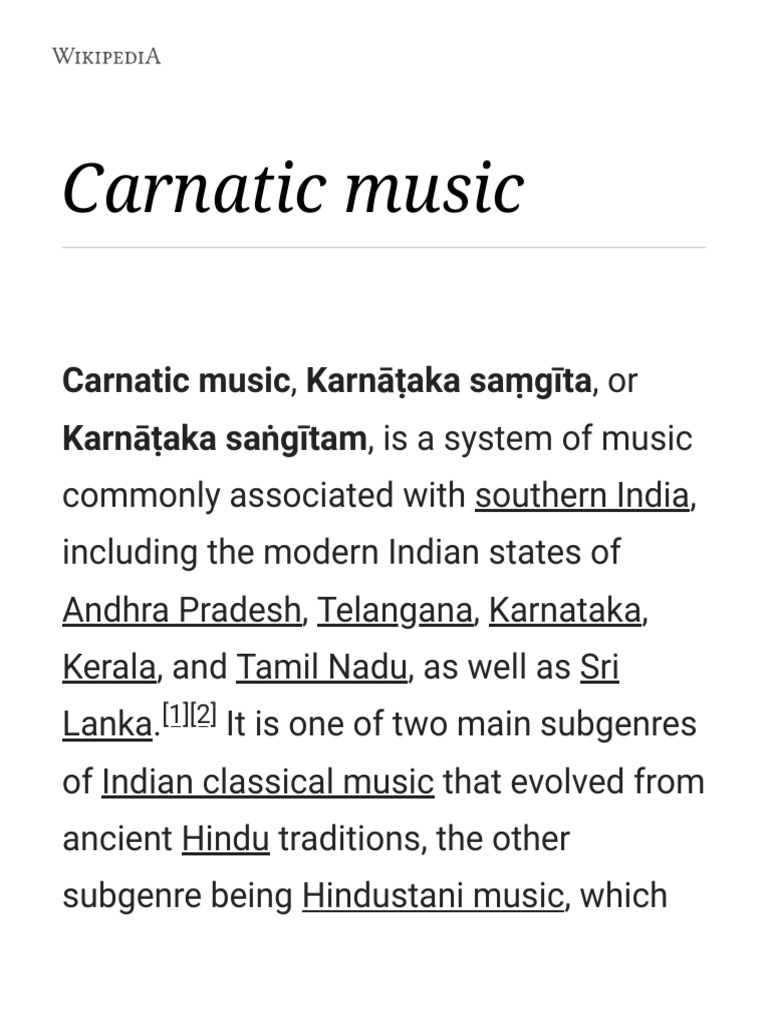
Carnatic music, a rich tapestry woven from the threads of ancient traditions, transcends mere auditory pleasure—it envelops its listeners in an ethereal embrace that speaks to the soul. Originating from South India, this classical genre is not just a form of musical expression; it is a profound dialogue between the artist and the divine, a captivating dance of ragas and talas that captures the essence of human emotion. Within this article, we will journey through the vibrant landscape of Carnatic music, exploring its historical roots, intricate structures, essential elements, and its enchanting allure.
Historical Context: The Birth of a Cultural Jewel
The genesis of Carnatic music can be traced back over a millennium, steeped in the rich lore of Indian culture. It blossomed during the reign of the Vijayanagar Empire, where it flourished under the patronage of royal courts and temples. As a river flows, nourishing the land around it, the music evolved, absorbing influences from neighboring regions and intertwining with the spiritual and lyrical poetry of the time.
It was during the 18th century that Carnatic music began to crystallize into the form we recognize today. The Trinity of Carnatic music—Tyagaraja, Muthuswami Dikshitar, and Syama Sastri—stood as monumental figures, crafting timeless compositions that continue to resonate with audiences. Their works serve as bridges across generations, connecting the past to the present in a harmonious continuum.
Structural Integrity: The Framework of Sound
At its core, Carnatic music is a meticulous amalgamation of the melodic (raga), rhythmic (tala), and lyrical dimensions. Each raga, akin to a painter’s palette, offers a unique emotional spectrum, evoking feelings ranging from joy to pathos, much like the shifting hues of dawn. The 72 parent ragas serve as the foundational pillars, akin to the roots of an ancient tree—nourishing and supporting an intricate canopy of diverse expressions.
Complementing these ragas is the tala, a complex rhythmic structure that serves as the heartbeat of the music. Just as a river’s flow is punctuated by stones and bends, the tala organizes time into cyclical patterns, creating a pulsating energy that propels the performance forward. Various talas, such as Adi, Rupaka, and Jhampa, each possess distinctiveness, akin to different brush strokes that bring a painting to life.
Varnams and Keertanas further adorn the musical landscape, weaving lyrical narratives that celebrate deities, love, and nature. These compositions, much like intricate embroidery, embellish the raga and tala with poetic elegance, inviting the listener into an odyssey of emotion and reverie.
Instruments: The Orchestra of Voices and Strings
The symphony of Carnatic music is elevated by an array of instruments, each possessing a distinctive voice that contributes to the overall texture. The veena, a resonant string instrument, embodies the very soul of tradition, while the mridangam, a double-headed drum, serves as the rhythmic backbone, akin to the pulse of life itself. The flute, with its airy melodies, dances gracefully alongside the vocalists, whispering secrets of the heart.
Moreover, the violin, evolved to fit this intricate idiom, reflects the adaptability and evolution inherent in Carnatic music. It intertwines with vocals, creating a chiaroscuro of sound that encapsulates a myriad of emotions—the highs, the lows, the unspoken.
Vocal Renders: The Pinnacle of Expressiveness
One cannot discuss Carnatic music without acknowledging the centrality of vocal performance. The human voice, an instrument like no other, serves as the primary conduit for expression, layering melody with emotion. Carnatic vocalists employ gamakas—ornamental techniques that embellish notes, akin to the delicate wilt of a flower petal in a breeze—imbuing their performances with an expressiveness that transcends the written word.
Through improvisation, or manodharma, musicians embark on spontaneous explorations, breathing life into established compositions while allowing the spirit of creation to flow freely. This improvisational nature is akin to a skilled artist, with every stroke of the brush revealing a new dimension of their creativity and inspiration.
The Spiritual Essence: Music as a Meditative Practice
At its heart, Carnatic music is an exploration of spirituality. Compositions are often steeped in devotion, addressing deities and celebrating the divine, making each performance a sacred act. The ideal performance transforms into a spiritual experience, much like the reverberations of a bell echoing through a sacred temple, inviting participants to feel a connection beyond the material realm.
Listeners are often drawn into this sanctity, finding solace and transcendence within the melodic cadences. Just as meditation leads to an awakening of consciousness, so too does the experience of Carnatic music evoke a profound sense of peace and fulfillment.
The Contemporary Resonance: Bridging the Past and Future
In the present day, Carnatic music continues to evolve while respecting its ancient foundations. Fusion genres emerge, breathing new life into traditional forms and allowing for cross-cultural dialogues. Modern artists blend classical tunes with contemporary rhythms, creating vibrant soundscapes that attract a diverse audience, akin to the harmonious merging of old and new worlds.
As technology bridges distances, online platforms have enabled wider dissemination of this art form, ensuring that the gem of Carnatic music shines brightly across the globe. It beckons individuals from all walks of life to explore its depths, promising an enriching journey that captures the beauty of human expression.
Conclusion: A Living Legacy
Carnatic music is not merely an auditory experience; it is a living, breathing entity that encapsulates the heart and soul of South Indian culture. It stands as a testament to the human spirit, continually evolving yet deeply rooted in tradition. Just as a river carves its path through the landscape, shaping both land and life, so too does this timeless music transform those who encounter it. Embracing its complexity while celebrating its beauty, Carnatic music invites us to listen—to truly listen—and in doing so, connect with something greater than ourselves.











Leave a Comment