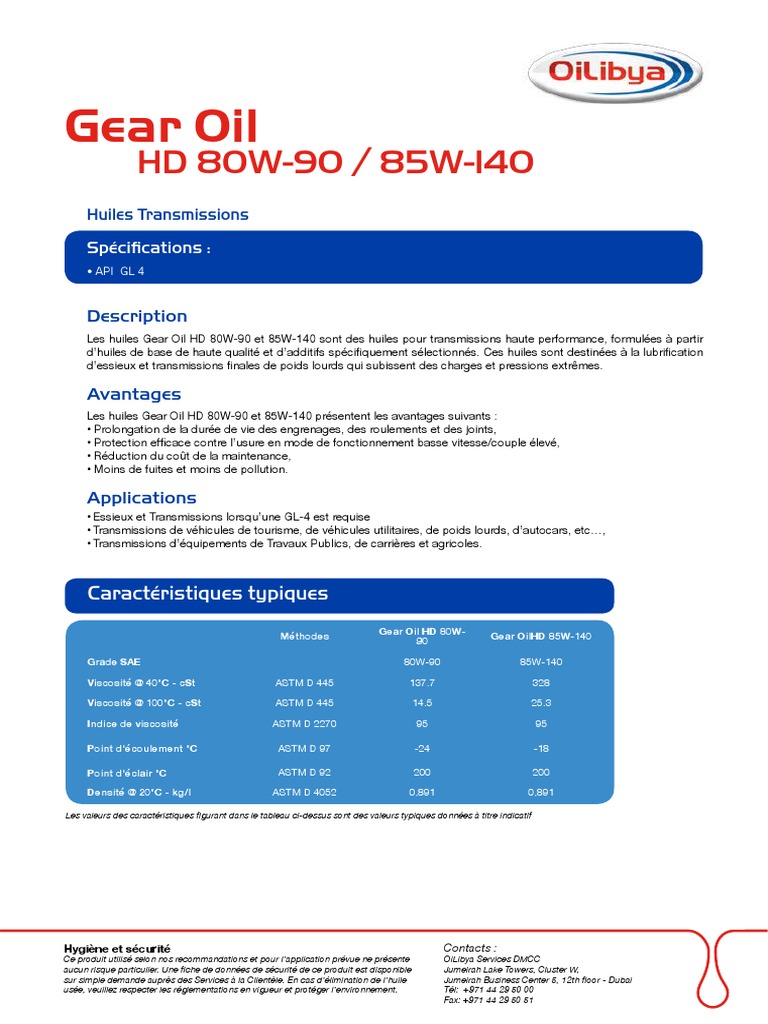
When it comes to selecting the appropriate gear oil for vehicles, the choices can often lead to confusion. Among the many options available, 75W-90 and 80W-90 gear oils frequently emerge as contenders, each boasting unique characteristics suited to specific applications. Understanding the differences between these two types can radically shift your perspective on vehicle maintenance. Here, we will explore the inherent properties, performance attributes, and suitable applications of both 75W-90 and 80W-90 gear oils.
1. Viscosity Fundamentals
At the core of any gear oil’s performance lies its viscosity—an essential factor determining how well it lubricates and protects gear components. The viscosity classification system, especially the Society of Automotive Engineers (SAE) rating, offers insights into the oil’s thickness. The first number, along with the letter “W” denoting winter performance, reflects the oil’s viscosity at colder temperatures, while the second number indicates performance in higher temperatures.
75W-90 gear oil signifies that it remains fluid at lower temperatures, allowing for efficient lubrication during cold starts. In contrast, 80W-90 gear oil, while still functional, has a slightly higher viscosity when cold, making it less fluid than its 75W counterpart.
2. Temperature Performance
Both 75W-90 and 80W-90 gear oils perform adequately in warm conditions, but their distinctions are most pronounced at lower temperatures. The enhanced cold-flow properties of 75W-90 make it an ideal choice for regions prone to frigid winters, where maintaining optimal lubrication at startup is paramount.
Conversely, 80W-90 gear oil is particularly effective in more temperate climates. While it can still supplement cold-weather performance, it may necessitate longer warm-up periods, potentially leading to increased engine wear during frigid conditions.
3. Chemical Composition
The formulation of gear oils consists of base oils, additives, and various performance enhancers. Both 75W-90 and 80W-90 have similar base compositions, primarily mineral or synthetic, yet their additive packages exhibit disparities. Depending on the brand and formulation, you may discover variations in anti-wear agents, shear stability, and oxidation inhibitors.
Synthetic variants of 75W-90 are renowned for their superior chemical stability, providing higher performance levels in diverse conditions, whereas mineral-based 80W-90 may exhibit satisfactory results under traditional applications, with generally less resilience over time. Chemical composition thus plays a crucial role in dictating the longevity and reliability of the fluid.
4. Application Suitability
Choosing the correct gear oil is not merely a technical decision; it also hinges on application specificity. 75W-90 is widely utilized in modern, high-performance vehicles that demand superior cold-weather operation and optimal fuel efficiency. Automotive applications, including differentials and manual transmissions, particularly benefit from the fluid characteristics of 75W-90, supporting smoother shifting and reduced friction.
On the other hand, 80W-90 is often recommended for older vehicles or heavy-duty applications found in construction and agricultural machinery. Its robust structure is optimal for enduring high loads and extreme operating conditions, making it a reliable choice in scenarios where ultimate performance under heavy pressure is critical.
5. Wear Protection
Effective lubrication is paramount in mitigating wear and tear within gears and bearings. Both 75W-90 and 80W-90 offer admirable protective qualities, yet their efficacies differ based on the operational environment. The enhanced cold-starting properties and lower operating temperatures of 75W-90 confer it a slight advantage concerning wear protection in environments susceptible to low temperatures.
In contrast, the slightly thicker viscosity profile of 80W-90 may yield adequate protective benefits under high-load scenarios. However, it may not provide the same level of finesse in cold-weather conditions, emphasizing the importance of context when choosing between the two.
6. Cost Considerations
Cost is frequently a decisive factor concerning automotive maintenance. Generally, 75W-90 synthetics have a higher price point with their advanced performance attributes. By contrast, 80W-90, often being mineral-based, is typically more affordable, making it an attractive option for those with budget constraints. However, when leveraging the long-term benefits of superior lubrication and reduced wear, the price differential may favor the investment in 75W-90 for certain applications.
Conclusion
Understanding the differences between 75W-90 and 80W-90 gear oils can transform your approach to vehicle care and maintenance. While both offer unique benefits, the choice between them hinges on a multitude of factors, including temperature conditions, application specificity, and financial considerations. For those in frigid climates or equipped with modern vehicles requiring precise performance, 75W-90 emerges as a formidable candidate. In contrast, 80W-90 presents itself as a stalwart choice for rugged, heavy-duty applications. By delving into these distinctions, you can make an informed choice that ensures both optimal performance and longevity for your vehicle’s drivetrain.










Leave a Comment