Water, the vital essence of life, flows through our existence in myriad forms, each with its own tale to tell. Among these forms, spring water and purified water stand out as two distinct choices, each imbued with unique characteristics and qualities. To understand their differences is to traverse a winding river of nuances, where clarity and depth converge in a refreshing dance of molecules. In this exploration, we shall delve into the contrasting realms of spring water and purified water, uncovering the essence that distinguishes them and the allure each holds.
1. The Origin of Each Elixir
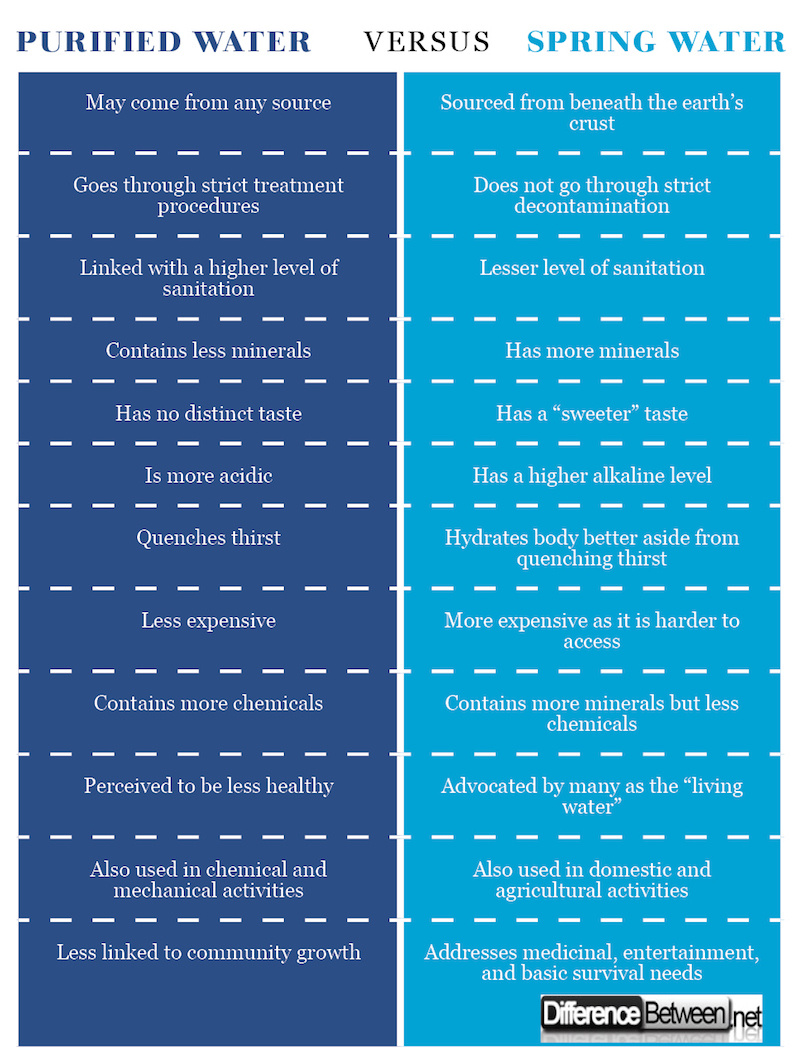
At the heart of their distinction lies the source from whence they spring. Spring water emerges from natural aquifers, surfacing through the earth’s crust as if summoned from deep within the geological embrace. It is often imbued with minerals—an echo of the rock formations it traverses—bestowing a distinctive flavor profile that many enthusiasts cherish. Sipping spring water is akin to drinking in the essence of nature itself, an elixir true to its roots.
In contrast, purified water is like a phoenix, reborn from a myriad of origins. It begins its journey from municipal supplies or natural reserves but undergoes rigorous filtration processes to strip away impurities. This transformation is akin to distillation—a purification rite that eliminates contaminants and unwanted elements, leaving behind water that is pristine in clarity. Yet, its lack of mineral content often renders it flavorless, a canvas waiting to be painted with added minerals for those who seek a taste.
2. The Composition: A Tale of Minerals
As we delve deeper into the composition of these waters, the narrative unfolds. Spring water is a potpourri of nature’s bounty, a cocktail of minerals like calcium, magnesium, and potassium, all harmoniously blended. These minerals not only tantalize the taste buds but also offer health benefits that resonate in the symphony of human wellness. The profile can vary significantly, depending on the geological structure of the source, making every sip an exploration of terroir.
On the other hand, the composition of purified water leans towards sterility. The purification process typically removes beneficial minerals, leaving water that is devoid of character. This absence can lead to an uninspiring drinking experience; however, some manufacturers add minerals back into the mix post-filtration, resulting in products like mineral-enhanced purified water. The journey from effervescence to blank slate creates a dichotomy that sparks endless debate among aficionados.
3. The Taste: Nature’s Symphony vs. Blank Canvas
Taste is an enchanting facet of the water experience, and here lies another pivotal distinction. Spring water, infused with nature’s salts and minerals, can provide flavor profiles that evoke the mountains from which they flow. Some may note earthy undertones or crisp mountain freshness, while others might find sweetness or subtle minerality. Each sip tells the story of its origin, allowing the drinker to connect with the very wells of the Earth.
Conversely, purified water presents itself as a blank canvas. Lacking the defining traits of minerals, it is often tasteless, an unremarkable companion to many. This neutrality can be appealing to some, particularly for those who prefer the absence of flavors mingling in their hydration. However, for connoisseurs, it can feel like a missed opportunity, as the palate yearns for richness and depth.
4. Health Considerations: A Double-Edged Sword
Health merits often govern our choices, and here the scales of preference tip. Spring water, with its inherent minerals, may provide health benefits, supporting hydration with electrolytes crucial for bodily function. Additionally, the natural filtering process through geological formations can introduce an array of beneficial trace elements, contributing to overall well-being. Drinking spring water can be viewed as reaping the rewards of Mother Nature’s pantry.
In contrast, purified water is celebrated for its cleanliness. The meticulous filtration processes eliminate pathogens and contaminants—assuring drinkers of safety. This rigorous assurance can be particularly crucial in areas grappling with water quality challenges. Nevertheless, one might ponder whether the trade-off of losing natural minerals is worth the benefit of enhanced safety. Thus, the choice becomes a balancing act between natural vitality and rigorous purification.
5. Environmental Impact: Nature’s Footprint vs. Industrial Process
In a world increasingly aware of sustainability, the environmental implication of our choices deserves scrutiny. Harvesting spring water often involves responsible practices, mindful of the natural ecosystem. When sourced ethically, spring water can protect aquifers and foster sustainable use. Like a gentle stream nourishing a forest, it intertwines with ecological preservation.
Conversely, the production of purified water may entail substantial energy consumption, particularly if bottled. The industrial process—from purification to packaging—can leave a significant environmental footprint. Choosing purified water can sometimes equate to trading natural resources for industrial efficiencies, challenging the sustainability ethos that many consumers now embrace.
Conclusion: A Choice of Essence
In the grand tapestry of water, spring and purified varieties represent two compelling choices, each with its own narrative, allure, and implications. Spring water embodies the untouched beauty of nature, rich with flavors and minerals, a direct connection to the earth. Purified water, while lacking the embellishments of its counterpart, offers unmatched safety and simplicity. The decision at hand is not merely about hydration; it is about choosing the essence that resonates with one’s lifestyle, values, and palate. Whether one seeks the mountain’s embrace or the clarity of pure refreshment, each sip leaves a mark on the journey of life, inviting exploration, appreciation, and choice.









Leave a Comment