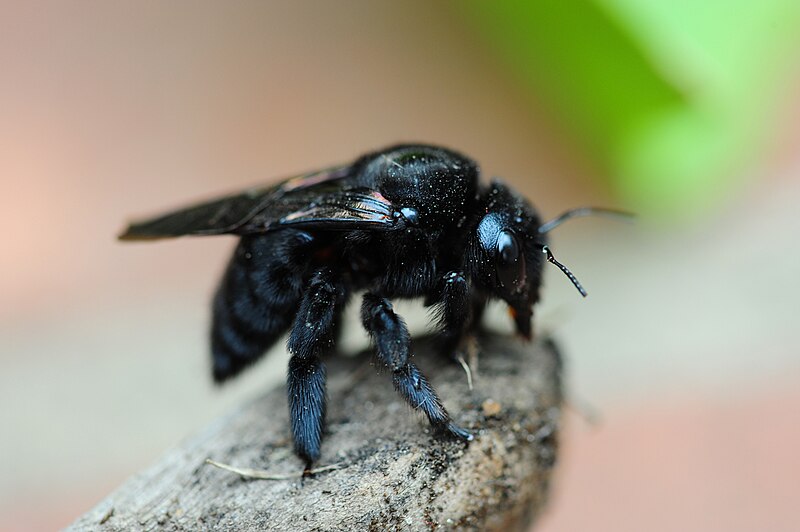
Carpenter bees, with their glossy exteriors and diligent nature, evoke a curious blend of intrigue and apprehension. These remarkable creatures, artisans of the insect world, do more than simply buzz about; they play an essential role in the ecosystem, all while carrying an air of mystique. As their name suggests, carpenter bees are known for their remarkable wood-boring abilities, yet many people harbor a lingering question: Do carpenter bees bite? Understanding the behavior of these fascinating insects offers insight not only into their lifestyle but also into the misconceptions surrounding them.
At first glance, the carpenter bee might appear formidable, especially when compared to its more docile bumblebee cousins. With a robust body typically clad in a brilliant black sheen, it zips through gardens, often mistaken for a small drone buzzing purposefully from flower to flower. However, this picture-perfect portrayal belies a deeper truth; while carpenter bees are impressive pollinators, their interactions with humans can lead to consternation, particularly when the subject of biting arises.
First, let’s delve into the anatomy of the carpenter bee. These bees possess two distinct types: the males and the females. Both exhibit the same striking features, but they diverge significantly in behavior. The male carpenter bee, though aggressive in its display, is inherently harmless. It flits around, hovering near potential threats while engaging in a dance of intimidation—think of a peacock flaunting its feathers, vibrant yet harmless. Males lack a stinger and, therefore, do not have the capability to bite or sting humans. Their bravado serves primarily as a warning, a theatrical performance to safeguard their territory and attract a mate.
In contrast, female carpenter bees are equipped with stingers and are capable of defending their nests. Yet, the likelihood of being bitten by a female carpenter bee is minuscule. They are known for their hermitic tendencies, preferring to invest their energy into nesting rather than confronting perceived threats. When cornered, a female may sting only as a last resort, akin to a lion retreating into the grass rather than confronting a threatening adversary. The evolutionary strategy of these bees emphasizes a fascinating distinction between aggression and defense, revealing that their primary interest lies in pollen gathering and nest-building rather than human contention.
The nests themselves unveil yet another layer of intrigue. Carpenter bees bore into wood—either naturally occurring or manufactured by humans—and create tunnels for their offspring. These tunnels serve as sanctuaries, providing shelter and an environment conducive to nurturing the next generation. This behavior demonstrate their capability as architects of their ecological niche. Observing a carpenter bee at work evokes an image of a skilled artisan meticulously carving out a masterpiece. While their penchant for wood may raise eyebrows in homeowners, the impact these bees have on pollination far outweighs the structural compromises they might cause.
Interestingly, the carpenter bee’s unique appeal does not solely rest on its industriousness. These insects play a pivotal role in the environmental cosmos, particularly in their role as pollinators. Carpenter bees are proficient at accessing flowers that other bees struggle to navigate due to their size. Their robust bodies allow them not just to traverse the taller blooms but to pollinate them effectively—enhancing biodiversity and sustaining ecosystems. Much like a dedicated gardener tending to a lush garden, they facilitate the reproductive cycle of plants, contributing to abundance.
Nevertheless, perceptions of carpenter bees can be dominated by fear and misunderstanding. Many homeowners perceive these bees as mere pests due to their nesting habits. However, fostering a harmonious coexistence rather than outright elimination can yield benefits. Acknowledging them as the industrious pollinators they are offers us a fresh perspective, allowing us to honor their presence while managing their colonies responsibly. Simple strategies such as sealing vacant wood or dedicating areas for bee activity can harmonize human and bee interactions.
For those hoping to evict carpenter bees, humane methods are preferable. Utilize deterrents that keep them at bay, such as natural oils or specific commercial products designed to repel without causing harm. By understanding their habits and preferences, homeowners can establish a balanced foundation that respects these insects as integral players in the pollination game, while also safeguarding personal spaces.
In conclusion, do carpenter bees bite? The answer, while nuanced, ultimately points toward a resounding no for the majority of encounters. Their propensity for aggression resides solely in display rather than direct action. As pollinators, architects, and environmental stewards, these bees hold a unique appeal that transcends their occasional mischief. By reframing our understanding and approaching them with respect and awareness, we can appreciate carpenter bees not only as a component of our gardens but also as crucial allies in the intricate web of life. Embracing their presence fosters an environment where both humanity and nature can flourish in harmony.








Leave a Comment