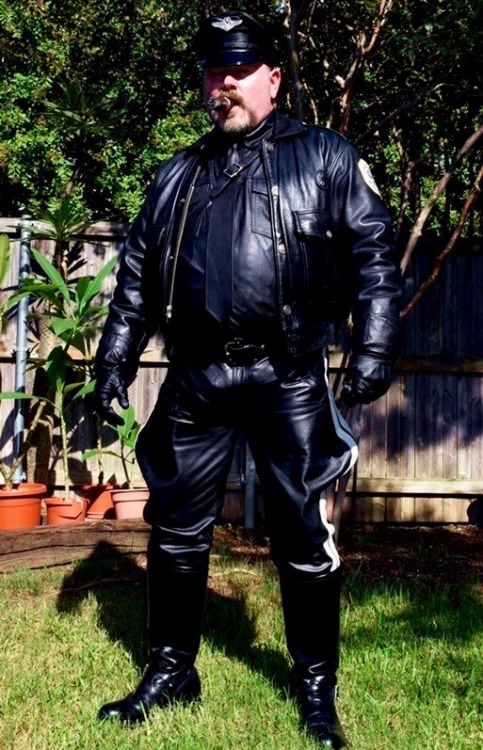
As the sun dips below the horizon and city lights flicker to life, a silhouette emerges, enveloped in the dark embrace of rugged leather. The enigmatic allure of the leather jacket has long been synonymous with authority, rebellion, and an unyielding spirit—qualities that resonate deeply within the world of law enforcement. Yet, in this age of evolving uniforms and advanced technology, a question arises: Do cops still wear leather jackets? To unravel this query, one must delve into the history, functionality, and symbolic significance that this iconic garment embodies within the police force.
First, let us traverse the annals of time to understand the roots of the leather jacket’s place in policing. The leather jacket, often associated with outlaws and rockstars, found its unexpected home within police ranks due to its practicality. Originally worn by motorcycle officers, these jackets provided both protection and a bold visual statement. As law enforcement shifted its aesthetic over the decades, the leather jacket became a symbol—a veritable knight’s armor against the unpredictable tapestry of urban life.
Today, leather jackets continue to be a tangible manifestation of camaraderie among officers. They evoke a sense of fraternity, a shared experience etched into the very fabric of the community. Beyond mere rank insignia, each scratch and scuff becomes a badge of honor, telling stories of the challenges faced and adversities conquered. The scent of leather can almost be likened to a timeworn tome, overflowing with tales of valor and vigilance.
In the modern era, the utility of leather jackets cannot be overlooked. Crafted to withstand the rigors of duty, these jackets boast a durability that synthetic materials often lack. Weather-resistant features play a pivotal role in varying climates, allowing officers to operate seamlessly in the rain-soaked streets or the searing heat of summer. Such jackets can perfectly merge function with form, providing ample pockets for essential gear, while exuding an aura of strength and resilience.
However, the question of whether leather jackets remain a mainstay in policing does not rest solely in their functional advantages. The changing landscape of law enforcement—marked by increasing scrutiny and evolving perceptions—has prompted departments to reconsider their traditional attire. The contemporary public response to policing has led to a more pragmatic and subdued approach to uniforms. The leather jacket, once viewed as an emblem of rugged rebellion, may clash with the current ethos advocating for transparency and approachability.
Yet, in this dichotomy exists a fascinating tension. The leather jacket still captivates the imagination—a metaphor for the lone wolf, straddling the line between authority and accessibility. Many officers choose to don this iconic garment during off-duty hours or community events, effectively bridging the gap between law enforcer and relatable figure. The leather jacket, thus, morphs into a symbol of commitment to serve the community while remaining approachable, akin to a lighthouse guiding wayward ships home amidst tumultuous seas.
Furthermore, the leather jacket’s portrayal in popular culture undoubtedly influences its perception amongst law enforcement personnel. Films and television shows have romanticized the image of the cop in the leather jacket, infusing it with mystique. Characters like ‘Dirty Harry’ or the crew from ‘Miami Vice’ have elevated this attire to cult status, embedding it deeply within the societal psyche. Officers who wear these jackets might do so not just for functionality but as an homage to a shared cultural iconography that symbolizes justice, grit, and a dash of rebellion.
Today, an array of leather jackets is available to officers—ranging from classic biker styles to more modern, tailored cuts. Departments may impose regulations on the type and style of these jackets, but the diversity allows officers to inject a bit of their personality into their uniform. The ability to personalize can engender a greater sense of pride among officers, promoting a profound connection to their duty and their community.
However, it’s crucial to acknowledge that not all officers are enamored with the leather jacket. Skeptics argue that this classic piece is becoming antiquated, inconvenient to wear for long shifts, and sometimes impractical for everyday duties. Thus, while the leather jacket remains an intriguing option, it stands at a crossroads, suspended between tradition and modernization. Departments increasingly favor breathable, multi-functional materials that enhance comfort and adaptability in the line of duty.
So, do cops still wear leather jackets? The answer is a complex tapestry woven with threads of nostalgia, practicality, sentimentality, and innovation. For some, it remains a staple—a bold statement of identity. For others, it represents a bygone era in the evolution of police attire. As society’s expectations continue to shift, the leather jacket symbolizes resilience, a bridge to history, and an ongoing dialogue about the nature of authority and approachability in law enforcement.
In conclusion, while the leather jacket may not dominate the contemporary policing landscape as it once did, its legacy endures. It embodies a confluence of tradition and modernity, reflecting a complex relationship between law enforcement and the communities they protect. The leather jacket, with its unique appeal and multifaceted significance, reminds us that even in a world of change, there are vestiges of history—enduring symbols that narrate tales of heroism and humanity in every scuffed seam and polished zipper.











Leave a Comment