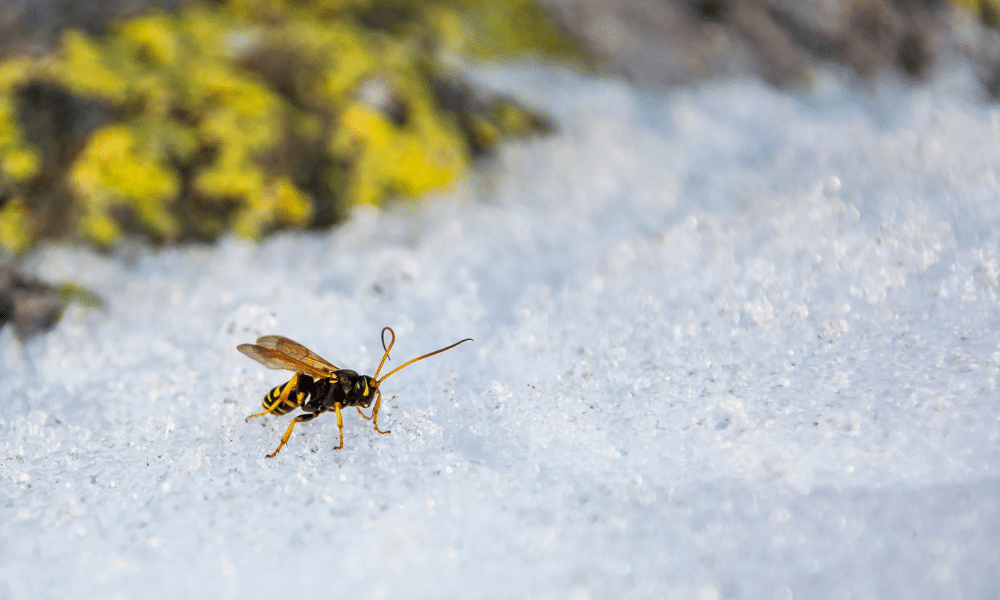
As the chill of winter settles in, the natural world undergoes a remarkable transformation. Trees stand bare, flowers retreat into dormancy, and many living creatures clandestinely prepare for the harsh months ahead. Among these inhabitants of the wilderness, wasps stir a multitude of questions and uncertainties. Do wasps die in the winter? Are they truly gone until spring returns, or is there more to their seasonal behavior than meets the eye? Delving into the secrets of these enigmatic insects invites a new perspective, one that may unfold the complexities of their life cycle and survival strategies.
First, it is imperative to grasp the intricate life cycle of wasps. Unlike many other insects, most wasp species operate under a distinct lifecycle rhythm that corresponds with seasonal changes. Typically, their annual activity peaks during the warm summer months, a period characterized by reproduction and colony expansion. Female wasps—known as queens—emerge from hibernation in early spring. With the sun’s warmth coaxing them from dormancy, they begin their quest to establish new colonies, which involves seeking sheltered environments to build their nests.
In stark contrast to the vibrant life exhibited during the warmer months, unpredictable weather conditions during the fall herald the impending demise of many wasp colonies. As temperatures begin to drop and food sources start to dwindle, mature worker wasps cease to thrive. Their roles as foragers become increasingly untenable, leading to the eventual dispersal and death of the vast majority of the worker population. Alas, the narrative of a wasp’s life does not conclude with the advent of winter; instead, it shifts dramatically.
The real intrigue lies in the fate of the queen wasps. As autumn descends, pregnant queens search for sheltered havens where they can wait out the winter months. Unlike the workers, who succumb to the cold, these resilient queens enter a state known as diapause—a period of dormancy that allows them to withstand adverse environmental conditions. This adaptation is crucial; it provides the queens with protection and the necessary energy reserves to persist until spring awakens the world anew.
Diapause is a fascinating phenomenon, it represents a strategic interplay between survival and adaptation. During this time, the queens’ metabolic activities significantly slow down, enabling them to survive on minimal energy. They often find refuge in tree bark crevices, under the eaves of buildings, or in decayed wood, close to the nest they will ultimately reclaim when conditions improve. This hidden strategy not only secures their survival but also shields them from predators and the elements.
An intriguing aspect of wasp behavior is the collaborative effort exhibited throughout the warmer months. Colonies comprised of hundreds to thousands of wasps are a hive of activity during late summer, yet the looming chill brings an abrupt end to this collective existence. Queens are the sole survivors, carrying the weight of future generations. As the rest of the colony expires through frost or starvation, the queen’s fortitude becomes the unprecedented bridge between seasons.
Amidst the chill of winter, it is crucial to consider the ecosystem’s cyclical nature. The disappearance of wasp populations may seem tragic; however, their temporary retreat plays a vital role in the balance of our environment. Wasps are often misconstrued as mere nuisances, yet they contribute significantly to pest control, pollination, and even nutrient decomposition. Their absence during winter presents a needed reprieve for other insect populations. Thus, the tale of the wasps is not simply about their survival, but how they integrate within the vast tapestry of life.
As winter wanes and spring makes its debut, the slumbering queens awaken. Fueled by the burgeoning warmth and the renewed availability of resources, they embark upon the task of establishing a new colony. With a few carefully selected locations and an abundance of tenacity, these queens lay their eggs and commence the cycle anew. This cyclical saga is nothing less than miraculous—a testimony to nature’s resilience.
Ultimately, the question “Do wasps die in the winter?” uncovers layers of complexity that merit exploration. While workers do not survive the frigid cold, queens employ a sophisticated survival strategy that links generations across seasons. Their ability to enter diapause illustrates nature’s ingenuity and highlights their integral role in maintaining ecological balance. Observing how wasps navigate the transition from vitality to dormancy may even inspire a newfound respect for these oft-misunderstood insects.
In the grand orchestration of our planet’s ecosystems, every creature has a narrative worth telling. Unraveling the story of the wasps, with their remarkable adaptability and resilience, is merely one thread in the intricate fabric of life. As we move forward into the fullness of seasons to come, may we harbor an appreciation for the quiet undercurrents of nature that often elude our notice. Embrace the mystery, cherish the cycles, and next winter, ponder anew the wasps’ tale, which interweaves survival with the promise of renewal.








Leave a Comment