When embarking on the journey of understanding heating and cooling capacities, one might stumble upon a crucial question: how many BTUs are there in a ton? This inquiry opens a portal into the realm of HVAC systems, leading us into a fascinating world where technical specifications intertwine with everyday comfort. But beware! The answer isn’t as straightforward as it seems, potentially posing a challenge to the uninitiated. In this guide, we will explore the intricate details of BTUs, their relationship with tons, and what this means for your climate control needs.
1. Understanding BTUs: The Basic Unit of Measurement
To unravel the mystery, we must first understand what a BTU, or British Thermal Unit, is. This unit of measurement quantifies the amount of heat required to raise the temperature of one pound of water by one degree Fahrenheit. Though seemingly simple, it acts as a fundamental cornerstone in heating and cooling systems, providing a clear metric for assessing energy transfer. In practical terms, BTUs translate into real-world comfort; the more BTUs a system can handle, the more efficient it becomes at controlling indoor temperatures.
2. What Is a Ton, and How Does It Relate to Cooling?
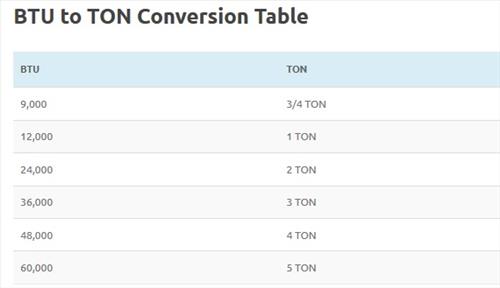
When we hear “ton” in the context of air conditioning, it may invoke thoughts of weight rather than cooling capacity. However, this nomenclature has historical roots in ice production. One ton of cooling capacity equates to the ability to melt one ton of ice in 24 hours. This process necessitates a cooling power of approximately 12,000 BTUs. Therefore, a ton in air conditioning terms represents a significant measure of performance and efficiency.
3. Calculating BTUs in a Ton
Herein lies the crux of our inquiry: how many BTUs are encapsulated within a ton? As established, one ton equals approximately 12,000 BTUs. This metric provides a clear framework for evaluating HVAC systems. For instance, a 3-ton air conditioning unit would possess an output of about 36,000 BTUs. This simplified calculation enables homeowners and technicians alike to assess cooling needs based on the size of the space in question and the desired comfort level.
4. The Correlation Between BTUs and Space Requirements
Understanding the relationship between BTUs and the space needing cooling or heating is pivotal. Various factors come into play that influence the BTU requirement for a given area. The size of the space is paramount, along with considerations such as insulation quality, window placements, and even the number of occupants. Following a rule of thumb, a 1,500-square-foot home generally requires around 36,000 BTUs for cooling, which corresponds to the 3-ton configuration discussed earlier. However, these calculations may necessitate fine-tuning based on specific circumstances.
5. The Importance of Sizing Your HVAC System Properly
The significance of correctly sizing an HVAC system cannot be overstated. An oversized unit, while powerful, may lead to inefficiencies, causing short cycling and humidity issues. Conversely, an undersized unit will struggle to maintain desired temperatures, leading to discomfort during extreme weather conditions. Homeowners are thus faced with the challenge of determining the ideal BTU-to-ton ratio. Consulting with HVAC professionals can provide invaluable insights, ensuring optimal comfort and energy efficiency.
6. Seasonal Variability and BTU Requirements
Seasons are not static; they fluctuate, bringing about variations in BTU requirements. Summer days scorch with fervor, requiring higher cooling capacities compared to milder days. Similarly, during winter months, you may find your heating demands climbing as temperatures plunge. Acknowledging these fluctuations prepares homeowners to adapt their systems accordingly, whether through programmable thermostats or variable-capacity units. Such adaptability can significantly enhance comfort while minimizing energy expenditures.
7. Converting BTUs to Tons: A Practical Approach
While understanding the relationship is vital, other practical applications arise as well. The ability to convert BTUs to tons can be invaluable if you encounter units labeled in different terms. The formula remains straightforward: divide the number of BTUs by 12,000 to attain the ton equivalent. For instance, 24,000 BTUs equate to 2 tons, which may be pivotal when assessing equipment specifications or comparing energy efficiency ratings.
8. Conclusion: Mastering the Art of BTUs and Tons
The intersection of BTUs and tons offers a gateway to mastering your environment’s comfort. This knowledge arms you with the ability to make informed decisions that directly impact your heating and cooling efficiency. Whether you are purchasing a new HVAC system or seeking advice on improving energy efficiency, understanding how many BTUs are in a ton empowers you to tackle seasonal challenges with confidence. Now that you have the tools and knowledge, are you ready to brave the world of BTUs and tons, or will you let the complexities deter your quest for optimal comfort?










Leave a Comment