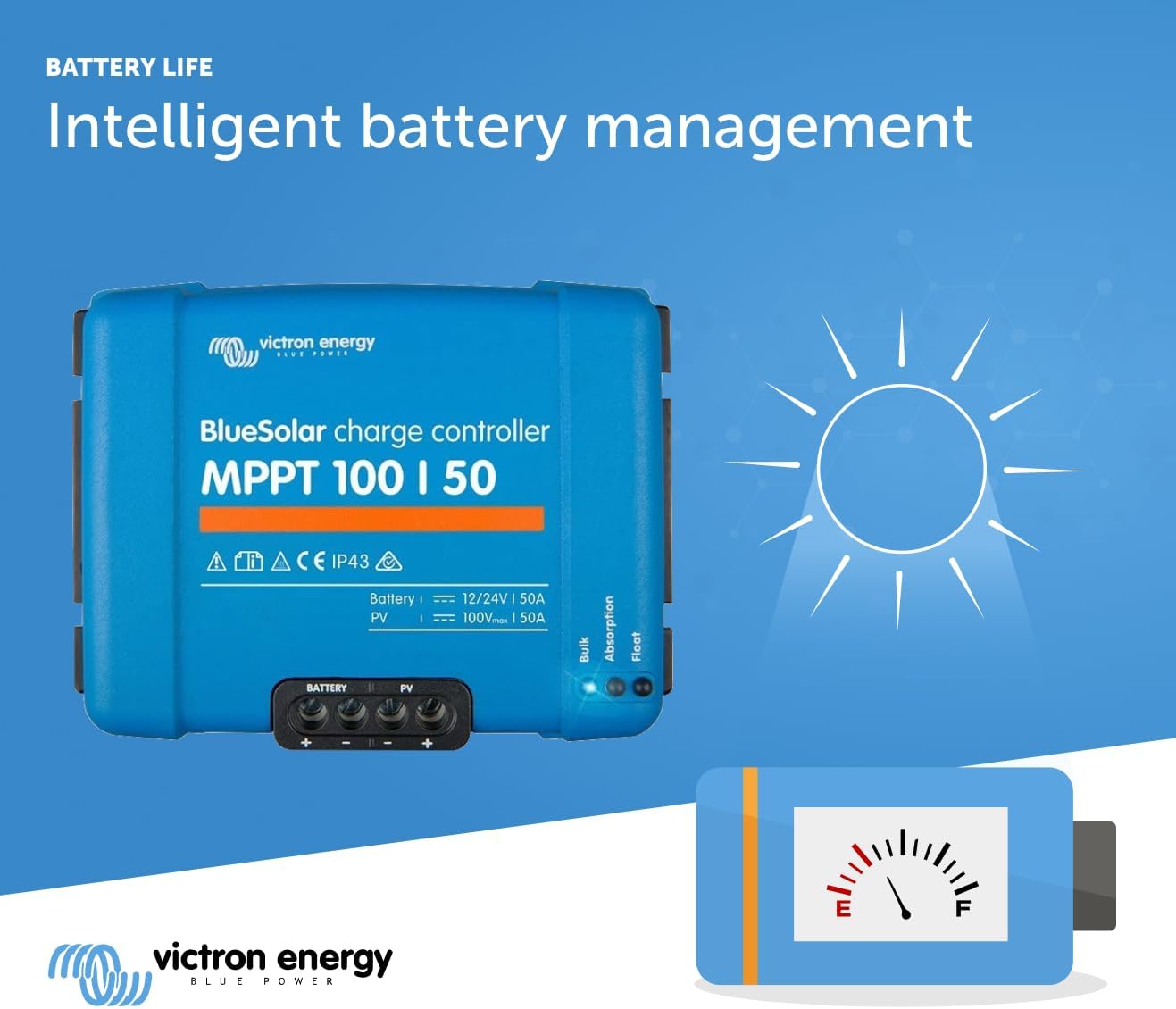
When you’re venturing into the world of solar energy, one burning question often rises above the rest: how many solar watts can a Victron 50 Amp solar controller handle? This inquiry, while seemingly straightforward, holds numerous implications for those planning to dip their toes into self-sustained energy solutions. Let’s take a closer look at the labyrinthine realm of solar controllers and untangle the complexity behind this pivotal question.
The Victron 50 Amp solar controller, renowned for its robustness and versatility, acts as a vital intermediary between your solar panels and your battery bank. Serving as a guardian of optimal energy flow, it facilitates the efficient charging of batteries while preventing overcharge and discharging damage. But just how much wattage can you effectively channel through this device?
To become acquainted with the capabilities of the Victron 50 Amp solar controller, we first need to delve into some of the fundamental specifications that govern its wattage management. The amp rating, in this case, is a clear indication of the controller’s capacity. Specifically, a 50 Amp rating allows this controller to manage a significant amount of energy, translating to about 600 watts when paired with a 12V battery system. However, if your setup consists of a 24V battery system, you’re looking at nearly 1200 watts.
The first important detail to note is that the amount of solar power you can input into the Victron solar controller directly correlates to the voltage of the system in question. An understanding of this dynamic can pose a playful challenge: how do you optimize your energy input based on your specific requirements? To maximize efficiency, you must calculate the power generated by your panels in conjunction with the specifications of your battery system.
Consider a scenario where you want to install a solar panel array designed to generate the most output permissible under the controller’s specifications. The ideal output for a 50 Amp Victron solar controller, under maximum load conditions, typically peaks around 720 watts to 800 watts. However, keeping the controller’s thermal ratings and design in mind is critical; pushing it beyond its capacity can lead to overheating, which not only endangers your equipment but also hampers performance.
If you’re planning a solar system, it’s crucial to factor in various elements, such as the power rating of the solar panels, the duration of sunlight exposure, and even environmental factors. Let’s dig deeper:
- Solar Panel Ratings: Each solar panel has its own wattage rating, usually ranging from 100 to 400 watts per panel. It’s critical to total the wattage outputs of the panels you intend to connect to the Victron 50 Amp controller. Keeping the combined output under 800 watts for a 12V system and 1600 watts for a 24V system is wise to avoid straining the controller.
- Batteries and Charging: The battery bank’s capacity plays a significant role in how effectively the Victron controller operates. A larger amp-hour rating in your batteries means longer intervals between charging but also necessitates a more expansive solar array to fill that capacity efficiently. It might tempt you to oversize your solar panel installation—but caution is your ally here!
- Sunlight Conditions: The amount of power generated is inherently linked to geographical location, time of year, and atmospheric conditions. Even with optimal panel ratings, you will only capture a fraction of that energy during cloudy or short winter days. Hence, ensure to optimize your arrangement according to your local sunlight conditions.
- Efficiency and System Losses: Wiring losses, inefficiencies in the solar panels, and the controller itself can detract from the total wattage you initially calculated. Generally, consider a 10-20% loss in efficiency when designing your solar array.
Now, here’s where the playful challenge takes a more serious turn. Are you equipped to engage in the nuanced calculations required to support your unique energy needs within the confines of the Victron 50 Amp solar controller? If mere numbers can baffle even the most seasoned professionals, imagine how daunting it may feel for newcomers. While these calculations can indeed appear bewildering, they are a stepping stone toward achieving true autonomy through solar energy.
The bottom line is that understanding how many watts the Victron 50 Amp solar controller can potentiate revolves around your specific battery configuration, solar panel capacity, and overall system design. Whether you’re looking to power your RV on weekend getaways, or striving for a more sustainable living arrangement, honing in on the specifics of your setup will prime you for solar success.
Ultimately, the Victron 50 Amp solar controller opens up a plethora of opportunities for solar energy utilization. Maximizing its capabilities requires a consolidation of understanding, awareness, and meticulous planning. While the question of how many watts it can handle may not have a one-size-fits-all answer, it inevitably leads you down a pathway of exploration and ingenuity. So go ahead—embrace the challenge! The bright future of energy independence awaits, and with careful calculation and thoughtful design, you can harness the power of the sun to its fullest potential.










Leave a Comment