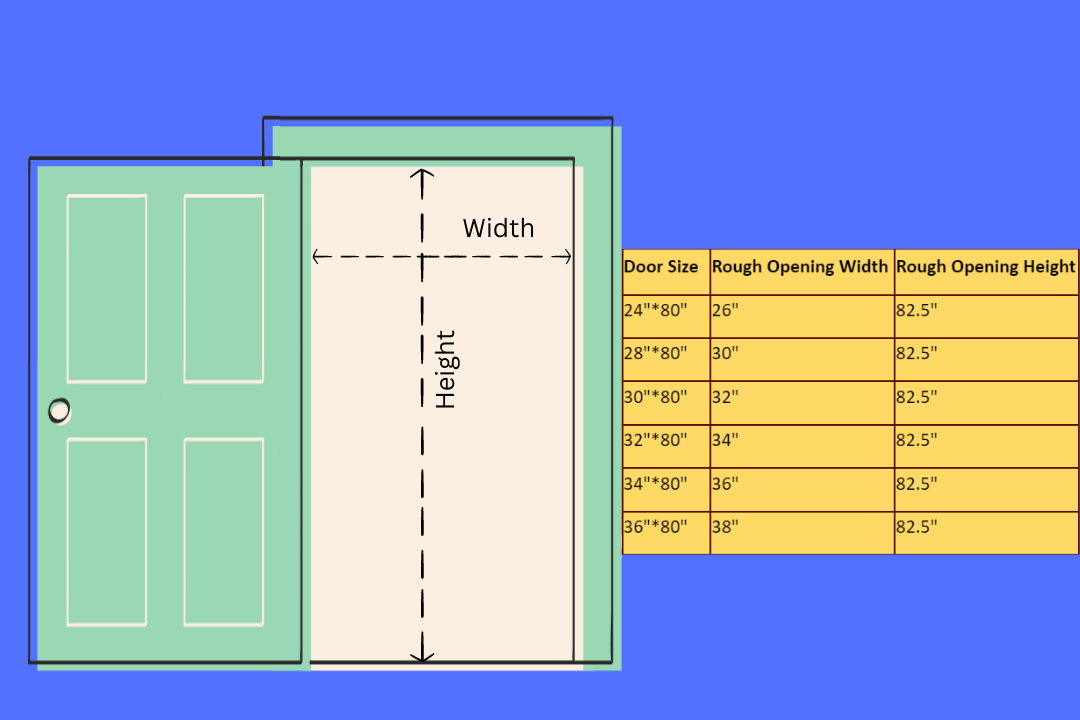
When embarking on the journey of home renovation or building, some aspects might seem mundane, yet they hold paramount significance. One such facet is the rough opening for a 36-inch door—a seemingly trivial standard that belies its complexity and importance. Measuring and constructing a proper rough opening not only accommodates the door itself but also plays a crucial role in the overall structural integrity and aesthetic appeal of any space. Understanding the specifications, installation nuances, and potential pitfalls can enlighten homeowners and builders alike, cementing their appreciation for this seemingly simple task.
Let’s delve into the essentials of rough openings for 36-inch doors, beginning with the fundamental measurements and their implications.
1. Understanding Rough Openings
A rough opening serves as the framework into which the door will be fitted. It encompasses the space necessary for hinges, the door’s thickness, and the frame itself. This is crucial, as failing to provide adequate space may lead to installation difficulties or functional issues post-installation.
2. Standard Dimensions
For a standard 36-inch door, the rough opening typically measures 38 inches in width. This additional space compensates for the door frame, shimming, and adjustment allowances essential for a level installation. Height-wise, the rough opening usually stands at about 82 inches—2 inches taller than the door itself. This height allowance accommodates the threshold and floor covering, ensuring seamless integration and function.
3. The Structural Importance of Rough Openings
The integrity of the entire door installation hinges on the correct sizing and construction of the rough opening. Walls are usually framed with studs and headers, and any anomaly in sizing could lead to sagging or misalignment over time. Additionally, a construction oversight could culminate in energy inefficiency, allowing air leaks that increase heating or cooling costs. Ensuring the rough opening is built to spec not only maintains the doorway’s purpose but also safeguards the home’s structural stability.
4. Tools Required for Measuring
Accurate measurements are the backbone of constructing a reliable rough opening. A tape measure, level, square, and pencil will be your primary tools. The tape measure allows for precise dimensioning, while the level ensures the opening is plumb. A framing square assists in verifying right angles, which are essential for the uniformity of the opening. Proper tools set the stage for a successful installation.
5. Step-by-Step Guide to Constructing a Rough Opening
Establishing a rough opening may seem straightforward, but meticulous attention to detail is paramount. Here’s a brief rundown:
- Step 1: Planning the Location – Consider the door’s functional purpose and its placement within the structure.
- Step 2: Measure and Mark – Use a tape measure to determine the height and width, marking the lines clearly on the stud framing.
- Step 3: Cut Framing Components – Use a saw to cut the necessary framing members—vertical studs and a horizontal header. A 2×4 or 2×6 header must be installed above the opening for support.
- Step 4: Assemble the Opening – Securely install the vertical studs first, ensuring they are plumb. Follow with the header, ensuring it’s level.
- Step 5: Inspect and Adjust – Double-check all measurements before proceeding. Any misalignment at this stage could lead to complications later in the process.
6. Common Mistakes to Avoid
Even experienced builders can fall prey to oversights. Here are some common pitfalls:
- Inaccurate Measurements – A common saying in construction is “measure twice, cut once.” A hasty measurement can lead to a cascade of issues.
- Ignoring the Door Weight – Heavier doors require sturdier frames. Neglecting this can result in sagging and operational failure.
- Inadequate Shimming – Failing to use shims can cause the door to stick or not close properly.
7. Incorporating Aesthetics and Functionality
Besides technical accuracy, the rough opening opens a world of aesthetic personalization. Trim, molding, and door styles can all enhance the entrance’s visual appeal. Opting for a more ornate style could require additional considerations in the rough opening, ensuring ample space for decorative elements while maintaining functionality.
Conclusion
The rough opening for a 36-inch door may appear an unremarkable component of home construction, yet its significance cannot be overstated. From ensuring structural integrity to enhancing aesthetic value, meticulous attention to this rather small detail influences a variety of factors that contribute to the home’s overall function and style. Embracing the detailed understanding of this task allows homeowners and builders to appreciate the mystique hidden within such seemingly simple processes.










Leave a Comment