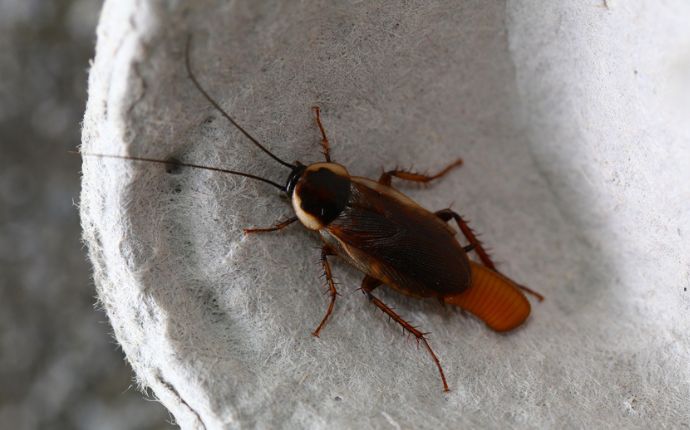
In the sprawling realm of the insect world, few creatures evoke as much dread as cockroaches. These resilient beings, often vilified in popular culture, possess a fascinating facet that many may overlook—cockroach eggs. Understanding what these minuscule vessels of life resemble can unveil a new perspective on these much-maligned insects. Like hidden treasures buried beneath layers of misconception, the appearance of cockroach eggs reveals intricacies that compel both curiosity and caution.
At first glance, cockroach eggs may appear to be merely inconspicuous specks—plain, unassuming, and easily dismissed. Yet, upon closer inspection, they bear distinctive characteristics that tell tales of survival and adaptation. To grasp their beauty, it is essential to delve into the specifics of what cockroach eggs look like, exploring their size, shape, color, and the fascinating egg cases known as oothecae.
In the world of entomology, cockroaches predominantly contribute to the family Blattidae, with numerous species, including the infamous German cockroach and the larger American cockroach. Each species, while sharing certain traits, also possesses unique features in their eggs. The ootheca, a term that conjures images of mystery, is a protective casing that holds the delicate cockroach eggs within. Often likened to a small, leathery purse, the ootheca serves as a fortress for developing embryos, safeguarding them until they are ready to emerge into the world.
Typically, the size of a cockroach egg varies depending on the species. Generally, these eggs are about 1 to 2 centimeters long, resembling the elongated curves of a grain of rice. Their shape—a somewhat cylindrical figure—gives them a sleek, streamlined appearance, suitable for their secretive existence. The surface texture is smooth, fostering an unassuming demeanor that belies the turmoil of life contained within.
The color of cockroach eggs is equally intriguing. They often display shades ranging from a pale tan to a deep brown, providing a camouflage that helps them evade detection in their chosen habitats, which are frequently dark and concealed. This natural defense mechanism can be compared to a work of art that blends into the canvas of its surroundings—a testament to evolution’s ingenuity.
When envisioning the cockroach egg’s ootheca, think of a complex structure akin to nature’s very own incubator. These egg cases are generally flat and paddle-shaped, with a segmented design that hints at the impending emergence of multiple nymphs—the juvenile form of the cockroach. An ootheca can house anywhere from 10 to 50 eggs, forming a miniature city of potential life, each egg cradled within the protective walls of the case. The ootheca itself is often discarded by the female cockroach shortly before the young emerge. This remarkable behavior can be visualized as a mother bird gently nudging her chicks from the nest, urging them to explore the world with a sense of independence.
As we venture deeper into the life cycle of cockroaches, it becomes evident that their reproductive strategy is nothing short of ingenious. In a bid for survival, these insects have evolved a reproductive system that prioritizes quantity over individual care. The female cockroach, a veritable matriarch of the underground, releases oothecae in sheltered locations, often in warm, humid crevices where they will remain undisturbed. Here, they become part of the surrounding clutter, masked by their environment—much like a skilled magician concealing a secret beneath layers of distraction.
After a gestation period that ranges from a few weeks to several months, the eggs develop into nymphs, their emergence marked by a dramatic transformation. One might liken this moment to a theatrical performance, as the tiny cockroaches break free from their protective casing, ready to embark on their own life journey. With a determination that belies their diminutive stature, they scuttle away into the shadows, echoing the tales of resilience embodied by their species.
Moreover, understanding the appearance of cockroach eggs can enable individuals to identify them, providing crucial insights for pest control. Spotting an ootheca within the confines of one’s home can act as an early warning system, alerting inhabitants to the potential presence of cockroaches. The presence of these packets of life serves as a clarion call for immediate action, prompting cleaning, sealing entry points, and employing extermination techniques if necessary.
In conclusion, while cockroach eggs may not encapsulate the beauty typically celebrated in the natural world, their unique attributes and adaptations contribute to a complex narrative of survival. By viewing cockroach eggs through a lens of intrigue rather than aversion, one can appreciate the intricate dance of life that unfolds silently, oftentimes right under our noses. They embody resilience—tiny vessels of life that harness the power of evolution and adaptability, thriving in environments that other species might shun.
As we reflect on the unassuming nature of these egg cases, perhaps it is time to reevaluate our relationship with these resilient creatures. Instead of mere pests, they can be seen as robust survivors, playing a pivotal role in the intricate tapestry of life that surrounds us. In recognizing the beauty held within the ootheca, we uncover hidden stories that captivate the imagination and inspire curiosity about the world of insects, often overshadowed by misconceptions.








Leave a Comment