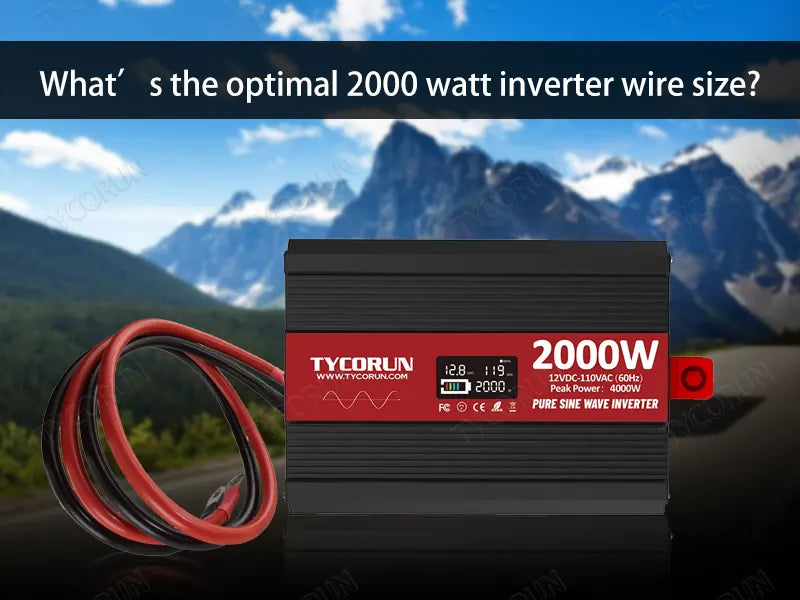
When it comes to powering your devices with a 2000-watt inverter, one of the most pressing questions is: what size wire should you use? This query may sound simple, yet it conceals a labyrinth of variables that can influence your decision. Are you prepared to untangle this web? In this article, we will delve into the necessary considerations that dictate the wire size for maximum efficiency and safety.
Understand the Basics of Inverter Power Consumption
To comprehend the requirements for wire sizing, it’s essential to grasp how an inverter operates. A 2000-watt inverter converts DC (direct current) from a battery into AC (alternating current) for household devices. The power consumed correlates with the load being driven. Thus, calculating the current (in amperes) is critical. The formula to determine this is:
Power (W) = Voltage (V) x Current (I)
For instance, if you’re using a 12-volt system, the equation indicates:
2000 W = 12 V x I
Solving for I gives you approximately 166.67 amps. This calculation is vital, as it establishes a benchmark for wire gauge selection.
Gauge Wire Systems: A Closer Look
Wire gauge is measured through the American Wire Gauge (AWG) standard, which advocates for increased wire diameter for lower resistance and improved current capacity. The smaller the AWG number, the thicker the wire. For a setup demanding high amperage like a 2000-watt inverter, you will require a hefty wire gauge, but how hefty?
Factors Affecting Wire Size
- Distance: The length of wire plays a critical role in voltage drop. Voltage drop refers to the reduction in voltage in the electrical circuit between the source and the load. If the distance from your battery to the inverter is significant, a larger wire gauge will mitigate the drop.
- Ambient Temperature: Higher temperatures can impact wire performance. As temperature rises, the wire’s ability to carry current decreases. It’s advisable to take these conditions into account, especially in the summertime or in hot environments.
- Continuous vs. Surge Current: Appliances often draw more power when starting up (surge current) than during regular operation. Ensure that the wire can withstand this initial surge, which may prompt you to choose a thicker gauge wire.
Recommended Wire Sizes for a 2000 Watt Inverter
After considering distance and other factors, the following guidelines generally apply:
- For lengths under 10 feet: A 4 AWG wire is typically sufficient in scenarios where the wire run is minimal. This allows for efficient current flow and mitigates potential heating issues.
- For lengths between 10 to 20 feet: When the distance extends, using a 2 AWG wire is prudent. This accommodates voltage drop and improves overall efficiency.
- Long runs exceeding 20 feet: In cases where wiring spans greater distances, consider a 1 AWG or even larger. The greater the distance, the more critical it becomes to counteract voltage drop and guarantee reliable performance.
Installation Considerations: It’s Not Just About Wire
A well-designed electrical system incorporates more than just the correct wire size. Here are additional elements you should contemplate to ensure a robust, safe setup:
- Connectors and Terminators: Using the appropriate connectors for your wire will establish secure connections, minimizing the likelihood of resistance buildup.
- Fuses and Breakers: Always integrate fuses or breakers rated appropriately for your loads. This is an essential safety feature that protects your equipment and lives.
- Terminal Blocks and Distribution Panels: A distribution panel can streamline your setup while ensuring that power is appropriately relayed to multiple devices safely.
A Final Word on Best Practices
When setting up a 2000-watt inverter, meticulous planning in wire selection isn’t merely a technicality; it is a cornerstone of safe and efficient system performance. Always err on the side of caution and consider future workloads that may demand higher amperage. Should challenges arise, seek professional assistance to avoid potential pitfalls and ensure the integrity of your electrical system.
Choosing the right wire size for a 2000-watt inverter can feel like navigating a complex puzzle, but with the right mix of knowledge and caution, you can forge ahead confidently. As you embark on your quest for electrical efficiency, reflect on the journey that has just begun. Can you solve the challenge and wire your inverter successfully? The answer lies in careful planning and execution, ensuring that every amp flows smoothly, free from perilous pitfalls.









Leave a Comment