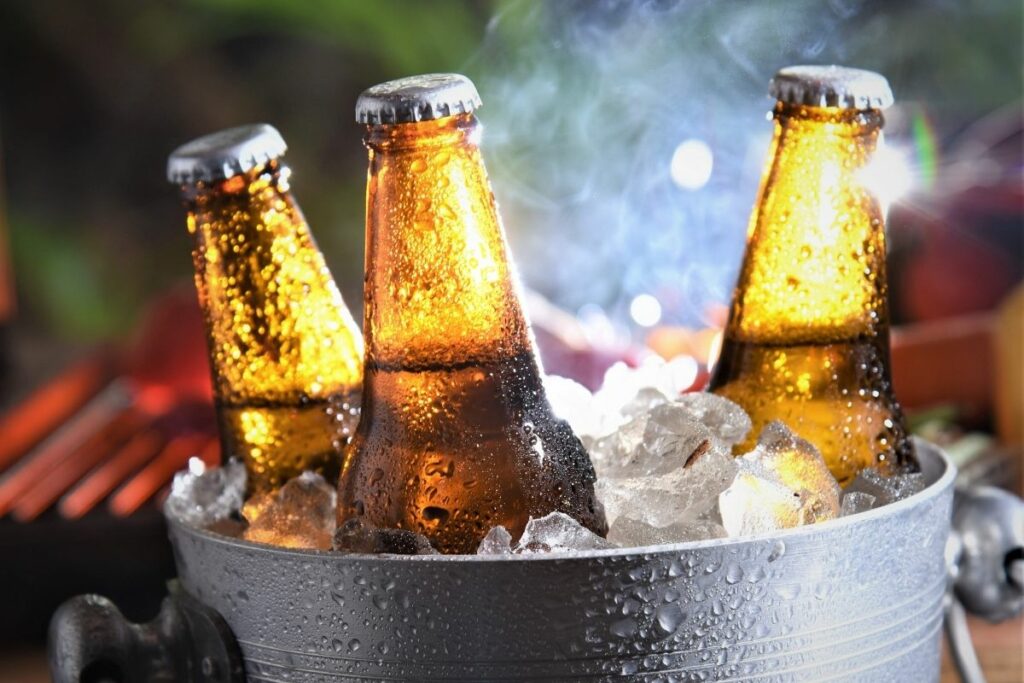
Beer, a cherished libation across cultures and centuries, is ingrained in social gatherings, celebrations, and moments of relaxation. For many enthusiasts, understanding the nuances of beer extends beyond mere appreciation of flavor and aroma; it encompasses the science behind its very essence. Among the myriad inquiries concerning this frothy drink, one common observation piques curiosity: what temperature will beer freeze? This seemingly straightforward question leads to a fascinating exploration of alcohol content, properties of beer, and the physics of freezing.
To grasp the freezing point of beer, one must first understand the properties of water and alcohol. Pure water freezes at 32°F (0°C), but beer is rarely a simple concoction of H2O. Typically, beer contains a significant amount of ethanol—around 4% to 6% for most standard brews, though some beers can have alcohol content as high as 12% or even more in certain craft varieties. The presence of ethanol alters the freezing point of the beverage considerably.
The Freezing Point of Beer
Generally speaking, the freezing point of beer hovers around 28°F (-2°C). However, this is not a universal figure; numerous factors can influence this temperature. Notably, the alcohol by volume (ABV) significantly affects the freezing point. As a rule of thumb, the higher the ABV, the lower the freezing point. For instance, a beer with 10% ABV might not freeze until it reaches temperatures below 25°F (-4°C), while lighter beers with only 4% ABV may start to crystallize closer to 30°F (-1°C).
In practice, this means that if you’ve ever hastily tossed a few cans into the freezer, the risk of forgetting them is real, and the consequences can be unfortunate. With temperatures falling beneath the critical threshold, not only is there the potential for seepage and explosion of the can, but the texture of the beer upon thawing can change dramatically. Beer that has frozen may emerge with flavors muted or off-balance due to the separation of components during the freezing and thawing process.
Factors Influencing Freezing Points
Delving deeper into why beer behaves the way it does when it comes to freezing, several factors warrant consideration. Most notably, the ingredients that comprise a typical beer demand attention. Ingredients like hops, malt, and sugar add complexity to the overall profile of beer, influencing its viscosity and freezing point. A hop-forward India Pale Ale (IPA) will differ in freeze potential compared to a rich and malty stout.
Another crucial element is the carbonation of beer. The carbon dioxide dissolved in beer creates a sense of effervescence and contributes to its overall stability. When beer freezes, these carbonated bubbles can expand and form ice crystals that disrupt the drink’s structure. This expansion is akin to how water behaves upon freezing, which can lead to alterations in taste and texture. Therefore, not only does the ABV matter, but the style and formulation of the beer also play substantial roles in determining its freezing point.
Practical Considerations and Tips
For beer lovers keen on enjoying their favorite brews at optimal temperatures, understanding freezing points can lead to better cooling strategies. Many enthusiasts prefer their ales in the range of 45°F to 55°F (7°C to 13°C), while lagers may be best served from 38°F to 45°F (3°C to 7°C). Keeping these temperatures in mind can help avoid over-chilling or, worse, freezing your beer.
If you’ve ever found yourself in a situation where you need to chill your libations quickly, consider immersing the bottles or cans in an ice bath rather than tossing them in the freezer. Adding salt to the ice bath can lower the freezing point of the water, creating an ultra-cold environment that chills beer in a fraction of the time without the risk of freezing.
Many breweries also recommend against freezing beer to preserve its integrity. Should you accidentally leave your beer in the freezer for too long and it freezes, allow it to thaw gradually. Rapid temperature changes may further impact the flavors, and patience is sometimes a necessary virtue to reclaim that beloved brew’s character.
Conclusion
The freezing point of beer is an intriguing aspect that intertwines science, enjoyment, and tradition. Understanding the interplay of temperature, alcohol content, and ingredients can enrich the drinking experience, elevating appreciation from mere consumption to a nuanced understanding. So, whether you find yourself savoring a hoppy IPA or a smooth stout, maintaining awareness of how temperature influences your beer can intensely enhance that moment of indulgence. Remember, beer is not just a drink; it’s a tapestry woven from history, chemistry, and culture that deserves respect.









Leave a Comment