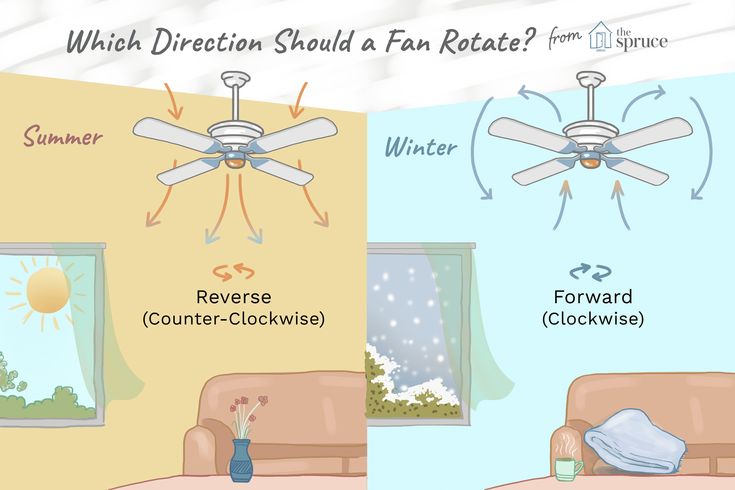
Ceiling fans have long been a staple in homes, providing comfort and aesthetic appeal. Yet, a common query arises among households: which direction should a ceiling fan turn? This question weaves a tapestry of practicality, efficiency, and even a hint of the obscure. The answer reveals not just a preference for air circulation but also an understanding of thermodynamics, environmental conservation, and even a nod to the evolution of home design. In this comprehensive guide, we will delve into the intricacies of ceiling fan direction, exploring their seasonal benefits, the mechanics that drive airflow dynamics, and much more.
1. Understanding Ceiling Fan Direction
The direction in which a ceiling fan turns is not merely an aesthetic choice; it can significantly impact air circulation in a room. Typically, ceiling fans can spin in two directions: clockwise and counterclockwise. The direction of rotation will dictate how air is moved around the space. One of the fascinating elements of this phenomenon lies in our innate relationship with airflow and temperature.
2. Counterclockwise Rotation: The Cooling Effect
During the sweltering summer months, when the oppressive heat bears down, setting your ceiling fan to spin counterclockwise becomes essential. In this configuration, the blades push air downward, creating a wind-chill effect that can make the ambient temperature feel much cooler—often by as much as several degrees. This occurs through the principles of convection; as the fan circulates air, it interacts with the warmth surrounding us, prompting a satisfying breeze that keeps stifling humidity at bay.
Moreover, this soothing airflow plays a psychological role. There is something inherently comforting about a gentle breeze; it not only cools the body but also invigorates the senses, fostering a calming ambiance in the sanctuary of your home.
3. Clockwise Rotation: The Heating Effect
On the other end of the spectrum, the cold winter months call for a strategic adjustment of your ceiling fan to a clockwise direction. While it may seem counterintuitive, the mechanism of warmth distribution enhances the efficacy of your heating system. In this clockwise rotation, the fan blades draw air upward, allowing warm air—being less dense—to rise and circulate back down the walls. This creates a more even temperature gradient within the room, effectively reducing cold spots.
Using a ceiling fan in winter can lead to greater energy efficiency, as it helps realize the full potential of your heating system. Homeowners may notice a reduction in heating bills, an enticing incentive for adopting this often-overlooked practice.
4. Operational Considerations: Fan Speed and Size
While the directionality of a ceiling fan is pivotal, one must also consider additional elements such as fan speed and blade size. A fan with multiple speed settings allows for greater customization based on weather conditions and personal comfort levels. In summer, a higher speed can amplify the cooling effect, while in winter, a lower speed suffices to gently circulate warmth without a vigorous draft.
The size of the ceiling fan also plays a significant role. An inadequately sized fan can lead to ineffective air circulation, leaving rooms unevenly heated or cooled. It is often recommended to select a fan with a blade span appropriate for the size of the room it inhabits. For example, larger spaces will benefit from wider blades, allowing for expansive air distribution, while smaller rooms may require a compact design to maintain efficiency.
5. The Impact of Ceiling Height
Ceiling height is another pivotal factor when considering ceiling fan direction and effectiveness. A fan that hangs too close to the ceiling may not operate at its optimal capacity, as the airflow is constrained. Conversely, a fan positioned too low may hinder movement and create discomfort. The general guideline is to maintain a distance of 7 to 9 feet from the floor to the bottom of the fan blades.
Moreover, the placement of the fan in a room—centralized versus offset—can echo prominently in the overall design and functionality. Strategic positioning can help maximize both performance and aesthetic merit, making the ceiling fan a focal point or a subtle enhancement depending on the desired ambiance.
6. Conclusion: A Multifaceted Approach to Ceiling Fans
The seemingly simple inquiry of which direction a ceiling fan should turn unfolds into a multifaceted narrative tethered to comfort, efficiency, and mindful design. By understanding how these devices interact with the surrounding environment, homeowners can elevate their living spaces into havens of tranquility. As the seasons shift and temperatures fluctuate, the humble ceiling fan emerges not just as a tool, but as an integral part of our relationship with our environment. It beckons us to embrace change and cherish the subtleties of our domestic lives, aligning practicality with a touch of artistry. In this exploration, the ceiling fan transcends its utilitarian role, becoming a participant in the ongoing dialogue of comfort and conscientious living.







Leave a Comment