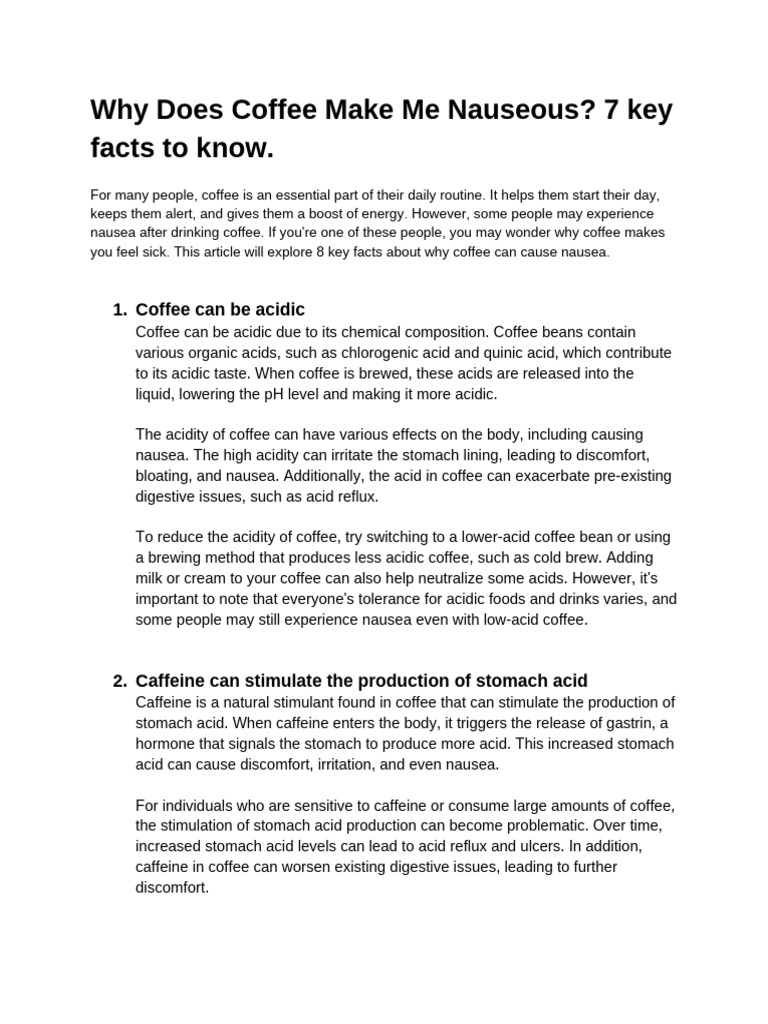
For many enthusiasts, the morning ritual of sipping coffee is an act steeped in tradition and pleasure. Yet, for some individuals, the very same cup that heralds the day can elicit a wave of nausea, transforming a cherished routine into a trial of discomfort. This perplexing phenomenon invites a deeper examination into the intricate interplay between the beverage and the human body. What lies beneath the surface of this common observation? This exploration seeks to elucidate the myriad reasons why coffee sometimes induces feelings of queasiness, unveiling potential health concerns and considerations for a more enjoyable experience.
1. The Role of Acidity in Coffee
One of the most significant factors to consider is coffee’s inherent acidity. Coffee contains various acids—chlorogenic acid, citric acid, and quinic acid, to name a few—that contribute to its flavor profile. While these acids provide the delightful tang that many appreciate, they can also irritate the lining of the stomach. For individuals who are particularly sensitive or have conditions like gastritis or acid reflux, this irritation can manifest as gastrointestinal distress and, ultimately, nausea.
2. Caffeine Sensitivity
Caffeine, the active ingredient that gives coffee its invigorating qualities, is another pivotal player in this narrative. The stimulant effects of caffeine vary dramatically from person to person. For some, even moderate amounts can trigger symptoms such as jitteriness, increased heart rate, and nausea. Caffeine stimulates the central nervous system and causes the stomach to produce more acid, which can exacerbate feelings of nausea, especially in people who metabolize caffeine slowly.
3. Dehydration Dilemma
Interestingly, while coffee is often enjoyed as a comforting morning beverage, it acts as a diuretic. This means that it can lead to increased urination and potential dehydration. Dehydration, regardless of its source, can manifest as nausea and light-headedness. So, if coffee is your primary liquid intake in the morning, the resultant dehydration might account for those queasy sensations. It’s imperative to balance coffee consumption with adequate water intake to mitigate these adverse effects.
4. The Impact of Additives
What you add to your coffee can also play a role in how your body responds. Creamers, sugars, and artificial sweeteners can introduce additional factors that potentially cause nausea. Lactose intolerance is prevalent in many adults, and those who add milk or cream to their coffee might experience digestive difficulties. Moreover, some sugar substitutes can provoke gastrointestinal discomfort, leading to an unpleasant aftermath of nausea. Consider evaluating your coffee accompaniments to determine if they might be contributing to your unease.
5. The Temperature Factor
The temperature at which coffee is consumed can also influence how it is tolerated. Some individuals may find that scalding hot coffee triggers their gag reflex or induces nausea. Hot drinks can act as a thermal irritant, making some people feel uneasy. Allowing your coffee to cool slightly before consumption could help in reducing any potential discomfort related to temperature. Attention to this seemingly minute detail can transform your experience significantly.
6. Timing and Empty Stomach
Another important consideration is the timing of coffee consumption, particularly when it is ingested on an empty stomach. For many, drinking coffee first thing in the morning can lead to stimulated acid production without any food to buffer it. An empty stomach can amplify the effects of both caffeine and coffee’s acidity, often resulting in feelings of nausea. Incorporating a light meal prior to your morning brew may mitigate this issue, providing a protective layer for the stomach.
7. Psychological Factors
The mind-body connection plays a remarkable role in physical sensations. Anxiety or stress can amplify the body’s response to coffee, causing upticks in heart rate or stomach churning. For those who associate coffee with hurried mornings or moments of tension, it could trigger feelings of nausea. A calmer approach to coffee consumption, perhaps by savoring each sip mindfully, may help to alleviate some of these psychological effects and enhance overall enjoyment.
8. Medical Conditions and Medications
Underlying medical conditions can also contribute to feelings of nausea when drinking coffee. Conditions such as irritable bowel syndrome (IBS), gastroesophageal reflux disease (GERD), or even certain food intolerances can worsen sensitivity to coffee. In addition, various medications can interact with coffee, intensifying nausea as a side effect. Awareness of personal health and consulting with healthcare professionals is crucial for individuals experiencing persistent nausea linked to coffee.
9. Quality of Coffee
The quality of the coffee bean itself can play an unexpected role in your body’s reaction. Poor-quality coffee often contains higher levels of mycotoxins and other unwanted compounds that can provoke gastrointestinal distress. Sourcing high-quality, freshly roasted beans may not only enhance the flavor but also make for a safer and more pleasant coffee-drinking experience.
Conclusion
In conclusion, experiencing nausea after consuming coffee is an intricate interplay of several factors—from acidity and caffeine sensitivity to personal health, hydration levels, and even psychological states. While it is a common observation, the reasons are varied and deeply nuanced. For those who love the taste and rituals surrounding coffee yet find themselves grappling with nausea, a few adjustments in consumption habits may help reclaim the pleasure of this beloved beverage. Ultimately, understanding your unique body and responses will empower you to enjoy coffee on your terms, transforming potential discomfort into delightful indulgence.








Leave a Comment