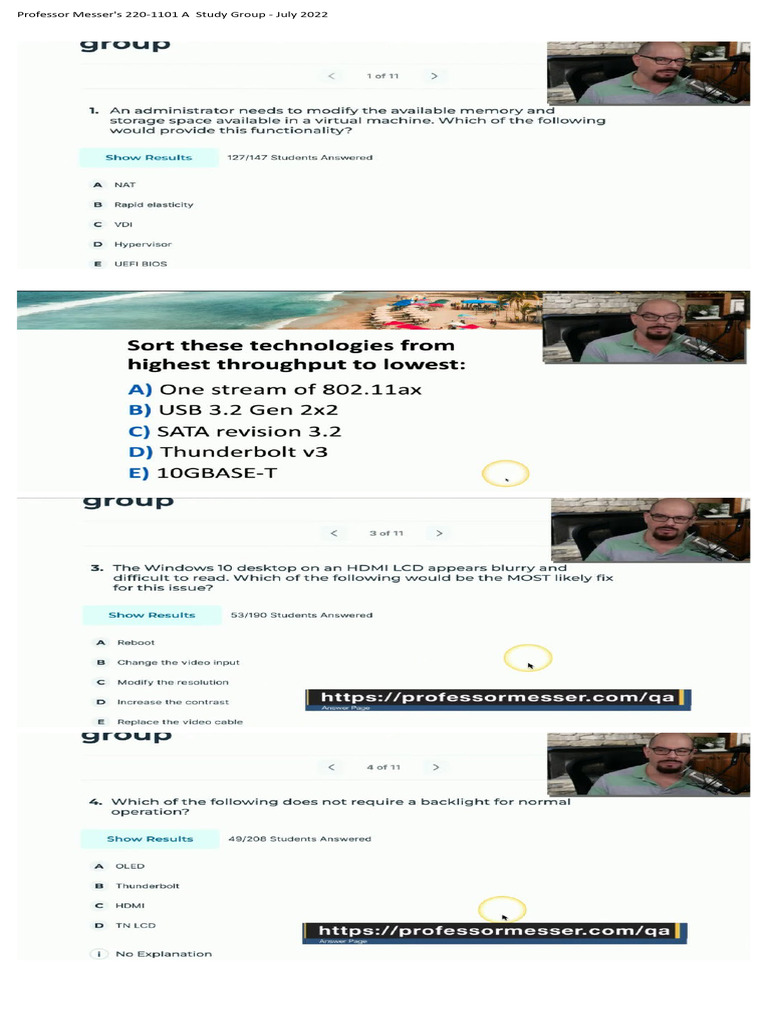
The CompTIA A+ certification is a prestigious credential that validates foundational skills in IT support and operational competencies. Aspiring professionals often find themselves eagerly awaiting details about the examination format, especially when it comes to the number of questions they will face during the assessment. Understanding the structure of the CompTIA A+ exam is crucial for effective preparation. This guide delves into various facets of the exam concerning the question count and what candidates can expect.
The CompTIA A+ certification is divided into two distinct exams: CompTIA A+ 220-1101 and CompTIA A+ 220-1102. Each of these exams encompasses different topics, reflecting the breadth and depth of knowledge required for IT support roles. As such, comprehending the question count and the nature of these questions can significantly bolster a candidate’s study strategy.
1. Exam Structure Overview
Each CompTIA A+ exam includes a plethora of question types designed to evaluate a candidate’s proficiency across multiple domains in IT. The total number of questions on each exam varies, but candidates can expect somewhere around 90 questions per test. The key to success lies in understanding the format, which encompasses multiple-choice questions, performance-based questions, and drag-and-drop questions. This structure is intended to gauge not just rote memorization, but also practical problem-solving abilities.
2. Types of Questions
It’s important for potential test-takers to familiarize themselves with the various question formats:
- Multiple Choice Questions (MCQs): Typically, the bulk of the exam consists of multiple-choice questions, where candidates choose the best option from a set of possible answers. These questions assess the breadth of a candidate’s knowledge and understanding of key concepts in IT support.
- Performance-Based Questions (PBQs): These questions are scenario-based and require candidates to demonstrate their skills in practical, hands-on situations. For instance, one might be asked to troubleshoot a malfunctioning system or to configure a network device. PBQs reflect real-world challenges and are integral for evaluating critical thinking and problem-solving capabilities.
- Drag-and-Drop Questions: This interactive format allows candidates to match components with their corresponding functions or arrange items in a logical sequence. While less common than MCQs, these questions test analytical thinking and comprehension in a tactile manner, providing a more immersive test experience.
3. Scoring Mechanism
The scoring for the CompTIA A+ exams is not as straightforward as one might think. The passing score for both exams typically hovers around 675-700 on a scale from 100-900. Understanding how scores are calculated is vital; not all questions carry equal weight, and performance-based questions often influence scores more profoundly due to their complexity. Therefore, every question plays a pivotal role in determining overall success.
4. Content Domains
The two exams cover distinct domains, each with its own set of competencies:
- CompTIA A+ 220-1101: Focuses on mobile devices, networking technology, hardware, virtualization, and cloud computing.
- CompTIA A+ 220-1102: Concentrates on operating systems, security, troubleshooting methodologies, and operational procedures.
The questions are curated to reflect these domains, ensuring that candidates possess a holistic understanding of IT fundamentals. Thus, a comprehensive study regime targeting these specific fields is indispensable.
5. Preparing for the Exam
An effective preparation strategy for the CompTIA A+ exams requires a multifaceted approach. Candidates should consider the following methods:
- Utilizing Study Guides: Comprehensive study guides that outline key concepts, provide practice questions, and explain answers can facilitate deeper comprehension.
- Mock Exams: Candidates should take full-length practice exams under timed conditions to simulate the test environment. This technique enhances time management skills and identifies areas requiring additional focus.
- Hands-On Experience: Engaging in practical exercises or labs enables candidates to apply theoretical knowledge in real scenarios. This experience not only enhances retention but also boosts confidence when tackling performance-based questions.
6. Final Thoughts
Approaching the CompTIA A+ examination with a clear understanding of its structure, including the number and types of questions, equips candidates to face the test with assurance. By familiarizing oneself with the content domains, mastering diverse question formats, and employing a strategic study plan, candidates can advance their prospects in the competitive IT landscape. Certifying one’s skills through the CompTIA A+ can open doors, offering numerous opportunities for growth and development within the technology sector.











Leave a Comment