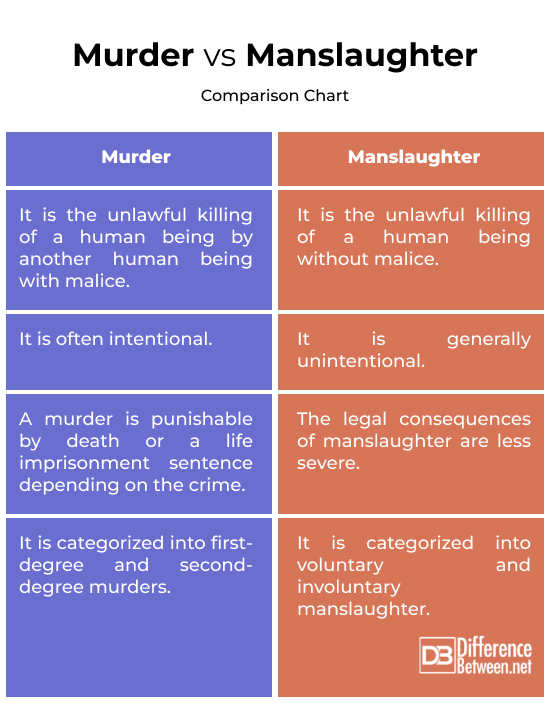
The intricacies of criminal law often confound individuals, particularly when it comes to understanding the distinctions between murder and manslaughter. These terms are frequently misused, leading to misconceptions that can cloud one’s judgment when discussing matters of life and death. Despite both offenses stemming from the act of unlawfully causing the death of another, the underlying nuances that differentiate them foster a deeper conversation about intent, emotion, and circumstances. This exploration promises to shift your perspective and provoke thoughtful inquiry into the complexities of justice.
Understanding Intent: A Crucial Differentiator
At the heart of the distinction between murder and manslaughter lies a pivotal element: intent. In legal parlance, murder is characterized by the presence of malice aforethought, which signifies a deliberate and premeditated intention to kill or cause grievous harm. This premeditation can range from meticulously orchestrating a plan to impulsively deciding to terminate a life during a heightened emotional state.
Manslaughter, in stark contrast, typically lacks this malign intent. Instead, it is often categorized into two primary types: voluntary and involuntary manslaughter. Voluntary manslaughter occurs when an individual unexpectedly finds themselves provoked in a manner that would incite a reasonable person to react violently, thus leading to the unintentional murder of another. Involuntary manslaughter reflects a more egregious neglect or recklessness—think of scenarios where a death results from careless driving or from failing to secure a hazardous environment.
The Role of Emotion and Provocation
Emotional turmoil serves as a unique catalyst in defining manslaughter scenarios. The law recognizes that human emotions can cloud judgment, leading individuals to act irrationally. For instance, a person who discovers their spouse in an act of infidelity may be overcome by rage, temporarily losing the capacity for rational thought. This momentary lapse is crucial; it forms the foundation for the classification of their actions under voluntary manslaughter as opposed to murder. The concept of “heat of passion” is instrumental here; it encapsulates the idea that such a response, driven by overwhelming emotions and provocation, should be viewed through a more forgiving legal lens.
On the other hand, the more detached perspective of murder posits that an individual acted with a clear mind, fully aware of the implications of their choices. This differentiation drastically alters the pursuit of justice, as the motivations underpinning each action reflect not only the individual’s culpability but also the societal attitudes towards empathy and understanding of human frailty.
Distinctions in Legal Consequences
The legal ramifications of murder and manslaughter also diverge dramatically. Murder is generally met with the most severe penalties, including life imprisonment or even the death penalty in jurisdictions where it remains in practice. The rationale behind such harsh sentencing finds its roots in the premeditated nature of the crime and the perceived threat an individual poses to society.
Manslaughter, by contrast, typically carries significantly lesser penalties. While still serious, sentences can range from a few years to two decades, particularly for voluntary manslaughter cases where provocation plays a fundamental role. Involuntary manslaughter cases can sometimes result in even lighter sentences that emphasize rehabilitation over retribution, reflecting a belief in the potential for change following an accidental or negligent act.
Factors Influencing Legal Interpretation
Several variables play a crucial role in how murder and manslaughter are adjudicated within the legal system. Jurisdictions may vary, leading to discrepancies in how laws are enforced and interpreted. Factors such as the defendant’s past conduct, societal norms, the presence of a weapon, and eyewitness testimonies can ultimately influence the categorization of a death as murder or manslaughter.
Another dimension to consider is the involvement of mental health issues. Defendants might argue that psychological impairments influenced their actions, potentially resulting in a manslaughter verdict instead of murder. This line of defense highlights the intersection between law and mental health, pushing society to ponder the complexities of human behavior and accountability.
Public Sentiment and Perception
How society views these two offenses can deeply affect prosecution and defense strategies. High-profile cases often frame public opinion. The community’s reaction may sway judicial outcomes, leading to intense media scrutiny and pressure for harsher penalties or more lenient interpretations based on the perceived morality of the act. This interplay between public sentiment and legal outcomes underscores the importance of understanding how context shapes both law and justice.
Conclusion: A Call for Clarity in a Complex Realm
The distinction between murder and manslaughter exemplifies the complexities of legal language and the inherent gray areas surrounding matters of morality, emotion, and culpability. While the surface similarities may mislead one into conflating the two, deepening one’s comprehension unveils a rich tapestry of factors that must be considered in pursuit of justice. The exploration of intent, emotional provocation, and societal influence not only educates but also invites a broader discourse on our collective values regarding life and accountability. In a world rife with misunderstandings, grasping these differences encourages more informed conversations, engendering a deeper respect for the law’s nuanced role in navigating the darkest aspects of humanity.









Leave a Comment