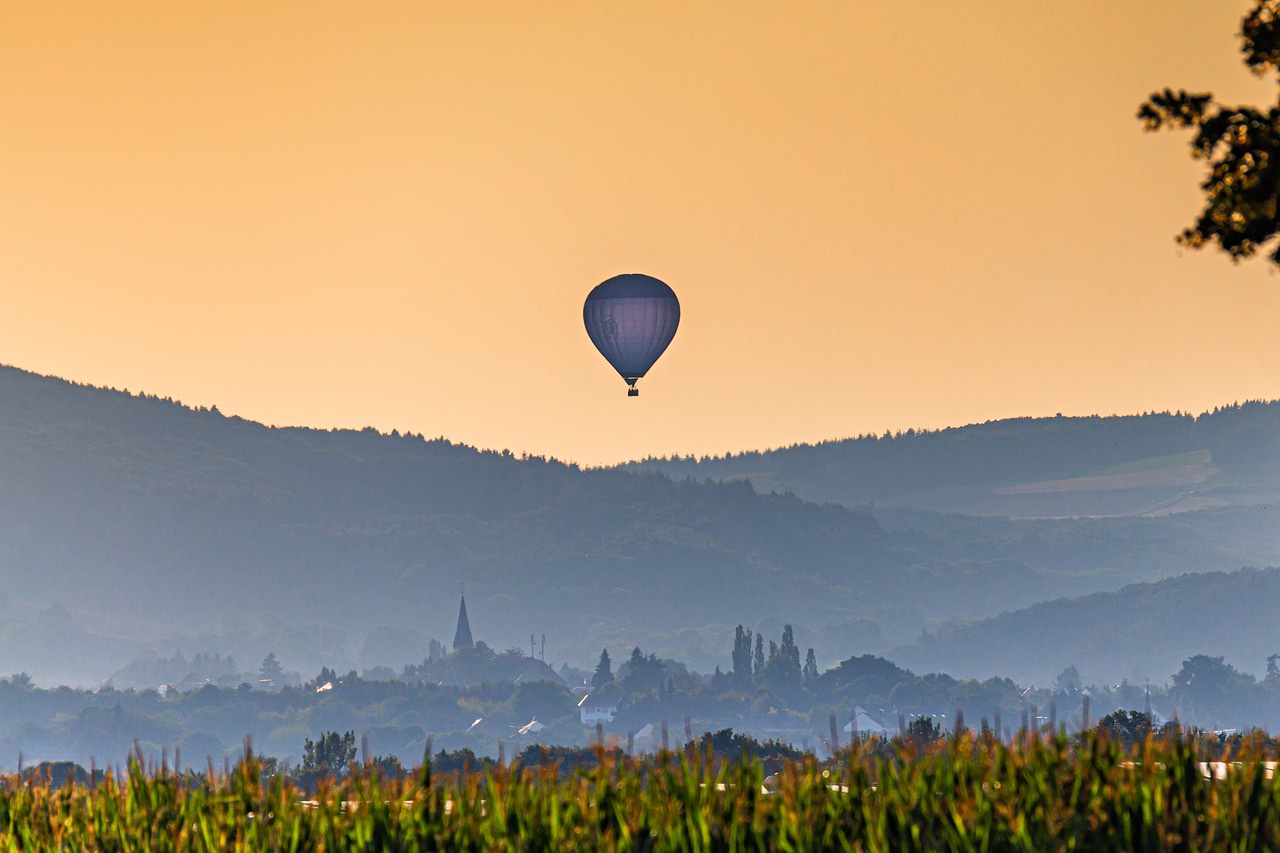
Imagine the gentle sway as the basket lifts from the earth, the ground gradually receding beneath you. Hot air balloons evoke a sense of whimsy, evoking nostalgia for simpler pleasures. Yet, the question lingers: how high can a hot air balloon truly ascend? To answer this question, we must explore the intricacies of buoyancy, the influencing factors of altitude, and the breathtaking vistas that await at dizzying heights.
The physics behind hot air ballooning is rather straightforward, yet mesmerizing. The principle of buoyancy, first articulated by Archimedes, dictates that an object will float if it displaces a volume of fluid equal to its weight. In the case of hot air balloons, the “fluid” is the cooler air surrounding the balloon. By heating the air inside the balloon with a flame, its density decreases, creating a buoyant force that propels the balloon upward. The key to ascend lies in the temperature differential.
Now, let us delve into the question of altitude. The general consensus among ballooning aficionados suggests that most hot air balloons can safely reach altitudes between 3,000 to 5,000 feet. However, the world record for the highest ascent in a hot air balloon stands at an astounding 68,986 feet, achieved in 2005. These extremes illustrate a profound dichotomy: while casual balloonists revel in the serene heights typical of most flights, seasoned adventurers push the limits of human capability and engineering.
As we consider how high a hot air balloon can ascend, various factors emerge as pivotal. One such factor is the design of the balloon itself. The envelope, which is the fabric structure containing the heated air, plays a crucial role. Balloons constructed from lightweight materials and designed with aerodynamic efficiency can achieve greater heights compared to their bulkier counterparts. Innovations in materials technology have resulted in balloons that not only retain heat more effectively but also withstand diverse atmospheric pressures and temperatures.
Weather conditions are another crucial determinant of altitude. A clear, calm day is ideal for a hot air balloon flight, particularly when temperatures are higher. However, as altitude increases, temperatures drop, affecting the balloon’s performance. Each ascent introduces potential physiological challenges and mechanical limitations. Balloonists must possess acute awareness of weather patterns, as unexpected gusts or thermals can transform a leisurely voyage into a precarious journey.
Moreover, as altitude increases, so does the potential for thin air and reduced oxygen levels. A pilot navigating above 12,000 feet may face hypoxia—the shortage of oxygen in the body as altitude increases. This risk necessitates specific training and precautions for those attempting high-altitude flights. Such preparations underscore the profound interrelationship between human physiology and the environment in the sphere of ballooning.
The breathtaking vistas encountered at high elevations are undeniable. From towering mountain ranges to sprawling landscapes dotted with tiny civilizations, the perspective afforded by soaring high above the earth captivates the senses. As the balloon ascends, the earth below transforms into a tapestry of color and texture, a reminder of nature’s grandeur. This shift in perspective invites contemplation about our place in the cosmos and a deeper appreciation for the world we inhabit.
Regulatory measures also play a significant role in determining how high a hot air balloon can rise. National aviation authorities impose altitude limits and airspace restrictions to ensure the safety of both the balloonists and the air traffic around them. These regulations can vary markedly by region, as safety concerns are addressed with varying degrees of strictness. In essence, the aviation landscape is littered with layers of bureaucracy that balloonists must navigate as they pursue their lofty aspirations.
For those drawn to the allure of high-altitude ballooning, preparation is key. A prospective balloonist should invest time in training, gaining essential skills that encompass not only the mechanics of flight but also decision-making abilities that could prove lifesaving. Additionally, exploring ballooning clubs or engaging with experienced pilots can provide invaluable insights into the nuances of this enchanting pastime.
Ultimately, the question of how high a hot air balloon can go is not merely a quantitative inquiry; it beckons a deeper exploration of human ambition, courage, and curiosity. Whether you find yourself gently lifting off into the sky, captivated by the ethereal beauty spreading before you, or exploring the bold ventures of world record holders, the journey of hot air ballooning is as much a pursuit of personal ascension as it is a venture into the unknown. The experience serves as a poignant reminder that the sky is not the limit, but rather an invitation to expand the horizons of our dreams.
In conclusion, hot air ballooning offers a unique union of science, art, and adventure. As flight enthusiasts embrace both the marvelous and the daunting aspects of ascending into the atmosphere, they discover not only the thrill of elevation but also the profound contemplation it brings. The next time you gaze upwards and spot a hot air balloon afloat in the zenith, consider the tales woven within its ascent and the unexplored heights that beckon beyond the horizon.










Leave a Comment