Have you ever glanced at a finely tailored suit and noticed that intriguing line beneath the pocket? It may seem like a mere design feature, but delve deeper, and you’ll find it serves a purpose more significant than mere embellishment. This feature, often overlooked, beckons a playful question: What exactly is its role in the grand tapestry of sartorial elegance? Yet, here lies a potential challenge; many remain ambivalent about its relevance. Let’s embark on a journey to unravel the mysteries surrounding this seemingly innocuous detail.
At first glance, the line under the pocket, often referred to as a “pocket flap,” may appear to be a simple stylistic element. However, it embodies the fusion of form and function, a principle that anchors high-quality tailoring. The flap commonly serves two primary functions: aesthetic appeal and the protection of the pocket contents. Although the sartorial landscape has evolved, this line continues to be an enduring hallmark of sophisticated menswear.
To appreciate the line’s significance, one must consider the historical context surrounding suit design. Tailoring can be traced back to medieval times, evolving from practical necessity to high art. Suits, once designed solely for functionality, have matured into symbols of prestige and refinement. The line under the pocket can be seen as a vestige of this evolution, an emblem of tradition that has managed to maintain its relevance in contemporary fashion.
But why stop there? Every detail in tailoring emerges from a meticulous process. The line under the pocket is often crafted from the same fabric as the suit itself, expertly stitched to encompass a sense of continuity in the overall design scheme. This creates a visual harmony that is pleasing to the eye and elevates the overall appearance of the garment. Utilizing expert craftsmanship, tailors employ a technique known as “floating lapels” to ensure this line maintains its shape and integrity over time.
Moreover, the line serves a practical purpose by providing structure to the pocket. An unstructured pocket may sag and deform, leading to an unsightly silhouette. The line acts as a reinforcement, maintaining the pocket’s shape while preventing its contents from distorting the suit’s sleek profile. In essence, it is an ingenious solution that marries function with aesthetic appeal.
As styles fluctuate, so does the significance of the pocket flap. In recent years, more minimalist designs have gained traction, leading some to forgo traditional lines for a cleaner silhouette. This shift presents a challenge: Should the pocket line be considered superfluous, or does it possess an irrefutable charm that merits its place on a modern suit? The answer lies in personal preference and the character one wishes to project.
While classic suits may feature pronounced pocket lines, more avant-garde designs often embrace asymmetry and unique cuts. This leads to an intriguing inquiry: can one successfully convey sophistication without the presence of that bold line? The realm of fashion is ever-evolving, yet the enduring allure of traditional tailoring suggests that this detail continues to hold significance, however subjective that might be.
Attention to detail is paramount in the world of bespoke tailoring. Tailors often employ intricate stitching techniques to enhance the pocket flap, a hallmark of fine craftsmanship. Hand-stitched elements can imbue a sense of uniqueness, setting an individual piece apart from mass-produced garments. Thus, this little line becomes a testament to the bespoke tailoring ethos, where each suit is a work of art, meticulously crafted to showcase the wearer’s individuality.
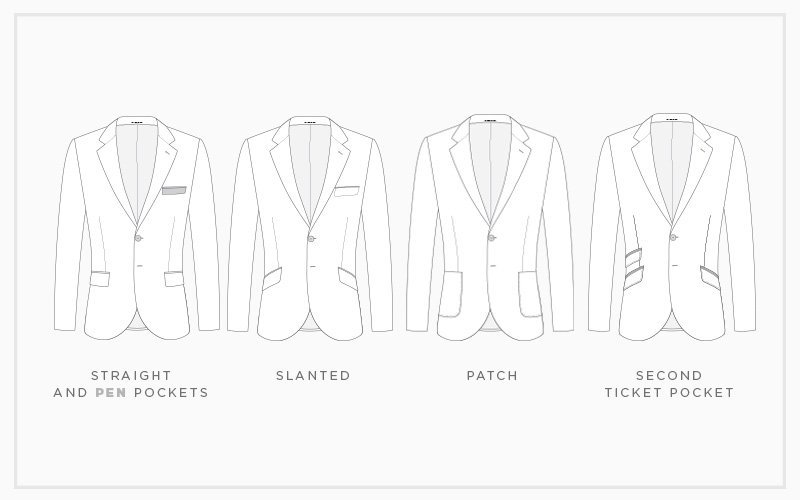
Furthermore, customization options abound regarding pocket flaps. Some individuals may opt for flap pockets, sleek and refined, while others prefer patch pockets that boast a more casual flair. The choice reflects one’s personal style and the occasion for which the suit is intended. In this light, the line not only serves a functional purpose but also acts as a canvas for self-expression.
Additionally, one must consider the impact of cultural nuances on suit design. In various cultures, the presence or absence of the pocket line can dictate perceived formality or casualness, influencing social interactions during significant life events. Understanding the cultural dimensions of tailoring enriches one’s appreciation of this minutiae, elevating it from a simple line to a marker of identity.
As we navigate the complex tapestry of design, one must also confront sustainability concerns prevalent in today’s fashion industry. The materials used to craft pocket flaps can affect not only the garment’s lifespan but also its eco-footprint. Exploring sustainable fabrics and ethical tailoring practices can give the pocket line a new narrative, merging tradition with modern responsibility.
In conclusion, the line under the pocket on a suit jacket is far from a trivial embellishment. It serves as a vital link between craftsmanship, tradition, and personal identity. Whether you admire it as a remnant of sartorial history or appreciate its functional prowess, this line epitomizes the intricate balance between style and substance. Considering the evolution of fashion, one may find themselves pondering: Is this unassuming detail a vestige of the past or an essential component of modern elegance? Only the discerning eye can decide as the world of tailored suits continues to evolve.











Leave a Comment