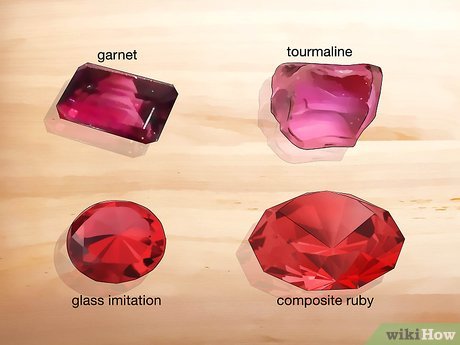
When faced with the scintillating allure of rubies, one may find themselves captivated by the fiery reds and unparalleled brilliance of this magnificent gem. The challenge arises, however, in distinguishing between a genuine ruby and a mere impostor. How can you be certain that the gem twinkling in your jewelry box or adorning a loved one’s neck is not a clever fake? Let’s embark on a journey to uncover the telltale signs that will help you determine the authenticity of a ruby.
1. Understanding Rubies: The Basics
Before diving into the nuances of detection, it is essential to grasp what constitutes a ruby. A ruby is a variety of the mineral corundum, characterized by its vibrant red hue due to the presence of chromium. This vivid color can vary from purplish-red to orange-red. Real rubies exhibit unique properties that differentiate them from synthetic alternatives and imitations.
2. The Color Spectrum: Evaluating Hue
The first aspect to assess is the color. Authentic rubies display a rich, vivid red, known as “pigeon’s blood.” Examine the gemstone under natural light to appreciate its depth of color. Look for hues that resonate with a dark red — not too orangey or too dark. Remember that the more intense the color, the more valuable the ruby typically is.
3. Light Reflection: The Gemstone’s Luster
Next, consider how the ruby interacts with light. Genuine rubies are known for their brilliance and sparkle. When light strikes them, you should see a vibrant glow radiating from within. Utilize a flashlight to observe if the ruby exhibits red flashes — a feature often absent in simulants. If the stone appears overly dull or translucent, it might not be a true ruby.
4. The Refractive Index: Using a Gem Tester
For those inclined towards scientific methods, employing a gem tester can be advantageous. Rubies possess a refractive index of approximately 1.76 to 1.77. By utilizing this tool, one can determine the refractive index of any specimen. If the measurement falls outside this range, you may be dealing with a fake or a different stone altogether.
5. Inclusions: The Fleeting Fingerprint of Natural Stones
Nature often leaves its mark on genuine rubies in the form of inclusions, or internal imperfections. Known as ‘silk,’ these needle-like inclusions can be a sign of authenticity. Examine the ruby carefully under magnification; authentic stones may display slight irregularities, while synthetic rubies tend to be flawless. Familiarize yourself with common inclusions such as rutile or tiny crystals trapped inside — these tell a story of authenticity.
6. The Scratch Test: Hardness Duel
Rubies are among the hardest gemstones, scoring 9 on the Mohs hardness scale, just below diamonds. A quick and rather daring method to test a ruby’s hardness involves scratching it with a material of lower hardness. Keep in mind, however, that this method is more suitable for experienced gemologists, as a miscalculated scratch could damage the stone irreparably. Proceed with caution!
7. The Heat Test: Evaluating Resistance
Another intriguing avenue involves the heat test. Genuine rubies can withstand extreme temperatures, hence the application of a flame from a lighter to the jewel should warrant no color change or damage. Fake stones or glass counterparts may melt or produce an unpleasant reaction. Again, this test should be handled with utmost care.
8. Origin and Certification
Knowing the provenance of the ruby can lend credence to its authenticity. Rubies from specific regions, such as Myanmar (Burma) or Thailand, are revered for their quality. Additionally, reputable jewelers should provide certificates of authenticity. These documents can reveal the ruby’s origin, treatment, and appraisal value, instilling confidence in your purchase.
9. The Price Factor: A Compatibility Check
Finally, the price of a ruby typically reflects its value. If a deal appears too good to be true — for instance, a high-quality, large ruby offered at a fraction of its market value — skepticism is warranted. Authentic rubies carry a price tag reflective of their rarity and desirability; beware of bargains that appear suspiciously attractive.
Conclusion: The Quest for Authenticity
Determining whether a ruby is genuine is an endeavor that requires a blend of knowledge, intuition, and the proper tools. As you navigate through the dazzling world of gemstones, remember that each ruby possesses its own tale of natural wonder. With the insights shared here, you are now equipped to unravel the mystery of your gem. So, the next time you wear or admire a ruby, you will do so with confidence, knowing that you possess the acumen to discern the real deal from an ersatz imitation.









Leave a Comment