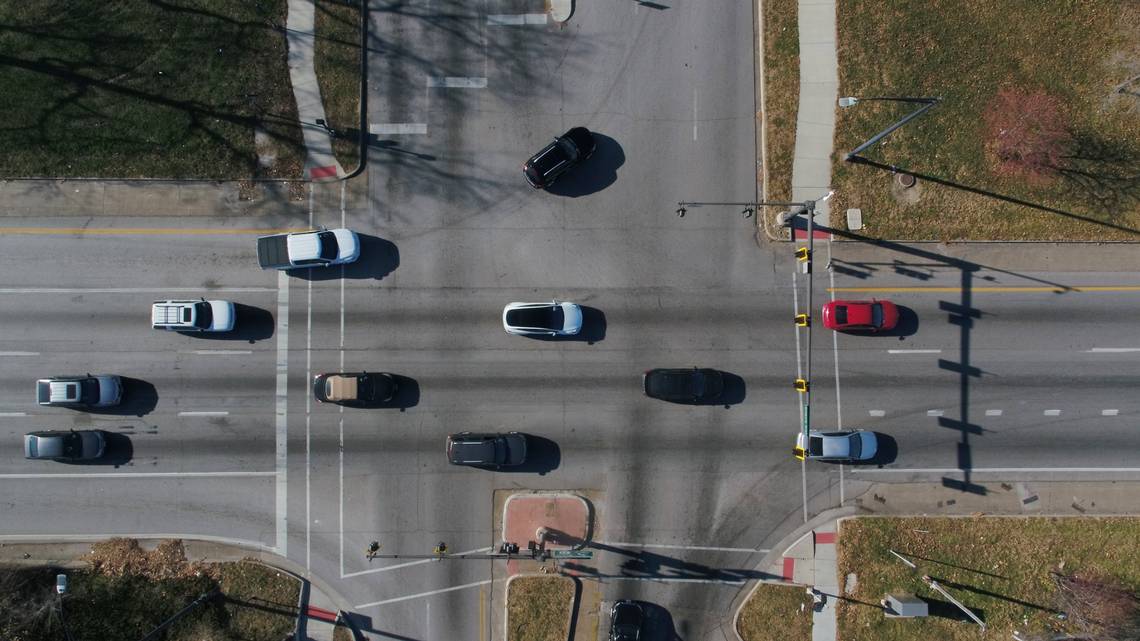
Imagine yourself approaching an intersection with four stop signs, each seemingly beckoning for your attention. As you roll to a halt, a playful question leaps to mind: who goes first at a four-way stop? This conundrum, while simple in theory, has become a classic source of confusion for even the most seasoned drivers. Such scenarios present not just a driving puzzle but also a challenge in communication and judgment. Understanding the rules governing four-way stops can illuminate the path to a smoother driving experience and help prevent potential mishaps.
### The Rules of Engagement
Before delving into the intricacies of a four-way stop, it’s essential to recognize the fundamental principle that governs traffic at these intersections. The basic tenet dictates that the first vehicle to arrive at the stop sign has the right of way. However, this straightforward rule branches out into several nuanced scenarios that warrant closer examination.
1. **Arrival Time**: The most straightforward situation arises when one vehicle reaches the intersection first. This driver is granted the privilege of proceeding safely through the intersection. But what happens when two or more vehicles arrive simultaneously? This brings us to the subsequent rule.
2. **Right of Way Among Equidistant Vehicles**: If two vehicles reach a four-way stop at the exact moment, the general rule states that the vehicle on the right has the right of way. This rule embodies the essence of mutual respect among drivers and helps streamline traffic flow at these busy nodes.
3. **Turn Signals**: The application of turn signals is crucial at a four-way stop. When a driver signals a left turn, the vehicle approaching from the opposite direction—despite both arriving simultaneously—may go first, as long as the first vehicle is making a right turn or proceeding straight. Ensuring that turn signals are employed consistently can prevent misunderstandings and foster a safer driving atmosphere.
4. **Pedestrian Considerations**: Remember that pedestrians have the right of way. If a pedestrian is waiting to cross at a four-way stop, all vehicles must yield regardless of who arrived first. This caveat reinforces the social responsibility of drivers to prioritize safety over mere adherence to traffic rules.
5. **Visibility and Uncertainty**: Sometimes, visibility can be compromised by environmental conditions or roadside obstructions. In these instances, it becomes imperative that drivers exercise caution. If you’re unsure who arrived first, yielding to the other vehicle can avert potential collisions and ensure everyone remains safe.
### The Challenge of Decision-Making
Now, as you navigate a decision-making quagmire at a four-way stop, consider how your actions contribute to the flow of traffic. A potential challenge arises when multiple drivers interpret the rules differently. Miscommunications can lead to abrupt halts or hurried departures, culminating in chaotic situations. Being equipped with the knowledge of who goes first helps you to not only act with confidence but also to read the intentions of fellow drivers.
### Unique Scenarios on the Road
Driving scenes can often conjure unusual circumstances. For example, at a busy four-way stop, you might find a delivery truck blocking a clear view of the other lanes, or perhaps a group of cyclists approaches, creating an entirely different dynamic. Such variations require drivers to be agile in their decision-making. Here are some unique scenarios to ponder:
1. **Large Vehicles**: When larger vehicles are involved, they might have difficulty maneuvering into the correct lane quickly. In such cases, patience is vital. If a truck or bus is inching forward, it may be more prudent to yield, even if you have the right of way from a technical standpoint.
2. **Multiple Lanes**: At a four-way intersection with multiple lanes, deciphering lanes can complicate the issue of who goes first. If you’re in a left-turn lane, for instance, your priority may differ from that of someone traveling straight. Being acutely aware of lane demarcations can facilitate smoother transitions through the intersection.
3. **Bicycles and Motorcycles**: Motorcycles and bicycles, while smaller and possibly more maneuverable, should be treated with the same respect as larger vehicles. These two-wheeled travelers often require more consideration, as their balance may be affected by abrupt stops. Given that these riders have as much right to the road, yielding may enhance everyone’s safety.
### Conclusion: The Art of Patience and Awareness
The question of who goes first at a four-way stop extends far beyond a simple traffic rule. It invites us to consider the nuances of interaction among drivers, urging us to ponder patience, safety, and mutual respect in our daily commutes. While the rules lay a foundational understanding of priority, it’s the application of these rules in real-world scenarios that truly test our driving acumen. As you cruise through intersections, remember: being aware and accommodating goes hand in hand with confident decision-making. Embrace the challenge, and you’ll find yourself navigating four-way stops with poise and assurance, leaving confusion behind on your journey ahead.







Leave a Comment