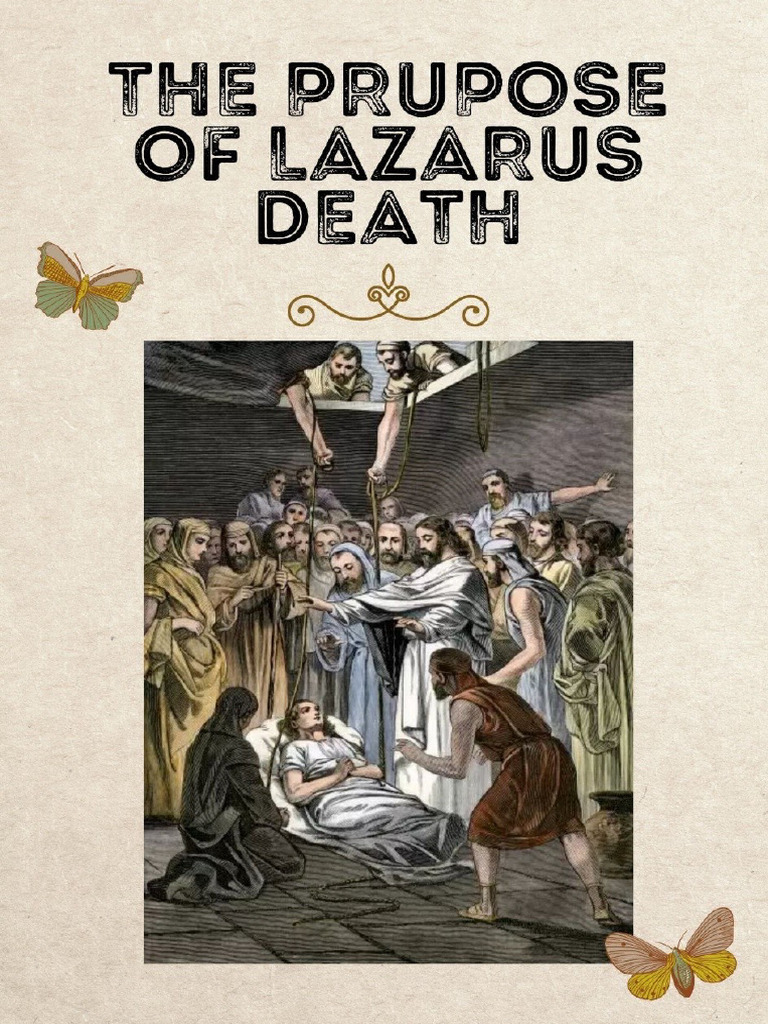
In the annals of biblical history, few figures are as enigmatic and captivating as Lazarus of Bethany. He is perhaps best known for being resurrected by Jesus, which leads us to an intriguing conundrum: How did Lazarus die in the first place? This query not only piques curiosity but also beckons us to delve deeper into the intricacies of his life, death, and the very essence of resurrection. Are you ready to explore the myriad interpretations and narratives surrounding this extraordinary figure? Let’s embark on this intellectual voyage, examining historical context, scriptural texts, and theological implications.
To understand the death of Lazarus, we must first consider the cultural and historical backdrop. Lazarus, along with his sisters Mary and Martha, lived in Bethany, a small town near Jerusalem. During the period of this narrative, death was a common and often grim aspect of life. The region suffered from rampant diseases, and many people succumbed to sickness or natural causes. Here lies the playful prompt: Can you picture a world where death was merely a paradox waiting to be rewritten? It is within this framework that we must ponder how Lazarus met his end.
In the biblical account found in the Gospel of John, we learn that Lazarus became gravely ill. Though the specifics of his ailment are not detailed, clues suggest it might have been a severe disease that rendered him incapacitated. In a society that lacked modern medicine, even minor ailments could evolve into fatal conditions. Thus, it isn’t far-fetched to surmise that Lazarus succumbed to a natural illness, leaving his sisters bereft and longing for the return of their beloved brother.
However, the narrative takes an intriguing turn when we examine the text closely. It indicates that Lazarus was in the tomb for four days before Jesus arrived. This resting place was often a cave, filled with the echoes of mourning and loss. The four-day wait is fascinating, evoking the theological concept of finality in death. Was it a mere coincidence, or did divine timing play a significant role? In many cultures, the fourth day is significant; it symbolizes a crossing into the unknown, where the door to resurrection starts to creak open.
Now, consider the perspectives of Mary and Martha. Their grief is palpable; they express profound sorrow and a sense of abandonment. They directly address Jesus, asking why he had not arrived earlier to save their brother. This narrative thread raises another compelling question: What if their belief in Jesus’ ability to heal could have saved Lazarus? Would he have died in the first place, or was his death a necessary precursor to an even greater miracle? The convergence of faith and mortality prompts deep reflection on the power of belief.
As we delve deeper, it is essential to acknowledge the theological implications of Lazarus’s death. Within Christian doctrine, his death serves not only as an individual tragedy but also as an allegorical representation of spiritual mortality. Lazarus’s resurrection signifies hope and eternal life, suggesting that death is not the ultimate termination but a transformative journey leading to rebirth. This notion introduces an added layer to our understanding of how Lazarus died; it was not merely a physical demise but also a pivotal point in the narrative of salvation.
Many scholars have posited theories regarding Lazarus’s death, from physical illness to possible martyrdom. In some interpretations, he is viewed as a symbolic figure—the embodiment of humanity’s struggle against death. This leads us to ponder the broader question: Are we all, in some sense, Lazaruses in our lives, grappling with our mortality and seeking redemption? Every person faces the reality of their own ‘death’, whether literal or metaphorical, prompting a challenging yet essential discourse on how we confront our existence.
In contemplating the death of Lazarus, it is also imperative to consider the reactions of the surrounding community. Grief was not only personal but also communal, provoking reflections on relationships and connections. The mourners and their responses to Lazarus’s death can be viewed as a microcosm of humanity’s struggle with loss. How do we cope with the demise of loved ones, and what collective narratives do we create around these events? This provocative angle invites introspection, prompting us to evaluate our own responses to mortality.
Moreover, the story of Lazarus beckons us to envision the transformation that death entails. Upon his resurrection, Lazarus emerged from the tomb, alive and anew—a powerful demonstration of faith in action. It implores readers and believers alike to ponder another challenging question: How can our own experiences of ‘death’ in life lead to profound transformation? Just as Lazarus emerged from darkness into light, could we too emerge from our struggles with newfound strength and purpose?
In conclusion, the death of Lazarus opens a multifaceted discussion that transcends the simple parameters of a biblical tale. By examining the historical context, theological implications, and personal reflections on mortality, we arrive at a deeper understanding of this complex narrative. Lazarus’s life, death, and resurrection continue to resonate through the ages, helping us confront our own beliefs and struggles surrounding death. Thus, we find ourselves not merely asking how Lazarus died but also challenging ourselves to consider what his story teaches us about life, loss, and the indomitable nature of hope. As we navigate our own mortality, may we remember the lessons gleaned from Lazarus’s journey—a reminder that death is not an endpoint but a mere interlude in the grand symphony of life.









Leave a Comment