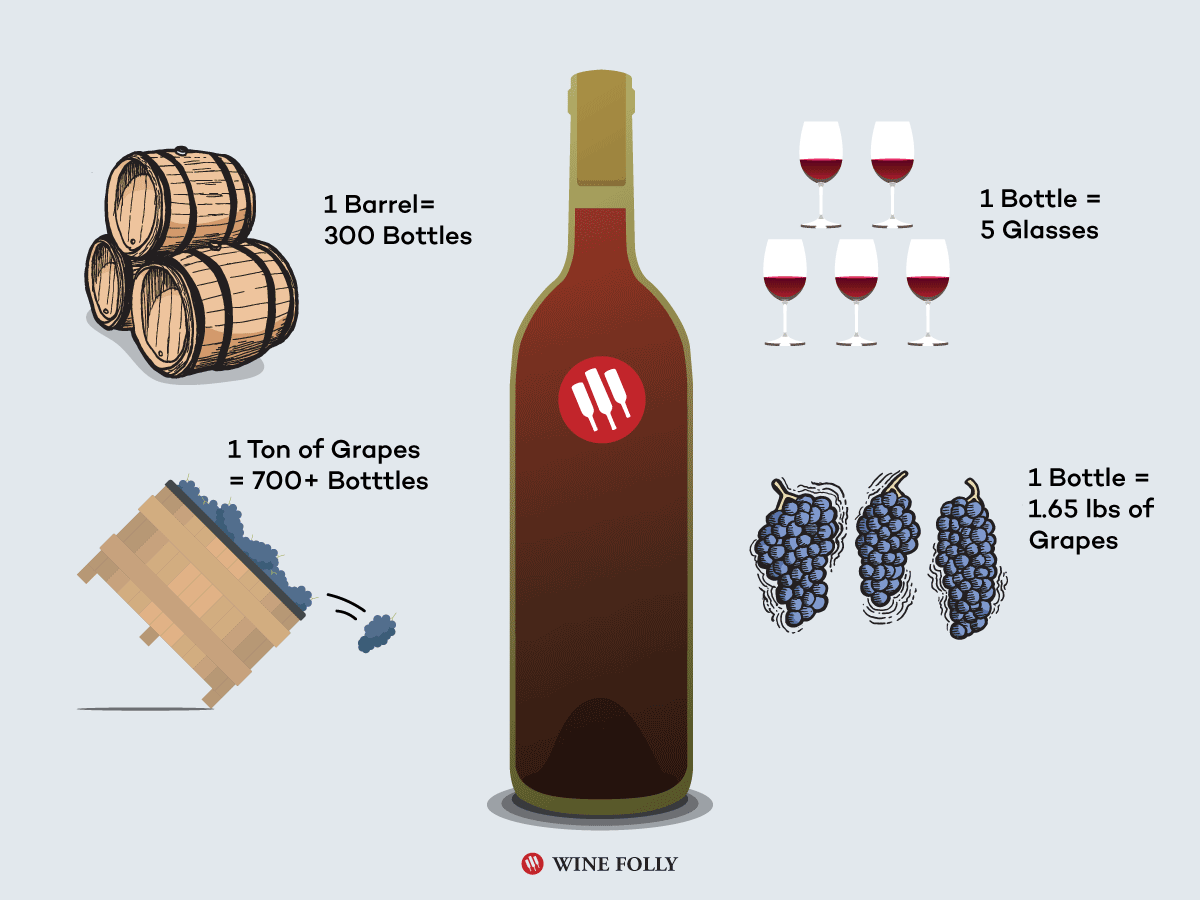
Wine, a delightful elixir celebrated for centuries, captures the essence of conviviality and celebration. With its rich hues and complex flavors, it serves as a catalyst for shared experiences, making it an indispensable part of many gatherings. Yet, a charming quirk of wine consumption often arises: how many glasses can one expect to yield from a standard bottle of wine? While the typical answer suggests roughly five glasses, the answer delves deeper into the realms of science, culture, and personal preference.
To comprehend the number of glasses in a bottle, one must first grasp the basics. A standard wine bottle contains 750 milliliters of liquid. This volume offers a significant amount of delicious wine, but glass sizes can vary widely. On average, a standard serving of wine is measured at approximately 5 ounces (or about 150 milliliters). When following this conventional measurement, one can understandably arrive at the conclusion that a single bottle yields approximately five glasses. However, one must account for variations in pour sizes and different types of wine service.
When pouring wine, the individual pour can often sway between generous and modest. Connoisseurs may argue for a heavier pour, as it allows the wine to breathe, thus enhancing its bouquet and overall experience. When recognizing this subjective element, it becomes apparent that the number of servings can fluctuate significantly. Should patrons opt for a more adventurous pour of 6 ounces, for instance, the same bottle would then cater to around four servings. A cursory glance at the numbers unveils the illustrative truth: wine, much like its drinkers, thrives on personal preference.
Beyond personal preference, the type of wine being consumed also plays a pivotal role in determining glass yields. Rich reds, crisp whites, and sparkling varieties each possess unique characteristics that can influence portioning. For example, one may choose to pour a slightly smaller serving of a robust Cabernet Sauvignon, as its full-bodied nature can be overwhelming in larger volumes. Contrarily, a light-bodied Sauvignon Blanc may invite a more generous serving. The choice of wine further underscores the nuanced relationship between the bottle and its designated glasses.
Interestingly, cultural context is yet another dimension to consider. Different regions and societies perceive wine consumption through varied lenses. In some cultures, wine is savored leisurely over time, resulting in smaller pours and extended enjoyment. In others, the focus may lean towards ample servings to engender an atmosphere of hospitality. This divergence unravels a broader narrative: wine is not simply a drink; it is a social ritual that holds meaning beyond its physical properties.
The number of glasses in a bottle can also be skewed by the occasion. Celebratory events, such as weddings, frequently encourage communal sharing, leading to more substantial pours. Conversely, intimate gatherings may foster a more conservative approach, owing to the desire for savoring each sip. This dynamic creates an intricate tapestry of experiences where a single bottle of wine could reflect multiple meanings based on context and company.
Another fascinating aspect lies in the glassware utilized during service. The vessel from which wine is poured can profoundly impact the drinking experience. Traditional wine glasses are designed to optimize aeration, allowing the aromas to flourish, whereas more casual tumblers may warrant less attention to detail. Consequently, the choice of glassware can subtly affect the amount poured, thus influencing how many glasses one can expect from a single bottle. The interplay between vessel and volume is a vivid demonstration of how elegance and functionality intertwine in the art of wine appreciation.
Moreover, one must consider the role of wine tasting in this discussion. When engaging in a wine tasting event, the pours often deviate from traditional servings. In order to sample multiple varietals, the pour might be reduced to a mere 2 to 3 ounces per glass. Taken in this light, a bottle could accommodate an astonishing 10 to 12 tasting servings. This exploration of small sips invites participants to revel in the diversity of flavors and textures, further enhancing the communal aspect of wine enjoyment.
In conclusion, the simple query of how many glasses are in a bottle of wine opens the door to a myriad of reflections on the intricacies surrounding wine culture. Whether it be the preferences of individuals, the nature of the wine itself, or the contexts in which it is consumed, each factor contributes to the enchanting landscape of wine appreciation. So, when contemplating that beautiful bottle of Cabernet or that chilled Sauvignon Blanc, ponder not just the number of glasses within, but the convivial histories and moments woven into each pour. Wine, a true testament to the art of living, illustrates that even the simplest questions can unravel layers of meaning, transforming a casual sip into a celebration of life itself.









Leave a Comment