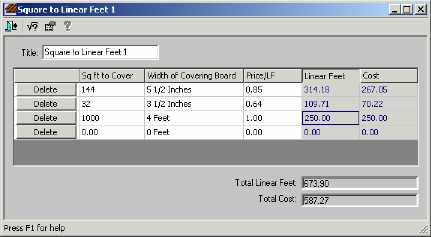
Understanding the conversion between square feet and linear feet may initially seem like a mere mathematical exercise, but grasping this relationship can significantly enhance your comprehension of spatial dimensions and applications in various fields, such as construction, landscaping, and design. The interplay between these two measurements invites curiosity, prompting a broader investigation of how they impact planning, purchasing, and creativity. This exploration will illuminate the intricacies of these concepts, offering valuable insights that go beyond simple calculations.
1. Defining the Basics: Square Feet vs. Linear Feet
To embark on this journey, one must first demystify the units in question. Square footage (sq ft) quantifies area, representing the amount of two-dimensional space within a defined boundary. In contrast, linear footage (lin ft) measures one-dimensional length, describing the distance of a straight line or perimeter. Instead of merely viewing these as isolated terms, consider them as two sides of a coin, each with its own relevance to different realms of measurement.
2. Applications: Where Each Measurement Shines
When you step into the realm of construction, the significance of these measurements becomes pronounced. For instance, flooring materials are typically sold by square footage, directly tying this unit to the area that will be covered. Conversely, linear feet matter significantly when purchasing materials like molding, trim, or fencing, where the focus is on the total length required.
Moreover, outdoor projects such as gardens or patios utilize square footage to determine the area needed for planting or furniture. By acknowledging the unique applications of each measurement, one can better navigate purchasing decisions and project planning. As such, professionals and DIY enthusiasts alike must master these terms to enhance their efficiency and effectiveness in various tasks.
3. The Connection: Understanding the Conversion
The intrinsic connection between square feet and linear feet emerges when considering the context of the shape involved. For rectangular or square areas—such as a room or lawn—the conversion is relatively straightforward. Here, you measure one side’s length in linear feet and then multiply this by the other side’s length in linear feet to get the area in square feet. For instance, a room measuring 10 feet by 12 feet encompasses 120 square feet.
This conversion requires the recognition that area is inherently a product of length multiplied by width, tethering the two measurements. However, if you want to dive deeper, consider shapes with irregular dimensions. The implications of these varying configurations reveal the complexity and beauty of spatial relationships, reminding us that even simple measurements can unravel into nuanced explorations.
4. Practical Examples: Real-World Scenarios
Imagine planning a new carpet installation for your home. First, measure the room in linear feet. A room measuring 15 feet wide by 20 feet long presents a straightforward calculation: 15 ft (width) multiplied by 20 ft (length) equals 300 sq ft of carpet necessary. However, if laying out baseboards around this room, you would only need the linear measurement of 15 + 15 + 20 + 20, resulting in 70 linear feet required. Such scenarios exemplify the practical necessity of converting between square and linear measurements effectively.
5. Tools of the Trade: Measurement Devices and Techniques
In the age of technology, the movement toward accurate measurements has been bolstered by innovative tools. Laser distance measurers, measuring tapes, and even smartphone applications provide precise linear measurements in mere seconds. For square footage, many of these tools can also calculate area, reducing the potential for errors in manual calculation.
The key, however, lies in understanding how to utilize these devices effectively. Take the time to familiarize yourself with the features and capabilities of your chosen tool. Knowledge empowers, and leveraging technology enhances efficiency, bridging the gap between linear and square footage with remarkable ease.
6. Common Misconceptions: Clarifying the Confusion
Misperceptions abound when it comes to these measurements. A prevalent error is assuming that linear footage inherently conveys square footage without considering the dimensions involved. This misconception can lead to significant miscalculations. Remember, while linear footage serves as a dimension of length, square footage requires an acknowledgment of area as a product of two lengths. Cultivating this cognitive distinction is critical for accurate estimations.
7. The Bigger Picture: Broader Applications Beyond Construction
Although construction and design might dominate discussions about these measurements, their relevance extends to numerous other fields. In landscaping, knowing how to convert between square and linear feet shapes garden layouts and irrigation strategies. In the realm of textiles and fashion, understanding fabric measurements in both dimensions can dictate the success of a design or project.
Conclusion: A Transformational Viewpoint on Measurements
Ultimately, the relationship between square feet and linear feet encourages a fascinating exploration of dimensionality and spatial understanding. By mastering these concepts, one can elevate their approach to planning and executing various projects. Whether you find yourself amidst a construction endeavor or crafting a garden oasis, the shift in perspective from mere arithmetic to a comprehensive understanding of space invites curiosity and opens doors to greater creativity. Embrace the intricate dance between these measurements, and you may discover new possibilities that await within your projects.









Leave a Comment