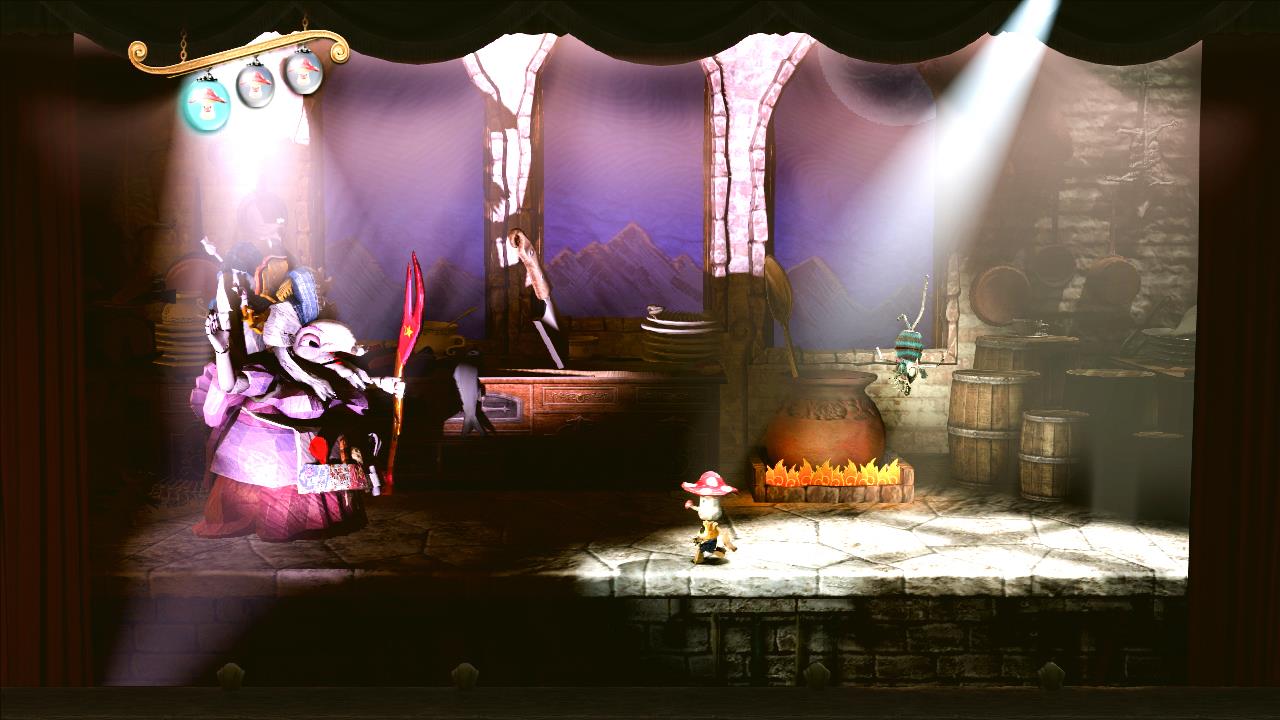
Imagine yourself immersed in a whimsical world, where plucky puppets dance at your fingertips, undertaking daring escapades and engaging in laughter-inducing antics. “Puppeteer,” the enchanting PlayStation 3 platformer, beckons players to control their characters with finesse. But herein lies the question: Does Puppeteer necessitate the finesse of the analog stick, or can the humble D-pad serve just as effectively? This inquiry unfurls an engaging challenge, inviting both seasoned gamers and novices to explore the intricacies of control schemes and the delightful artistry of the game itself.
To delve into this conundrum, it is essential to understand the nature of control in video games, particularly within the context of “Puppeteer.” At its core, the game is a colorful tapestry woven with whimsical characters and captivating environments. The gameplay revolves around precision platforming, seamless navigation, and well-timed actions that will likely provoke players to ponder which control scheme best serves their puppeting prowess.
First and foremost, let’s dissect the control options available while embarking on this puppet-themed odyssey. The PlayStation 3 controller provides two primary control mechanisms: the analog sticks and the D-pad. Each offers a distinct tactile experience and responsiveness level, which may affect gameplay differently, especially in a platformer.
The analog sticks, with their smooth, fluid motions, invite players to navigate the vibrant landscapes of “Puppeteer” with ease. The precision derived from thumb placement allows for rapid character adjustments and finely-tuned movements. Those who favor this method may revel in the freedom it provides during gameplay, particularly in scenarios that demand acute reflexes. The feeling of being in control is undeniable, as players deftly maneuver past obstacles and execute daring stunts.
However, the question of whether the D-pad can effectively replace the analog stick is not one to be dismissed lightly. The D-pad presents a more traditional, directional approach to character control. Players utilizing the D-pad experience a distinct sensation of tactile feedback—each click and directional input a declaration of intent. This simplicity can cultivate a nostalgic connection to gaming’s roots, echoing the days when 2D platformers automatically engaged players without the frills of complex controls.
Engaging in a rigorous analysis, one might ponder whether using the D-pad impedes the immersive experience “Puppeteer” strives to create. The game is designed with intricate levels that demand not just precision but also fluid motions. Evaluating the challenges posed by rapid platforming sequences reveals a critical point: while the D-pad can navigate by leaps and bounds, it may fall short in situations that require nuanced control. Players might experience difficulty when executing swift combos or steering characters through crowded scenarios where every millisecond counts.
Conversely, the D-pad does have its merits. For those who favor a methodical approach, it can provide a certain rhythm to gameplay—a careful dance rather than the frantic flurry demanded by the analog stick. Take a moment to consider: is there an element of strategy inherent in choosing the D-pad over the intuitiveness of the analog controls? Could a player wield the D-pad effectively, turning traditional input into an advantage by seamlessly anticipating platforming patterns?
Moreover, controlling the pace of gameplay can be a double-edged sword. An analog stick often allows for greater speed, thereby accommodating more agile maneuvers. Yet, players who take a more measured approach might find solace in the D-pad’s limitations. It invites a reflective playstyle—one in which players can deliberate over each action instead of rushing headlong into calamity. Ultimately, success in “Puppeteer” hinges on personal preference and play style.
As players transverse across the enchanting landscapes of “Puppeteer,” they may also grapple with the notion of comfort versus capability. How important is it to feel at ease with your control method? Are players willing to sacrifice precision for nostalgia, embracing the D-pad experience, even at the risk of hampering performance? The answers to these questions lie within the hearts of the players, each navigating their own whimsical journey through this delightful puppet adventure.
Reflecting on this assessment, one must recognize the elegant tapestry woven by both control methods. Although the analog stick is often regarded as the favored choice for the dexterous demands of “Puppeteer,” the D-pad undeniably possesses its unique charm. The game offers a captivating experience regardless of the method chosen, as both paths present distinctively different ways to interact with the playful narrative. The analog sticks may favor those who thrive on fluidity, while the D-pad might attract traditionalists or those who embrace challenge in every nuanced maneuver.
In conclusion, the playful inquiry into whether Puppeteer demands the analog stick or the D-pad reveals far more than mere control preference. It encapsulates the very essence of gaming artistry and personal expression. Ultimately, players can embrace either path, customizing their puppeteering experience. The real challenge remains not just in mastering the controls, but in exploring the myriad of ways to traverse, engage, and revel in the enchanting world of “Puppeteer.” So, whether one chooses the elegance of analog or the steadfastness of the D-pad, the heart of the adventure awaits—ready to be puppeteered!











Leave a Comment