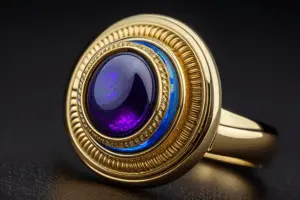
When it comes to mood rings, the vibrant colors they exhibit can evoke curiosity and joy. Among the spectrum of shades, purple holds a unique place, often captivating the imagination of wearers. What does purple signify on a mood ring? This inquiry beckons an exploration of emotions, psychological implications, and the intriguing lore surrounding this color.
To unravel the mystery of purple, it’s vital to understand the foundational essence of mood rings. Invented in the 1970s, these jewelry items typically contain thermotropic crystals that respond to temperature variations, thereby reflecting changes in the wearer’s emotional state. This fascinating interplay between temperature and emotion fosters a deeper understanding of self.
As we delve deeper into the spectrum of emotions conveyed through mood rings, it becomes evident that purple embodies a rich tapestry of meanings. To comprehend its significance, we must first explore the psychological attributes commonly associated with this color. Purple, often linked with spirituality and introspection, can suggest a state of deep emotional resonance.
Psychologically, purple is frequently perceived as a bridge between the calm stability of blue and the fierce energy of red. This duality allows it to encapsulate a wide array of feelings. On one end of the spectrum, purple may emanate tranquility, relaxation, and a sense of peace. It invites the wearer to reflect inwardly, fostering a sense of self-awareness and contemplation. In more intense instances, it can also signify passion or ambition; a reminder to pursue one’s desires and dreams fervently.
Understanding purple’s nuanced meanings can also lead to insights about personal states of mind. Typically, when a mood ring displays a purple hue, it might indicate that the individual is experiencing a blend of emotions—perhaps feeling inspired, creative, or whimsical. It can underscore feelings of optimism and motivation, suggesting that the wearer is in a phase where imagination and determination coalesce.
However, purple is not merely a representation of positive feelings. The interplay of colors within the emotional lexicon also allows for the possibility that wearing purple may suggest internal conflict or confusion. In relation to one’s emotional landscape, it reflects the complexities many experience. It can serve as an emblem of emotional turmoil, urging the wearer to delve deeper into their feelings to resolve internal discord.
Diving further, it is essential to acknowledge how personal experiences and cultural backgrounds can shape perceptions of purple. In some cultures, purple is revered as a royal color, embodying power and prestige. This can translate to a rich sense of self-worth or ambition for those who identify with these qualities. In contrast, others may associate it with sensitivity or melancholy, reflective of personal histories or societal influences surrounding the color.
As we examine the implications of purple on a mood ring, it is equally important to consider the physiological aspects at play. The body’s temperature naturally ebbs and flows in response to various stimuli, including emotional ones. The hues that mood rings display—purple being a primary example—are predicated on these physiological changes. This intriguing nexus creates an emotional feedback loop; the color you see is a window into your emotional state, while also influencing your subconscious perceptions and reactions.
People who frequently find themselves cherishing the purple hue on their mood rings may notice that it acts as a catalyst for reflection and creativity. The wearer’s disposition can be influenced significantly. For instance, an artist or writer experiencing purple may feel an invigorating urge to create, fueled by inspiration or emotional clarity. As a result, those who engage with mood rings often find them to be not just decorative but transformative, enhancing emotional intelligence and self-exploration.
Furthermore, there exists a holistic perspective intertwined with the color purple. In some therapeutic contexts, wearing gemstones associated with purple—like amethyst—can promote emotional healing and a sense of calm. Mood rings, too, can serve as tools for self-exploration, providing gentle reminders to check in with one’s emotions. When the ring turns purple, it could serve as an invitation to pause, reflect, and embrace whatever complex emotions may surface.
In conclusion, the color purple on a mood ring is a multifaceted emblem steeped in both psychological and cultural significance. Whether signifying tranquility, creativity, self-reflection, or even inner turmoil, it resonates with the complexity of human emotion that often defies simple categorization. Those who wear mood rings may find themselves on an ongoing journey of self-discovery through the colorful lens of their emotions. Embracing this journey with an open heart and an attuned mind allows for a richer understanding of the vibrant tapestry of feelings that color the human experience.






Leave a Comment