
Short Answer
Heaving to is a fundamental heavy-weather and boat-handling maneuver that allows a sailboat to slow to a controlled, near-stationary position while keeping sails hoisted. By balancing a backwinded headsail against an eased mainsail and the rudder, the boat settles into a stable fore-reaching attitude, giving crew time to rest, make repairs, or wait out deteriorating conditions. This article explains the maneuver, its mechanics, practical steps, limitations, and common mistakes, drawing on established seamanship guidance.
Main Explanation
What it is
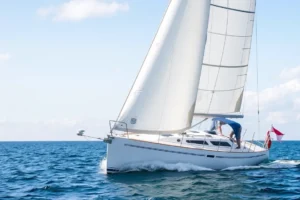
Heaving to is not a piece of equipment or a brand-specific technique; it is a sailing maneuver that uses opposing aerodynamic and hydrodynamic forces to reduce a boat’s forward progress to a gentle drift. In practice, the boat tacks but the headsail is not released, so it becomes backwinded on the windward side. The mainsail is eased, and the helm is turned to windward and lashed. The result is a balance: the backed headsail tries to push the bow downwind, while the rudder and eased main try to turn the bow into the wind. The boat “fore-reaches” slowly, making perhaps 1–2 knots and drifting sideways, rather than sailing on a normal course. According to Practical Boat Owner, a properly hove-to boat should “fore-reach gently” and provide a stable platform. NauticEd describes it as bringing the boat to a “near stop while keeping the sails fully raised.”
Why it matters
Many sailors rarely practice heaving to, despite its value. Practical Boat Owner notes that “countless magazine articles have been written about heaving to, but how many times do you actually see the manoeuvre carried out? Not often for sure.” The reasons include perceived difficulty, conflicting advice, and the fact that different hull designs respond differently. Yet the stakes are high: in heavy weather, a reliable way to stop the boat without dropping sails or starting the engine can prevent exhaustion, allow a crew to manage a problem, or avoid running into danger. Information overload from forums and outdated textbooks can make the maneuver seem more complicated than it is. A clear, independent explanation—grounded in tested practice—helps sailors build confidence and use the technique appropriately.
How it works
The maneuver relies on three interacting elements: the backwinded headsail, the eased mainsail, and the rudder. When you tack without releasing the headsail sheet, the jib or genoa fills on the wrong side, pushing the bow away from the wind. The mainsail, eased until it luffs or nearly luffs, reduces forward drive. The helm, turned to windward, tries to steer the bow back into the wind. These opposing forces reach equilibrium: the boat lies at about 40–60 degrees off the wind, making slow headway and slipping to leeward. The exact balance varies by boat. Practical Boat Owner reports that “some boats heave to better with the main eased towards the quarter,” meaning the mainsail may need to be trimmed slightly differently depending on hull shape, keel type, and rig. A fin-keel boat with a high-aspect rig may require more experimentation than a long-keel cruiser. The key is to adjust the helm and sail trim until the boat settles into a steady, gentle fore-reaching motion rather than tacking or falling off.

How to do it
For a typical coastal passage or heavy-weather scenario, follow these steps:
- Ensure you have adequate sea room and no immediate navigational hazards to leeward.
- Brief the crew and secure loose gear.
- From a close-hauled or close-reaching course, tack the boat but do not release the headsail sheet. The headsail will backwind.
- Ease the mainsail completely or nearly completely, so it luffs or just fills.
- Turn the helm to windward (toward the side the wind is coming from) and lash or lock it in place.
- Observe the boat’s behavior. If it falls off too much, ease the main further or adjust the helm slightly. If it tries to tack back, trim the main a little or reduce helm.
- Once balanced, the boat should fore-reach at 1–2 knots and drift slowly to leeward. Monitor position regularly and adjust as conditions change.
NauticEd’s step sequence is similar: tack without releasing the headsail, ease the main, turn the helm to windward. Practical Boat Owner emphasizes that the maneuver is not always as simple as “tack, then lash the helm to leeward”—the exact helm position and sail trim must be tuned to the boat.
When not to do it
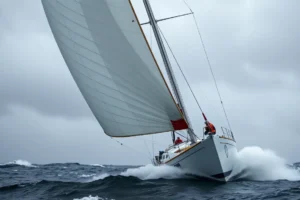
Heaving to is not a universal storm tactic. In very high winds and large breaking seas, a boat may be thrown about or the balance may fail, and other tactics—such as lying ahull, running off under storm sails, or deploying a sea anchor—may be more appropriate. Cruising World notes that “no single tactic works in all conditions” and that the choice must account for boat design, sea state, and crew endurance. Do not rely on heaving to in confined waters, near a lee shore, or when the boat has insufficient sea room to drift. It is also not a substitute for professional training: a certified sailing course provides supervised practice and feedback that no article can replace. Finally, if your boat has a fin keel, spade rudder, or a high-freeboard hull, it may not heave to as comfortably as a traditional long-keel design; you should test the maneuver in moderate conditions before needing it in a storm.
Visual
The following step sequence summarizes the heaving-to procedure at a glance:
- Prepare: Check sea room, brief crew, secure gear.
- Tack without releasing the headsail: The jib or genoa backs on the windward side.
- Ease the mainsail: Let it luff or nearly luff to reduce forward drive.
- Turn the helm to windward: Steer the bow toward the wind and lash the helm.
- Adjust for balance: Fine-tune main trim and helm until the boat fore-reaches gently.
- Monitor: Check position, drift, and sail trim regularly; adjust as conditions change.
Common Mistakes
Releasing the headsail during the tack
If you release the headsail sheet as in a normal tack, the sail will not backwind, and the boat will continue sailing normally. The consequence is that the maneuver fails. The correct approach is to hold the headsail sheet until the sail fills on the windward side, then leave it there.
Not easing the mainsail enough
A mainsail that is trimmed too tightly will keep driving the boat forward, overpowering the balance and possibly causing the boat to tack or accelerate. The consequence is loss of the near-stop state. Ease the main until it luffs or just barely fills, reducing forward drive to a minimum.
Lashing the helm without testing
Every boat responds differently to helm angle. If you lash the helm immediately without observing the boat’s behavior, it may fall off, round up, or oscillate. The consequence is an unstable platform. Adjust the helm gradually, test the boat’s response, and lash it only when the boat settles into a steady fore-reaching attitude.
Assuming all boats heave to identically
Hull shape, keel type, rig, and sail plan all affect how a boat heaves to. A long-keel cruiser may balance easily, while a fin-keel racer-cruiser may require different sail trim or helm angle. The consequence of assuming a one-size-fits-all method is frustration or failure. Practice on your own boat in moderate conditions to learn its specific balance point.
Using heaving to in too much wind without reducing sail
In strong winds, full sails create excessive heeling, rudder stall, and loss of control. The consequence can be a dangerous broach or knockdown. Reef deeply first, or switch to a storm jib and trysail, before attempting to heave to in heavy weather.
Forgetting to monitor drift and position
A hove-to boat is not stationary; it drifts forward and to leeward. If you stop paying attention, you can drift into shipping lanes, shallow water, or a lee shore. The consequence is a navigation hazard. Plot your position regularly, set a drift alarm if available, and maintain a proper lookout.
Safety Note
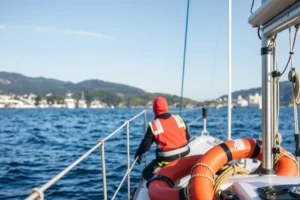
Heaving to is a valuable seamanship tool, but it must fit within a broader safety framework. Digital references, articles, and apps complement—never replace—proper training, physical checks, and human judgment. Always cross-check critical data such as weather forecasts, tides, and navigation information with official sources like national weather services and coast guard broadcasts. Never use a tablet or phone as your only navigation tool; keep paper charts and a handheld compass as backups. Take a certified safety and seamanship course, and practice heaving to in moderate conditions before you need it in heavy weather. Ensure every crew member knows the procedure and their role. Follow the International Regulations for Preventing Collisions at Sea (COLREGS) and all local maritime regulations, including watchkeeping and sound-signal requirements. Finally, remember that no single tactic works in all conditions—be prepared to switch to other heavy-weather strategies if heaving to becomes unsafe.
FAQ
Can any sailboat heave to?
Most monohulls can heave to, but the ease and stability vary. Long-keel, heavy-displacement boats often balance more readily than fin-keel, light-displacement designs. Catamarans and some high-performance boats may not heave to effectively. Test your boat in moderate conditions.
How much do you drift when hove to?
A hove-to boat typically fore-reaches at 1–2 knots and drifts to leeward at a similar rate, but this depends on wind strength, sea state, hull shape, and sail trim. Always monitor position and allow ample sea room.
Is heaving to safe in a storm?
Heaving to can be a valuable storm tactic in winds up to about 25–30 knots and moderate seas, but it is not suitable for all storms. In very high winds or breaking seas, other tactics such as lying ahull, running off, or deploying a sea anchor may be safer. Reduce sail appropriately first.
Do I need special sails to heave to?
No special sails are required. A standard headsail and mainsail work, but in heavy weather you should reef deeply or use a storm jib and trysail to reduce power and maintain balance.







Leave a Reply