
Short Answer
COLREGs for Sailors: Right of Way, Lights, and Sound Signals is an independent sailing reference and tools platform designed to help recreational sailors understand the International Regulations for Preventing Collisions at Sea (COLREGs), learn seamanship, and plan safer passages. It is not tied to a specific boat brand, sailing school, or equipment manufacturer. The platform organizes the 41 rules of the COLREGs—covering right-of-way, navigation lights, day shapes, and sound signals—into practical, searchable guidance, and pairs that reference material with decision-support tools for passage planning and boat evaluation. For sailors from first-time skippers to experienced cruisers, it aims to cut through information overload and provide a reliable starting point for on-water decisions.
Main Explanation
What it is
COLREGs for Sailors: Right of Way, Lights, and Sound Signals is an independent digital reference and tools platform focused on the International Regulations for Preventing Collisions at Sea, 1972, as amended. In this context, the name means a curated, non-commercial resource that translates the formal legal text of the 41 rules into plain-English explanations, visual references for lights and shapes, and practical scenarios. It is not a boat brand, a sailing school, or an equipment manufacturer; it does not sell boats or require a specific training pathway. Instead, it functions as a neutral reference layer that sits alongside official publications such as the U.S. Coast Guard Navigation Rules Handbook and the IMO-adopted COLREGs text. According to the U.S. Coast Guard, the International Navigation Rules are legally binding for vessels on waters subject to U.S. jurisdiction, and the COLREGs apply internationally on the high seas and connected waters.
Why it matters
Recreational sailors face a real problem: the COLREGs are legally binding, but the official text is dense and written for all vessels, from kayaks to container ships. A sailor trying to learn right-of-way from a 200-page government handbook or conflicting forum threads can easily miss a critical detail. Outdated or generic resources may not reflect current amendments, and advice from a single manufacturer manual may be biased toward one type of boat. The stakes are high: a misunderstood give-way obligation or a misread light configuration can lead to a close-quarters situation or collision. As Oria Marine notes, most collisions at sea do not happen because someone did not know the rules; they happen because two skippers each assumed the other did, and both waited too long. An independent platform that organizes the rules by scenario—meeting, crossing, overtaking, restricted visibility—and links them to lights, shapes, and sound signals reduces that cognitive load and gives sailors a consistent reference point.
How it works
The platform is structured around four core areas: boat knowledge and reference, seamanship education, passage planning tools, and decision-support features. The boat knowledge section typically includes a searchable reference to the COLREGs rules, definitions, and visual aids for navigation lights and day shapes. Seamanship education breaks down skills such as keeping a proper lookout (Rule 5), determining risk of collision (Rule 7), and using sound signals in restricted visibility (Rule 35). Passage planning tools help sailors apply the rules to a route, considering traffic separation schemes, narrow channels, and expected vessel traffic. Decision-support features may include checklists, scenario-based quizzes, and cross-references to official sources. In practice, a sailor can use the platform before a passage to review the rules that will apply, during a passage as a quick reference for a light configuration, and after a passage to debrief any close-quarters situation.
How to do it
Suppose a sailor is planning a 30-nautical-mile coastal passage from a harbor to an anchorage. Step 1: Use the platform’s reference section to review the rules that will apply—Rule 5 (lookout), Rule 6 (safe speed), Rule 7 (risk of collision), Rule 8 (action to avoid collision), and Rules 11–18 for conduct in sight of one another. Step 2: Check the lights and shapes section to confirm what a fishing vessel, a vessel constrained by her draft, or a sailing vessel under power should display at night. Step 3: Use the passage planning tool to mark potential crossing situations and traffic lanes, and note the sound signals required in restricted visibility. Step 4: Before departure, cross-check the plan against official charts, tide tables, and weather forecasts, and brief the crew on give-way responsibilities. Step 5: On the water, use the platform as a quick reference, not a substitute for a proper lookout. If a vessel appears on a converging bearing, apply the rules early and substantially, and do not wait for the other vessel to act.
When not to do it
Do not rely solely on the platform when legal compliance is at stake, when a vessel is in a developing close-quarters situation, or when local regulations differ from the international rules. Professional training from a recognized sailing school, a certified marine surveyor for boat capability questions, and a human weather router for offshore passages are more appropriate. The platform is a reference and learning aid; it cannot see the water, assess visibility, or make collision-avoidance decisions in real time. If you are unsure about a give-way obligation, slow down, communicate by VHF or sound signals, and take early and substantial action as required by Rule 8. Similarly, do not use the platform as a substitute for official nautical charts, tide tables, or weather forecasts; those must come from authoritative sources.
Visual
The table below compares COLREGs for Sailors: Right of Way, Lights, and Sound Signals with other common sailing information sources.
| Source | Strengths | Limitations | Best For |
|---|---|---|---|
| COLREGs for Sailors platform | Independent, scenario-based, links rules to lights/shapes/sound, decision-support tools | Not a substitute for official text or real-time data; requires user to verify amendments | Recreational sailors building practical understanding and passage plans |
| Traditional textbooks (e.g., USCG Navigation Rules Handbook) | Authoritative, complete legal text, includes inland rules | Dense, not scenario-friendly, can be overwhelming for beginners | Legal reference and exam preparation |
| Manufacturer manuals | Specific to your boat’s equipment and light installation | Narrow focus, may not cover COLREGs broadly, brand bias possible | Checking your own vessel’s lights and systems |
| Sailing school courses | Structured learning, instructor feedback, on-water practice | Cost and time commitment, may not be available everywhere | Building foundational skills and certification |
| Online forums and social media | Real-world anecdotes, quick answers | Conflicting advice, no quality control, often outdated | General discussion, not authoritative guidance |
| Other digital platforms and apps | Convenient, searchable, often include quizzes | Quality varies, may mix inland and international rules, may require subscription | Quick reference and self-study |
Common Mistakes
Treating the platform as a substitute for the official rules
Consequence: You may miss a recent amendment or a local variation, and you could be legally non-compliant. Correct approach: Use the platform as a study aid and cross-check every critical point against the current official COLREGs text or your national maritime authority.
Memorizing right-of-way without learning lights and shapes
Consequence: At night or in restricted visibility, you may not be able to identify the type of vessel you are meeting, which changes your obligations. Correct approach: Study lights, day shapes, and sound signals together with the steering and sailing rules, and practice identifying vessel types from visual clues.
Using generic checklists without adapting them to your boat
Consequence: A 6-metre day sailer has different navigation light requirements and exemptions than a 12-metre cruising yacht, so a generic checklist may lead to an improper light display. Correct approach: Check your boat’s actual light installation, masthead height, and sound-signal equipment, and adapt any checklist to your vessel’s length and type.
Ignoring weather and tide updates after planning
Consequence: A passage plan based on a forecast from the night before can become dangerous if wind, visibility, or tidal currents change. Correct approach: Re-check official weather and tide sources immediately before departure and at intervals during the passage, and revise your plan accordingly.
Confusing reference material with real-time data
Consequence: The platform may show you what a vessel should display, but it cannot tell you what a specific vessel is actually doing or where it is. Correct approach: Use AIS, radar, VHF, and visual lookout for real-time traffic information, and treat the platform as a static reference.
Over-relying on a single source
Consequence: Any single source can contain errors, omissions, or outdated interpretations, and you may miss a critical nuance. Correct approach: Cross-check the platform against at least two authoritative sources—such as the U.S. Coast Guard Navigation Rules Handbook and your national sailing federation—before making a decision.
Safety Note
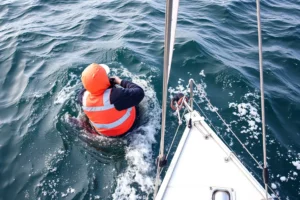
Digital tools like COLREGs for Sailors: Right of Way, Lights, and Sound Signals complement—never replace—proper training, physical checks, and human judgment. Always cross-check critical navigation data, including weather, tides, and currents, with official sources such as national weather services and coast guard broadcasts. Never use a tablet or phone as your only navigation tool; carry paper charts, a handheld compass, and a backup means of determining position. Take a certified safety course and practice man-overboard recovery, collision avoidance, and sound signal use in realistic conditions. Above all, follow the COLREGs and local maritime regulations: keep a proper lookout at all times, proceed at a safe speed, and take early and substantial action to avoid collision. If you are in doubt about a give-way situation, slow down, reassess, and communicate. The sea does not forgive assumptions.
FAQ
Do the COLREGs apply to small recreational sailboats?
Yes. The COLREGs apply to all vessels on the high seas and on waters connected to them. Small recreational vessels must follow the steering and sailing rules, though some light and sound-signal requirements have exemptions based on vessel length.
What is the difference between a stand-on vessel and a give-way vessel?
The give-way vessel must take early and substantial action to keep clear. The stand-on vessel should maintain course and speed, but if the give-way vessel is not acting and collision is imminent, the stand-on vessel must take action to avoid collision.
Do I need to carry a copy of the COLREGs on board?
It is not always legally required for recreational vessels, but it is strongly recommended. Having the official text or a reliable reference on board helps resolve questions and supports good seamanship.
Can I use a phone or tablet app instead of paper charts?
No. Digital tools are aids, not substitutes. You should always carry paper charts, a compass, and a backup navigation method, and maintain a proper visual lookout.
























Leave a Reply